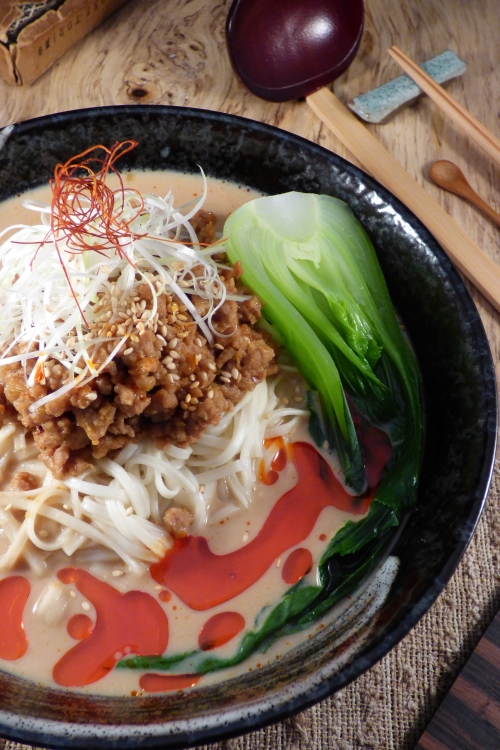
Our first encounter with tantanmen- the Japanese version of the chilli laced, sesame sauced Sichuan noodle dish dandanmian- came in a cramped ramenya down a nondescript backstreet in the Tokyo district of Shibuya. Sat at a dimly lit wooden counter where the thick varnish had been worn away by decades of jostling elbows from hungry diners, the chef placed before us two deep bowls of noodles sunken beneath blush ivory coloured broth, swirled with a bright red slick of rāyu and a scattering of fried pork. After the initial shock of the vibrant colours against the dark bowls we were struck by the rich, earthy sesame aroma followed by the sweet smell of long-simmered chicken stock. One messy, clumsily slurped mouthful was all it took for us to fall head over heels for this red-faced cousin of the classic pork ramen; the tingly chilli-kissed lips only helped our feelings grow stronger.
Little known outside of Japan, tantanmen has become a staple in many noodle restaurants and as a quick to prepare dinner for rushed parents to whip up for their ever-hungry children after school. Much like most other styles of ramen, a powerfully flavoured broth assisted by a couple of well cast supporting characters is the key to a memorable meal. Homemade chicken stock is enhanced with creamy, nutty sesame paste to give an incredibly rounded flavour, then poured over deliciously toothsome chukamen noodles before being topped with intense, salty pork mince seasoned with miso and sake. The whole dish is then drenched (or perhaps merely drizzled, depending on your feelings towards spiciness) in chilli infused rāyu oil to not only increase the heat levels, but also to boost the savoury flavours and add the fat needed to smooth out the consistency and texture of your noodles.
Incidentally, the miso seasoned pork mince is a fantastic meaty component to a bento, or it works incredibly well alongside some scrambled eggs as a topping for a bowl of rice to make an easy version of the classic soboro-don.

 kakuni