During the twentieth century a large number of Sichuan immigrants made their way to Japan, taking with them their own cuisine and eventually opening up restaurants catering to their fellow countrymen. As time went on, the prickly, spicy dishes that the Sichuan province is famous for changed to suit the local tastes, gone were the copious amounts of dried chillies, pungent garlic and mouth-numbing peppercorns, instead replacing them with savoury miso, aromatic sake and sweet mirin. One popular dish which received this transformation was mapo doufu or pock-marked beancurd; originally a sweat-inducingly hot, oil based sauce with pork and soothing pieces of beancurd to take the edge off the spiciness. The Japanese version of the dish is a much more mellow affair, sweet and salty with a slight hint of chilli-heat, and a thicker, unctuous sauce. This version of mabo tofu has found its place in Japanese cuisine as the nation’s favourite Chinese dish; in a similar way to Britain’s much-loved adaptation of Indian tandoori food, chicken tikka masala, it has evolved from its original form and become a fantastic dish in its own right.
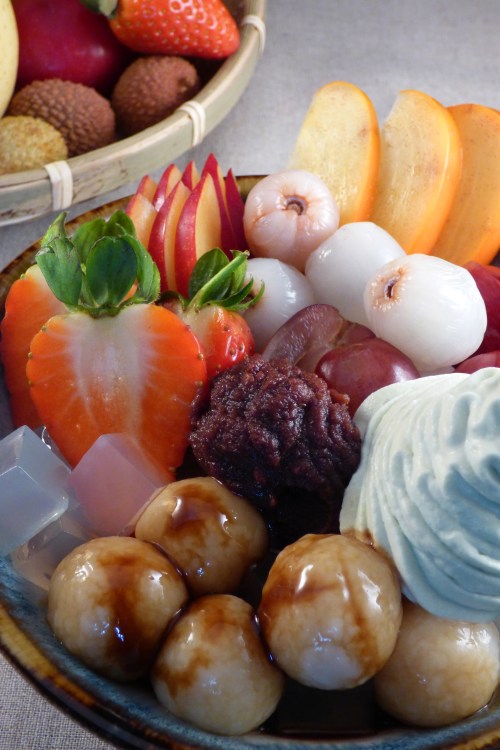
A relatively modern etymological trend in Japan is the use of portmanteau in describing foods, such as anmitsu being a contraction of the words anko and kuromitsu, and in this case mabo tofu donburi- a bowl of rice with a topping- becoming simply mabodon.



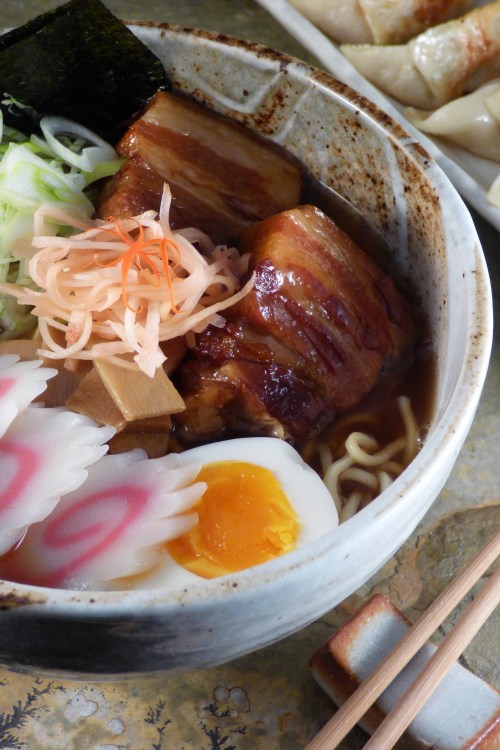

 kakuni