Ebi Furai to Poteto Sarada

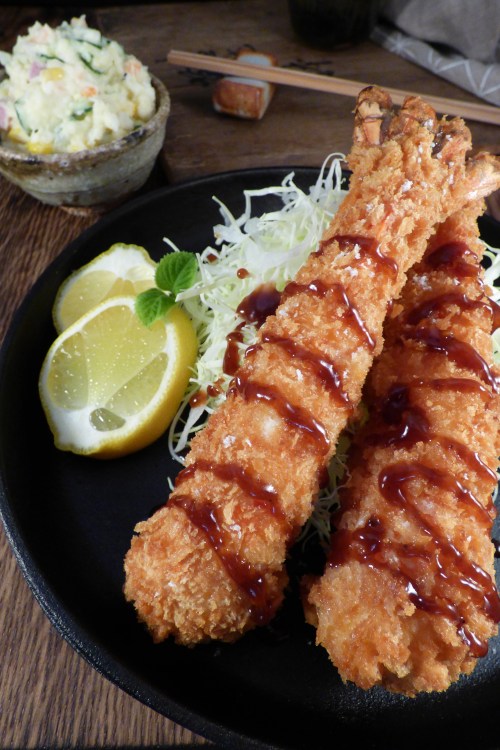
Ebi Furai- colossal, breaded, deep fried prawns- became the signature dish of Nagoya thanks to a quip made by the television comedian Tamori at the expense of the city’s dialect and accent.  Misunderstanding of this joke led to the nation believing that Nagoya excelled in making the succulent, sweet prawns coated in shatteringly crisp shards of panko, and the city was happy to adopt this modern meibutsu as their speciality.  In reality ebi furai was created during the Meiji Restoration period of the late nineteenth century in response to the increasingly popular deep fried yōshoku dishes such as tonkatsu and menchi-katsu that were being served in the larger, metropolitan cities.  Traditionally made using Kuruma ebi (Japanese imperial prawns) which can grow to a monstrous thirty centimetres in length, nowadays the more ecologically sustainable black tiger shrimp is used in making this celebration of oversized shellfish.

Breaded, fried prawns have since become one of the most common ingredients for bentō packed lunches, crammed into ebi-sando sandwiches smeared with coleslaw or even served hotdog style in long soft bread rolls topped with creamy tartar sauce. Perhaps our favourite way to eat ebi furai though is paired with another yōshoku bentō staple, the Japanese take on potato salad.  Creamier and more tangy than your typical potato salad, this version uses mashed potatoes studded with nuggets of smoked ham, crushed hard boiled eggs, salted cucumbers, and ultra sweet, exploding kernels of corn bound together with the ubiquitous Kewpie mayonnaise and a dash of vinegar.  These two dishes make a delicious light meal when combined with some thinly shredded cabbage and a drizzle of the thick Worcestershire-style sauce that goes so well with fried breaded foods, or they work wonderfully well individually as starting points for making a packed lunch.
ebi furai
Ebi Furai- colossal breaded fried prawns, served with Japanese potato salad.

Continue reading “Ebi Furai to Poteto Sarada”

Hiyashi Chūka

The last thing many people can imagine wanting to do on a hot, humid day in late Summer is to huddle over a deep bowl of ramen, with clouds of meaty steam billowing up and enveloping your face while you slurp on mouthful after mouthful of scalding hot noodles slick with unctuous pork fat.  This of course would be a huge problem for the tens of thousands of ramen-ya owners all across the country, if not for the wonderfully refreshing and reviving noodle dish Hiyashi Chūka which dominates their menus in the more oppressive months.  Sitting comfortably on the halfway-line between a crisp salad and the familiar bowl of soup noodles, hiyashi chūka keeps many of the most popular ramen toppings but adds plenty of crunchy fresh vegetables and replaces the savoury broth with a chilled vinegary dressing, making this the perfect dish for a lunchtime spent hiding from the midday heat.  Like most dishes in Japanese cuisine, the colour and temperature of the food is just as important as the flavour and texture, and in this most summery of noodle dishes they all come together harmoniously to cleanse, stimulate and revitalise the senses.

In our version of hiyashi chūka, we’ve incorporated two of the most popular toppings- crab sticks and cucumber- directly into the chūkamen themselves to create an even lighter noodle base.  We’ve crowned this tangle of enhanced noodles with a crunchy slaw made from spicy radishes and turnips, earthy carrots and crisp nashi pear to add even more freshness, and a springy, knobbly chikuwa fishcake for an extra hit of sweet ocean flavour.  All of that is doused liberally with the bracing vinegar, soy sauce and sesame dressing at the table with extra on the side for those who want a more intense, soupy mouthful.


hiyashi chuka
Hiyashi Chuka- cold noodles for a hot day

Continue reading “Hiyashi Chūka”

Tai-Meshi

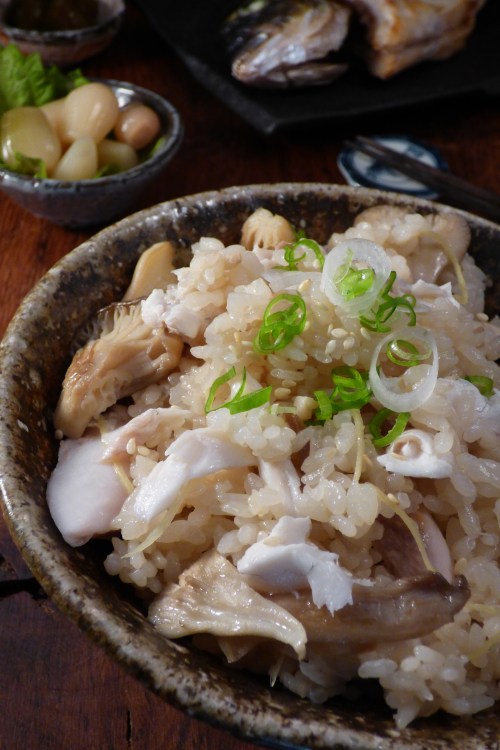
Sea bream or Tai is without a doubt Japan’s most beloved fish.  Being a symbol of good fortune it is traditionally served during celebrations, which is alluded to in the term ‘medetai’, a phrase used to congratulate people on auspicious events.  During the Edo period tai was so prized that it was reserved almost exclusively for the tables of the wealthy and a market solely trading in this king of fish was even set up in Osaka.  Lucky bream shaped sweets are a popular favour handed out at Japanese weddings, and the hot, sweet, bean-filled pancakes called taiyaki can be bought at stalls and cafés all over the country.  Ebisu- one of the traditional seven gods of fortune, is portrayed holding a fishing rod in one hand and carrying a huge red tai in the other.  It is the symbol of wealth, prosperity and high quality; it even spoils at a slower rate to other fish thanks to the high levels of inosinic acid present in its flesh, making it an excellent choice for sashimi.

One of the best ways to enjoy this luckiest of fish is in this ‘surf & turf’ inspired takikomi gohan; the sweet, succulent pearly flesh of the tai is paired with meaty, earthy mushrooms and the spicy freshness only ginger can provide, to create a deliciously savoury rice dish that borders on the decadent.  We’ve used a selection of our favourite mushrooms in this recipe, some frilly, some dense and some tender, but feel free to use whatever is available locally to you.  If you’re fortunate enough to have some of the highly sought after, distinctly flavoured, matsutake mushrooms, they would make a phenomenal addition to your tai-meshi, combining both the country’s favourite fish and fungus into one memorable dish that spells out what the Japanese value most in food.


taimeshi
Tai Meshi- mushroom and ginger rice, cooked with the king of fish.

Continue reading “Tai-Meshi”

Sabazushi

Transporting fresh fish from the coast of Japan to its major inland cities was almost impossible before the advent of refrigerated trains; the days required to travel by horse resulted in inedible, spoiled goods unfit for the population of the Kansai region.  The only reliable means of getting fish to the then-capital city of Kyoto was to preserve it in some way- fermenting the fish in rice was popular, which extended its shelf-life to six months or more but altered the flavour dramatically.  In this early form of sushi, the rice was discarded and only the soured, preserved fish was eaten; it would take another three or four hundred years until the mid 1600s for a version with edible rice to evolve.  As the techniques for making sushi developed, the preservation of the fish improved but palates accustomed to the old style dishes yearned for the sour tang and started adding vinegar to the rice, creating the seasoned sushi rice we know and love today.

Sabazushi, still one of Japan’s most popular forms of sushi, lies comfortably between the fish preserving necessities of old that led to the development of sushi and the modern, perfectly crafted slices of fish atop vinegared rice that spring to mind as this most ubiquitous Japanese delicacy.  Glistening, iridescent, tiger-striped fillets of mackerel are salted and lightly cured before being wrapped over a pillow of seasoned sticky rice and sliced into perfect, jewel topped pieces.  Traditionally in Osaka, you would press this in an oshizushihako box mould to create a rectangular block, but we prefer to make it Kyoto-style and shape it by hand so you can appreciate the naturally domed top that the fish forms.  Whether you press it or not this makes a plate of beautiful, two-bite sized morsels; delicate, refreshingly tangy and with just enough of the rich, creamy fattiness that we love mackerel for.


battera
Sabazushi- rich, smooth, tangy and tiger-striped.

Continue reading “Sabazushi”

Agedashi Tofu

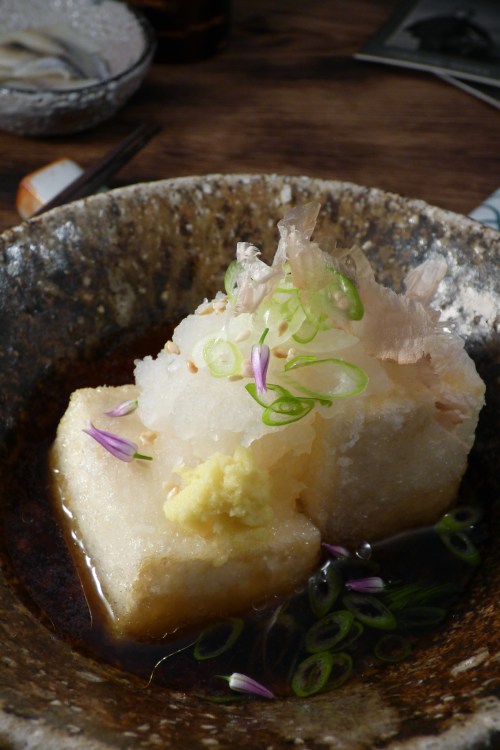
An izakaya staple and to my mind one of the most elegant ways to serve beancurd, agedashi tofu is in essence a very simple recipe- smooth, delicate kinugoshi silken tofu is dusted in potato starch, deep fried and served in a bowl of seasoned dashi broth.  A light, crisp shell gives way to a gently yielding, creamy, custard-like texture that melts in your mouth while the katakuriko gives the agedashi its distinctive soft, stretchy, jelly-like coating when immersed in the sweet, smoky soup.  The two main elements of the dish are further enhanced by a selection of toppings- normally fresh spring onions, spicy daikon oroshi, savoury katsuobushi flakes and intensely powerful grated ginger- but you can also add chopped shiso leaves, shredded sheets of nori seaweed or a citrussy chilli kick from some shichimi togarashi.

Documented as early as the 1780s in Ka Hitsujun’s Tofu Hyakuchin- an immensely popular Edo period book on tofu- the clean, harmonious flavours and ease of preparation have helped keep this unassuming, humble looking dish a favourite across all of Japan, and one that we make a beeline for whenever we see it on a restaurant menu.  The simplicity of the recipe allows each component to really shine and since they have nothing to hide behind you want to use the best quality ingredients you can find, make them all memorable and you’ll have a beautifully balanced bowl of food.


agedashi tofu
Agedashi Tofu- creamy deep fried tofu in a sweet, smoky dashi broth.


Continue reading “Agedashi Tofu”

Wafu Oroshi Hambāgu

Not to be confused with hambāgā- the French fry accompanied, grilled beef burger served in a bun the world over- hambāgu is a much lighter, juicier confection; a blend of pork and beef mince, caramelised onions and spices, shaped into an oval patty before being fried and simmered in one of a variety of different sauces.  It could be described as Japan’s take on the Salisbury steak and depending on which type of hambāgu you order in a restaurant, your patty could be smothered in a rich, thick Worcestershire style sauce,  a French-inspired red wine reduction, a beef and mushroom ‘loco moco’ gravy (nearly always partnered with a runny fried egg) or dressed in the wafu oroshi style with a zesty, tangy ponzu sauce and a heap of spicy grated daikon.  This final version is about as refreshing and light a burger as you’ll ever find; juicy from the addition of fatty pork mince, tender from the milk-soaked panko breadcrumbs and packed with bright summery flavours courtesy of the citrus dressing and the herbal notes that the shiso leaves bring.  Serve the hambāgu with a steaming bowl of rice and some light vegetable side dishes to make the perfect home-style dish for a late dinner on a sunny evening, or use cooled cooked patties with the sauce and daikon oroshi on the side as the feature components in an obento lunch.


hambagu
Hambagu- Salisbury steak, Japanese style.

Continue reading “Wafu Oroshi Hambāgu”

Chāshūdon

Owing its heritage to char siu- the bright red, five-spice seasoned barbecued pork served in Cantonese restaurants, chāshū has become perhaps the world’s favourite ramen topping.  This is of course for good reason, meltingly tender succulent meat, braised at a low temperature for hours until the tough connective tissues and collagen have turned into silky soft gelatin, yielding to the slightest pressure from a chopstick.  The sweet, juicy layers of fat and moist, savoury meat are enhanced further by leaving them in a soy and sake seasoned broth overnight before being thinly sliced and seared in a hot pan to reawaken the glistening fats and juices hiding within the pork.

Chāshū isn’t only enjoyed with soup and noodles however, and one of our favourite ways to eat it is on top of a big bowl of rice as a chāshūdon.  Combined with other noodle toppings such as boiled eggs, pink pickled ginger and spicy Korean radish kimchi, you have a dish that gives you the same satisfaction as a deep bowl of brothy noodles but with a lot less effort.


chashudon
Chashudon- all your favourite ramen toppings, on rice.

Continue reading “Chāshūdon”

Teuchi Udon

Grain milling technology is said to have entered Japan during the thirteenth century when a Buddhist monk, Enni Ben’en, returned with it after studying meditation in China.  Along with that mechanical knowledge, he brought with him the idea that would eventually lead to the thick, white, toothsome, wheat flour noodle that we know today as udon.  Easily our favourite type of noodle, udon has enough character to be the main focal point of a dish, whether it’s a meal of chilled noodles with dipping sauce in the heat of the Summer, a plate of fried yaki-udon bought from a yatai at a festival or sunken deep in a bowl of smoky pork broth, topped with slow braised meat and a boiled egg.  There are some fantastic udon available to buy from supermarkets, even here in the UK, and they’re the ones we use day-to-day, but when we want something that little bit special, when you want the noodle to break free from its supporting role and be the star of the dish, nothing beats making them yourself.

Making noodles at home is a simple affair, requiring very few ingredients and not taking much time at all; kneading the dough is perhaps the only labour-intensive part of the process and that is made a lot easier by letting your feet do the work rather than wearing out your arm muscles.  The beauty of making udon yourself rather than buying them really lies in the ability to make them whatever size and shape you like- from the almost paper thin Himokawa noodles of Gunma Prefecture, to the finger-thick “Two Noodle” udon of Kyoto’s Tawaraya restaurant and everything inbetween.  Our preference lies somewhere towards the Ise udon end of the spectrum- larger and thicker than commercially available noodles, but not so fat that they take a whole hour to boil them.


udon
Homemade udon noodles, served bukkake style.

Continue reading “Teuchi Udon”

Tori Paitan Ramen

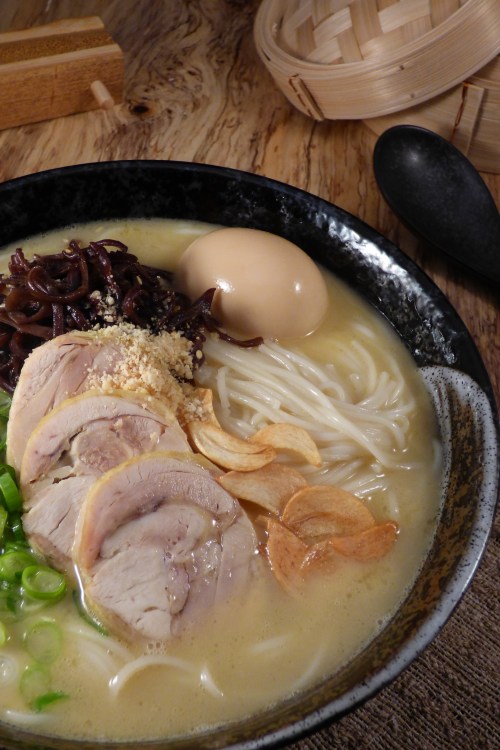
In the past few years tonkotsu has become the coolest style of noodles to be seen eating or making here in the UK; a thick, unrefined, intensely meaty broth, served with the regular gang of ramen toppings, chashu pork, boiled eggs and bamboo shoots.  Restaurants vie to see who has the longest simmered stock with the most opaque suspension of fat and collagen, while critics search for the ramenya with the softest pork and the most unctuous fat.  Worthy of equal praise and attention though, is the lesser known, neglected relative of tonkotsu, and one of the unsung heroes of the noodle world- Tori Paitan Ramen.  A richly satisfying, creamy broth of chicken bones, skin and cartilage, milky in appearance and sticky on the lips from the copious amounts of fat and gelatin present and the long periods of fierce boiling.  To accentuate the deep chickeny flavour of the broth, we’ve added lots of garlic in the form of fried garlic chips and a spoon of powerful, garlic infused duck fat which lends an intense muskiness and a brilliantly rich mouth feel to the finished soup.

A bowl of ramen wouldn’t be complete without some slow-cooked meat to top your mound of noodles, but rather than use the traditional pork, we’ve kept our paitan a purely poultry dish and created a torchon of chicken by wrapping together thigh and breast meat in a layer of skin.  When sliced thinly, this sausage of chicken makes the perfect topping for ramen and falls apart at the slightest pressure from your chopsticks.

tori paitan
Tori Paitan Ramen: The ultimate chicken noodle soup.

Continue reading “Tori Paitan Ramen”

Yasai no Agebitashi

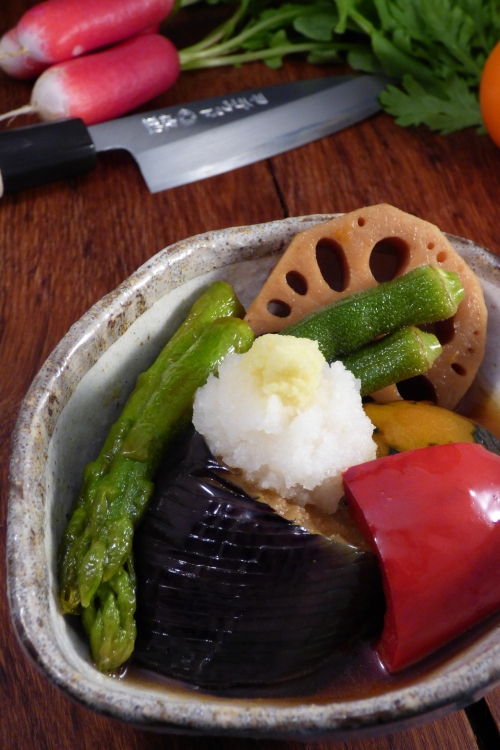
Every now and then you come across a side dish so vibrant, flavoursome and bountiful that it could be- and often is in our household- a main meal in itself.  Yasai no Agebitashi, or ‘fried and soaked vegetables’ to translate its name, is one such dish.  Nearly always made with aubergine as the main ingredient, a selection of firm vegetables are deep fried quickly without any form of coating, ‘suage’ style.  The fierce heat of the oil causes the insides of the vegetables to steam through before they get marinated in a sweetened dashi broth; the tender, cooked vegetables absorb the liquid like a sponge, carrying the flavour throughout.  This technique creates silky, creamy aubergines that melt in your mouth, while crisper vegetables like the lotus root and red peppers retain just the right amount of bite, providing a fantastic contrast of textures.  Topped off with a spicy mound of grated daikon and ginger to counter the richness of the vegetables and the sweetness of the broth, this is the perfect appetiser or side dish to go with nearly any meal, and by changing the dashi to a kombu broth you can easily make a vegan or vegetarian version.

agebitashi
Yasai no Agebitashi: Fried vegetables soaked in a sweet soy broth.

Continue reading “Yasai no Agebitashi”