Tōgan Soboro Ankake

Summer fatigue or natsubate can be a big problem during the humid middle months of the year; people become lethargic, have trouble sleeping, lose their appetites and in the workplace, productivity hits an annual low.  The Japanese way to combat this starts with the copious amounts of air conditioning installed within practically every home and building, but the most effective treatment against overheating comes through the application of food.  You could follow in the habits of the kappa- a fart-loving mythical water dwelling creature, and enjoy a salty, marinated cucumber on a stick, perhaps sit down to a mound of shaved ice topped with mashed beans and fruity syrups or greedily devour a wedge of melon, but snacking can only get you so far through the day and eventually you’ll want to eat a real meal.  A dish of simmered and chilled tōgan- a close relative of both the cucumber and watermelon, can provide the relief needed to get you through the most oppressive of summer days.  Known across much of Asia as Winter Melon because it is one of the only fresh vegetables still available by that season, tōgan is recognised in both Ayurvedic and Yakuzen schools of medicine as being able to remove excess heat from the body and revive flagging energy.  After being cooked briefly in dashi and dressed with minced prawns and chicken, also known in folk remedies for its restorative qualities, this chilled tōgan makes a light but sustaining meal with a crisp bite and a soothingly cool sauce that makes even the hottest, stuffiest weather that little bit more manageable.



soboro ankake
Winter melon with shrimp and chicken ankake sauce- simple cooling food for hot summer days


Continue reading “Tōgan Soboro Ankake”

Ebi Furai to Poteto Sarada

Ebi Furai- colossal, breaded, deep fried prawns- became the signature dish of Nagoya thanks to a quip made by the television comedian Tamori at the expense of the city’s dialect and accent.  Misunderstanding of this joke led to the nation believing that Nagoya excelled in making the succulent, sweet prawns coated in shatteringly crisp shards of panko, and the city was happy to adopt this modern meibutsu as their speciality.  In reality ebi furai was created during the Meiji Restoration period of the late nineteenth century in response to the increasingly popular deep fried yōshoku dishes such as tonkatsu and menchi-katsu that were being served in the larger, metropolitan cities.  Traditionally made using Kuruma ebi (Japanese imperial prawns) which can grow to a monstrous thirty centimetres in length, nowadays the more ecologically sustainable black tiger shrimp is used in making this celebration of oversized shellfish.

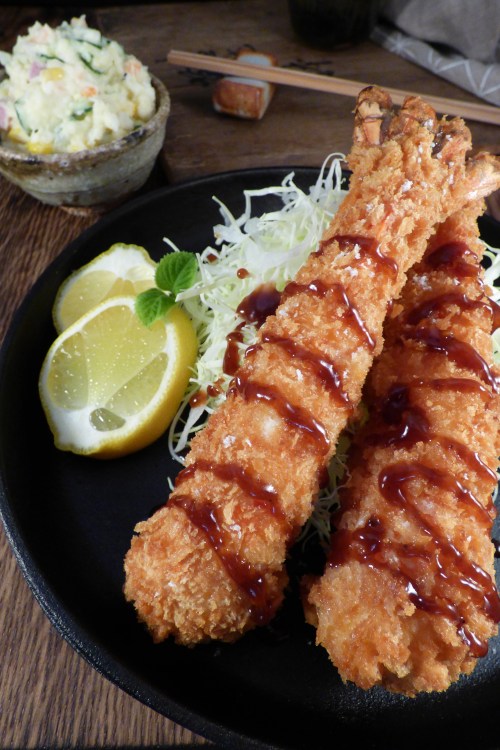
Breaded, fried prawns have since become one of the most common ingredients for bentō packed lunches, crammed into ebi-sando sandwiches smeared with coleslaw or even served hotdog style in long soft bread rolls topped with creamy tartar sauce. Perhaps our favourite way to eat ebi furai though is paired with another yōshoku bentō staple, the Japanese take on potato salad.  Creamier and more tangy than your typical potato salad, this version uses mashed potatoes studded with nuggets of smoked ham, crushed hard boiled eggs, salted cucumbers, and ultra sweet, exploding kernels of corn bound together with the ubiquitous Kewpie mayonnaise and a dash of vinegar.  These two dishes make a delicious light meal when combined with some thinly shredded cabbage and a drizzle of the thick Worcestershire-style sauce that goes so well with fried breaded foods, or they work wonderfully well individually as starting points for making a packed lunch.

ebi furai
Ebi Furai- colossal breaded fried prawns, served with Japanese potato salad.

Continue reading “Ebi Furai to Poteto Sarada”

Tai-Meshi

Sea bream or Tai is without a doubt Japan’s most beloved fish.  Being a symbol of good fortune it is traditionally served during celebrations, which is alluded to in the term ‘medetai’, a phrase used to congratulate people on auspicious events.  During the Edo period tai was so prized that it was reserved almost exclusively for the tables of the wealthy and a market solely trading in this king of fish was even set up in Osaka.  Lucky bream shaped sweets are a popular favour handed out at Japanese weddings, and the hot, sweet, bean-filled pancakes called taiyaki can be bought at stalls and cafés all over the country.  Ebisu- one of the traditional seven gods of fortune, is portrayed holding a fishing rod in one hand and carrying a huge red tai in the other.  It is the symbol of wealth, prosperity and high quality; it even spoils at a slower rate to other fish thanks to the high levels of inosinic acid present in its flesh, making it an excellent choice for sashimi.

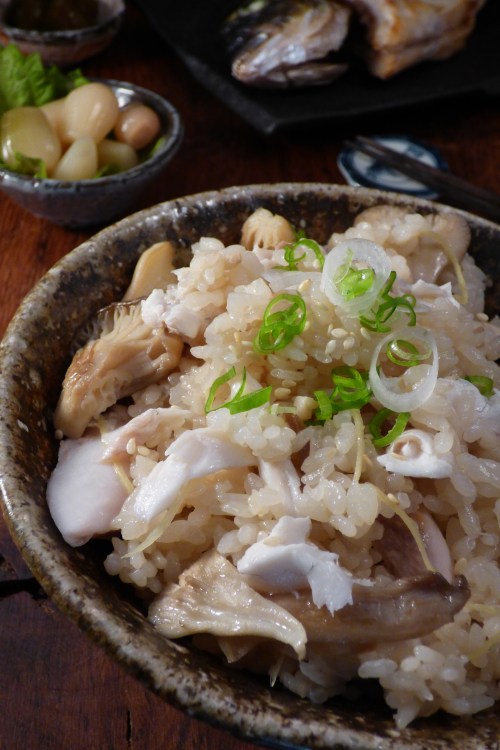
One of the best ways to enjoy this luckiest of fish is in this ‘surf & turf’ inspired takikomi gohan; the sweet, succulent pearly flesh of the tai is paired with meaty, earthy mushrooms and the spicy freshness only ginger can provide, to create a deliciously savoury rice dish that borders on the decadent.  We’ve used a selection of our favourite mushrooms in this recipe, some frilly, some dense and some tender, but feel free to use whatever is available locally to you.  If you’re fortunate enough to have some of the highly sought after, distinctly flavoured, matsutake mushrooms, they would make a phenomenal addition to your tai-meshi, combining both the country’s favourite fish and fungus into one memorable dish that spells out what the Japanese value most in food.


taimeshi
Tai Meshi- mushroom and ginger rice, cooked with the king of fish.

Continue reading “Tai-Meshi”

Agedashi Tofu

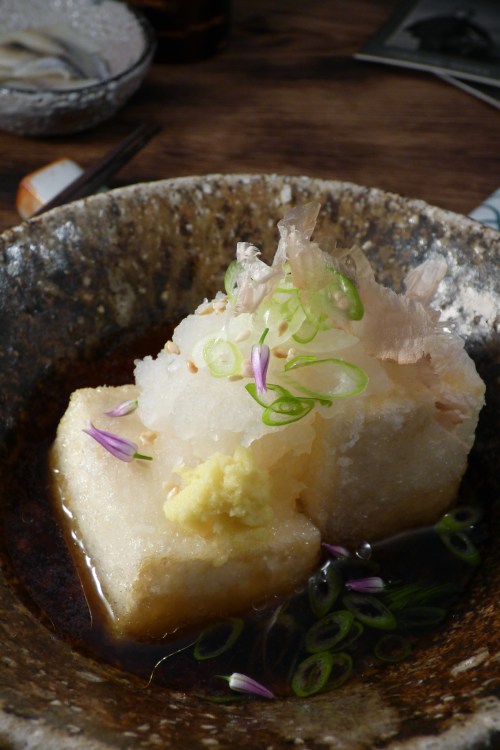
An izakaya staple and to my mind one of the most elegant ways to serve beancurd, agedashi tofu is in essence a very simple recipe- smooth, delicate kinugoshi silken tofu is dusted in potato starch, deep fried and served in a bowl of seasoned dashi broth.  A light, crisp shell gives way to a gently yielding, creamy, custard-like texture that melts in your mouth while the katakuriko gives the agedashi its distinctive soft, stretchy, jelly-like coating when immersed in the sweet, smoky soup.  The two main elements of the dish are further enhanced by a selection of toppings- normally fresh spring onions, spicy daikon oroshi, savoury katsuobushi flakes and intensely powerful grated ginger- but you can also add chopped shiso leaves, shredded sheets of nori seaweed or a citrussy chilli kick from some shichimi togarashi.

Documented as early as the 1780s in Ka Hitsujun’s Tofu Hyakuchin- an immensely popular Edo period book on tofu- the clean, harmonious flavours and ease of preparation have helped keep this unassuming, humble looking dish a favourite across all of Japan, and one that we make a beeline for whenever we see it on a restaurant menu.  The simplicity of the recipe allows each component to really shine and since they have nothing to hide behind you want to use the best quality ingredients you can find, make them all memorable and you’ll have a beautifully balanced bowl of food.


agedashi tofu
Agedashi Tofu- creamy deep fried tofu in a sweet, smoky dashi broth.


Continue reading “Agedashi Tofu”

Ninniku no Misozuke

Tsukemono- preserved vegetables- pop up nearly every time food is consumed in Japan but can easily go unnoticed; they’re served with sushi to cleanse the palate in between flavours, as a snack with beers after a long day at work, used to top a bowl of rice and garnish dishes or as a course all of their own in a traditional kaiseki meal.  These pickles help bring balance and harmony to a meal, they awaken the senses and excite the mouth preventing flavour fatigue and they add textures and colours that are otherwise missing from the foods that they accompany; samurai even used them for a quick energy boost during battle- and that alone is a good enough endorsement for me.

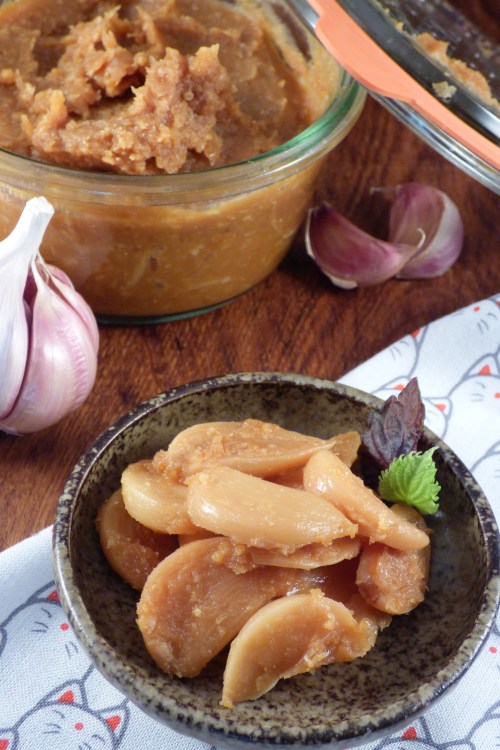
Unlike most Western pickles, those of Japan don’t rely purely on salt or vinegar to take care of the preservation of the main ingredient- tsukemono can be made with leftover lees from brewing sake, rice bran, mustard, soy sauce or as in this recipe, miso.  These misozuke pickles are perhaps the most intensely savoury of all the tsukemono, garlic cloves are buried in a finger-licking mixture of miso, sake and mirin before being left for months to slowly transform.  The miso helps temper the fiery flavour of the garlic which in turn mellows out the saltiness of the miso, resulting in two beautifully balanced condiments; a crunchy, umami-rich pickled garlic that’s a perfect accompaniment to meat or fish dishes, and a garlic enhanced nerimiso that’s just crying out to be stirred into a soup, spooned over hot steamed vegetables or smeared onto a crispy, lightly singed yaki onigiri.  Oishii!


ninniku
Ninniku Misozuke- deeply savoury, highly addictive miso-pickled garlic.

Continue reading “Ninniku no Misozuke”

Duck Egg Chawanmushi

If you ever have the pleasure of eating in one of Japan’s more formal kaiseki ryōri restaurants, you’ll probably be served a futamono- “lidded course” between your sashimi and your grilled yakimono course.  Your futamono could be a small stew of seasonal ingredients, a soup such as a suimono, or our favourite, chawanmushi- a silky smooth treasure hunt of a dish.  Named after the lidded tea-cup or chawan that it is cooked in, chawanmushi is a wonderfully light, delicate egg custard, seasoned with dashi and mirin, and steamed until just set enough to encase and obscure the morsels trapped within its depths.  Each spoonful of custard is an edible lucky dip where you might bring up a firm ginkgo nut, a tender prawn, a juicy chunk of shiitake or a sour, palate cleansing bubble of yuzu pulp.

A popular, and to my mind almost compulsory addition to chawanmushi is a spoon or two of ankake sauce added moments before serving.  This mildly fishy, faintly smoky sauce adds an extra savoury oomph to each mouthful and helps you appreciate the sweetness of the steamed eggs.


chawan mushi
Duck egg chawanmushi- a lucky dip into savoury egg custard.

Continue reading “Duck Egg Chawanmushi”

Ramson Gyoza Suimono

For me, spring only truly starts when the first foods of the season are ready to harvest or forage, and one of the plants that I most eagerly look out for each year is wild garlic or ramsons.  Ten minutes walk from our house is a small brook, its banks lined with a stretch of woodland that provides a welcome glimpse of nature among the noise and rush of the city.  Within the dappled light of these woods lies a patch of ramson plants, carpeting the edges of pathways and giving off their distinctive pungent aroma whenever they’re lightly brushed by a passing bird or walker.  The leaves of this shamefully overlooked and short-lived plant provide a powerful garlic hit along with a spring onion-like flavour that makes it perfect for mixing into dipping sauces and dumpling fillings, and if you’re lucky enough to find some plants with open flowers they offer up an edible garnish of such intense flavour you won’t believe it came from such a delicate looking thing.

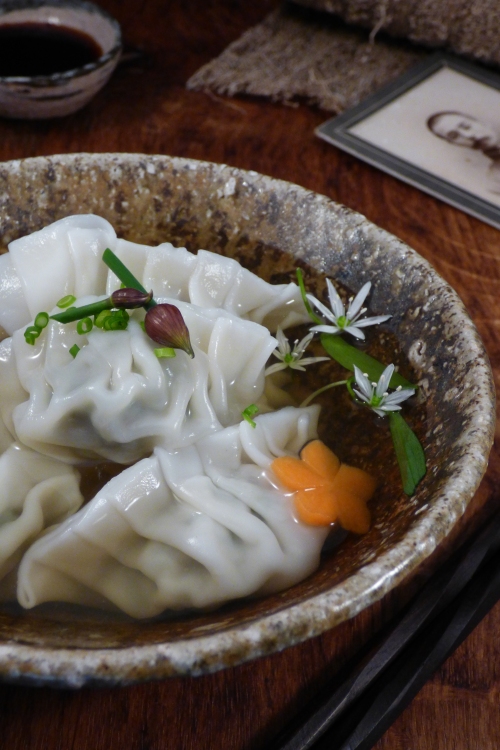
Seasonality and the use of local produce are two of the main cornerstones of Japanese cuisine so these wild ramsons are the perfect ingredient to use in the kaiseki style dish of suimono or clear soup.  A delicate, lightly seasoned broth that allows you to focus on the flavours of the individual elements that it contains, in this case a pile of carefully crimped duck and wild garlic gyoza and a scattering of flowers and leaves from both the foraged ramsons and some young chives.

gyoza suimono
Clear soup with duck gyoza and wild garlic flowers.

Continue reading “Ramson Gyoza Suimono”

Yasai no Agebitashi

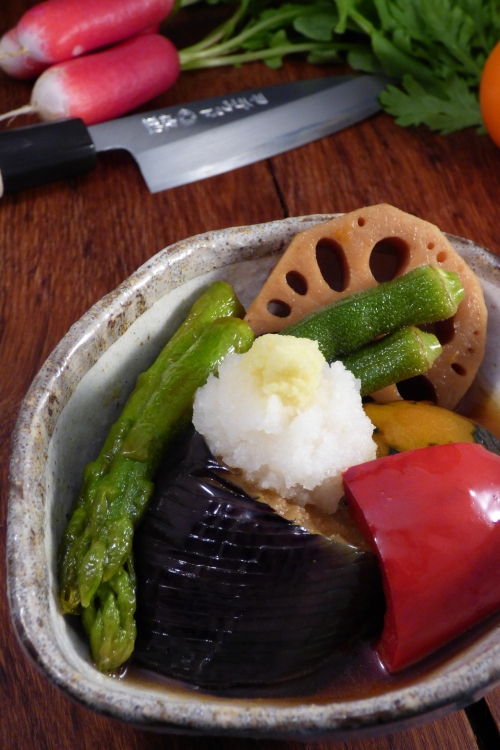
Every now and then you come across a side dish so vibrant, flavoursome and bountiful that it could be- and often is in our household- a main meal in itself.  Yasai no Agebitashi, or ‘fried and soaked vegetables’ to translate its name, is one such dish.  Nearly always made with aubergine as the main ingredient, a selection of firm vegetables are deep fried quickly without any form of coating, ‘suage’ style.  The fierce heat of the oil causes the insides of the vegetables to steam through before they get marinated in a sweetened dashi broth; the tender, cooked vegetables absorb the liquid like a sponge, carrying the flavour throughout.  This technique creates silky, creamy aubergines that melt in your mouth, while crisper vegetables like the lotus root and red peppers retain just the right amount of bite, providing a fantastic contrast of textures.  Topped off with a spicy mound of grated daikon and ginger to counter the richness of the vegetables and the sweetness of the broth, this is the perfect appetiser or side dish to go with nearly any meal, and by changing the dashi to a kombu broth you can easily make a vegan or vegetarian version.

agebitashi
Yasai no Agebitashi: Fried vegetables soaked in a sweet soy broth.

Continue reading “Yasai no Agebitashi”

Unadon to Samphire Gomaae

Hugely popular from its creation in the late Edo period, to modern times, Unadon- or Unagi Donburi to give the dish its full name- is one of the most common ways to eat freshwater eels in Japan.  An oversized lacquer bowl, a mound of perfectly cooked, pearly white rice, and a fillet of eel, glazed to a rich mahogany colour with a mixture of soy and mirin, caramelised and slightly charred.  The first time we ate unadon was early one Summer’s morning in Shibuya.  After a dawn visit to the Meiji shrine complex we needed a hearty breakfast to boost our flagging energy, knowing little Japanese at the time we stumbled across a restaurant that was open where we recognised the word for ‘eel’ and decided to give it a go.  It proved to be the ultimate reviver, the sugary, salty kabayaki glaze along with the big hit of protein and fat got us back on our feet in no time and it has gone on to become one of our favourite breakfast dishes.

Despite being traditionally eaten all over the UK, getting fresh eels nowadays is a little difficult, so over the years we’ve experimented with cooking different native fishes in the kabayaki style.  The closest match we’ve been able to find is the locally abundant garfish, long and silvery with a fine flesh and just a little fat, it even looks pretty similar to an eel and should be easy to get hold of in most fishmongers.  Whilst at our fishmongers we also saw some beautiful samphire for sale and knew that this vibrant, salty, shoreline succulent would make the perfect gomaae accompaniment to the unadon; while these are both classic breakfast dishes, they’re delicious for any meal of the day.

unadon
Unadon served with sesame dressed samphire.

Continue reading “Unadon to Samphire Gomaae”

Hanetsuki gyoza

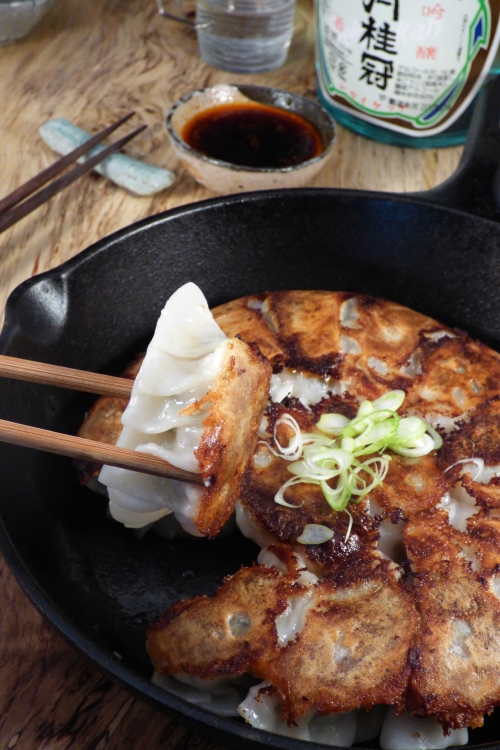
Steaming hot crescent moons, an aromatic mixture of juicy pork, cabbage and garlic chives encased within a chewy skin, fried on one side until shatteringly crisp and served with a slightly sour dipping sauce.  Gyoza have become an integral and hugely popular part of nearly every ramenya’s menu, finding their place as an almost essential accompaniment to the deep, nourishing bowls of noodles.  When cooked poorly they can drag down a memorable dish of ramen, but if cooked well, with consideration and care, they have the power to raise a lacklustre meal to giddy heights, providing a contrasting texture to the silky noodles and soothing broth.  High quality frozen gyoza wrappers are available in most oriental supermarkets these days, meaning that home-made dumplings are more achievable than ever before, and while the filling and pleating of the little parcels can take a while to get used to, there’s a huge amount of satisfaction to be had when you gaze upon a tray of your handiwork.

Hanetsuki gyoza are a recent variation of these classic pot-stickers, where a number of plump, steamed dumplings are fused together in a hot pan with a thin mixture of flour and water.  This batter crisps and darkens to form lacey skirts or wings (hane) around the edges of each dumpling, creating more surface area for crunchy, brittle bubbles to form and when placed in the middle of the table, it makes a fantastic tear-and-share style dish, perfect for relaxed dining with friends.


hanetsuki gyoza
Hanetsuki- winged gyoza

Continue reading “Hanetsuki gyoza”