Anmitsu

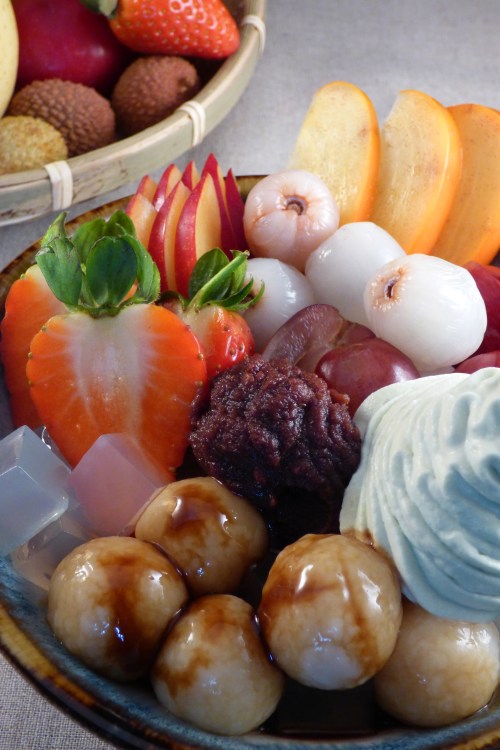
Partially down to the way Japanese meals are structured, and partially because they tend to specialise in one type of dish and not stray far from that, many Japanese restaurants don’t tend to offer desserts.  When you do stumble across one that does serve a sweet course, a lot of the time it’ll be the perennial favourite, anmitsu.  At first glance appearing to be a fruit salad, the closer you look the more you start to notice key Japanese flavours and ingredients within it.  Sweetened red bean paste and green tea flavoured cream sit atop a mound of cubed kanten- clear water jelly made from red algae, and small round rice dumplings are anointed with a slick of kuromitsu black sugar syrup, before the whole dish is adorned with the selection of fresh or preserved fruits that first caught your attention. Shiratama dango are traditionally made from just rice flour and water, but we’ve added silken tofu to ours to make a softer, more delicate dango that dries out less and has an irresistibly bouncy, squidgy bite to it.  All of the elements combine harmoniously to create a very refreshing dish, perfect for eating after a particularly rich or spicy meal or it makes an excellent snack on a hot Summer’s day.
anmitsu
Anmitsu; beanpaste, syrup, riceballs, agar jelly and green tea cream.

Continue reading “Anmitsu”

Okinawan black sugar steamed cakes

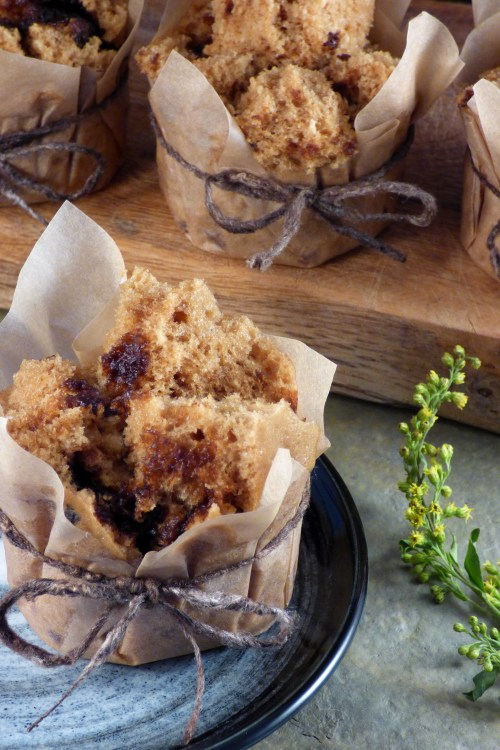
A dark, unrefined, deeply caramel flavoured ‘black’ sugar is cultivated and processed on the Southern Japanese island of Okinawa.  The almost constant sunshine, volcanic soils and nutrients provided by sea spray have created the ideal growing conditions for producing this mineral rich sweetener which has, quite naturally, found its way into a lot of both island and mainland Japanese cuisine.  Pieces of the dense, almost raisiny tasting sugar are often consumed as a sweet along with green tea, or used as a flavouring in rafute pork stew, but our favourite way to use it is in these steamed cakes that we first encountered in a Tokyo depachika.  Fresh from the steamer these light, airy cakes remind me of the geothermal, mountainous areas of Japan- their craggy, ruptured exterior, internal veins of rich gooey syrup and vents issuing jets of hot air.  They are best eaten greedily, while still scalding hot, to really enjoy the texture and contrasting flavours of the delicate dough and the random nuggets of sugar.


steamed cakes
Steamed cakes flavoured with Okinawan ‘black’ sugar.

Continue reading “Okinawan black sugar steamed cakes”

Okonomiyaki

Bearing more similarities to rösti or bubble and squeak than pizza, as it is often compared, okonomiyaki is to my mind one of the best ways to eat cabbage and a great example of wartime necessity creating fantastic food.  During World War II, when rice supplies were at their lowest, inexpensive wheat flour was made into a thick batter, mixed with shredded cabbage and fried as filling, savoury pancakes.  Seventy years and numerous adaptations to the original recipe later and we now have one of Japan’s most popular dishes.  Nagaimo (a type of yam from a climbing vine) is often added to the batter nowadays to enhance the consistency with its unique sticky, foamy texture.  If you can’t find nagaimo in an oriental supermarket, beating some air into the two egg whites in the recipe will help to make the okonomiyaki fluffier and closer to the real thing.

The word okonomi translates as ‘what you like’ and yaki to ‘grilled’, and as the name suggests, you can add whatever toppings you like to this dish, our favourite combination being prawns and smoked bacon.  Whatever extra ingredients you choose, just make sure to top the pancake with aonori seaweed, dried bonito flakes, Japanese mayonnaise and the punchy, fruity brown sauce known as sōsu or okonomi sauce.


okonomiyaki
Kansai style Okonomiyaki

Continue reading “Okonomiyaki”

Murasaki Imo Tarts

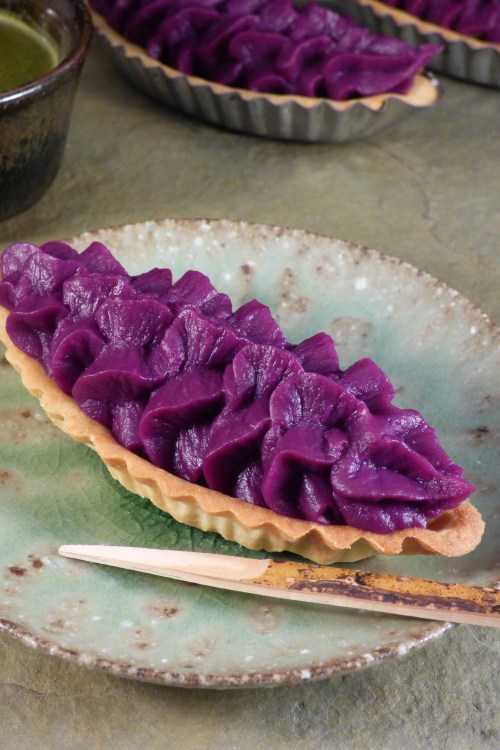
Every now and then you come across an ingredient that you fall head-over-heels in love with, you cook everything imaginable with it and spend hours dreaming about how to get just one more recipe out of it.  For us, that ingredient is murasaki imo, or purple sweet potato.  Similar to the pale yellow or white fleshed sweet potatoes usually favoured by the Japanese, these purple potatoes have more dry matter than the orange fleshed American variety, and a much stronger taste.  A rich, fruity, almost winey flavour, an otherworldly, deep purple colour and the added bonus that they are packed full of vitamins make them a winner in our books for savoury dishes or desserts.

Japanese meals do not traditionally have a dessert course or end with something sweet.  The time for a sweet treat is at around either 10am or 3pm, as a contrasting flavour to go with the slightly bitter green tea that workers would normally stop for.  The confections served with tea vary from moulded higashi of sugar and rice flour to fresh fruits, and from jelly-like warabi mochi made from bracken starch to small French style cakes and tarts such as this Okinawan creation.  Murasaki imo is mashed, enriched with cream, butter and sugar then piped into crisp pastry cases, just enough for three or four bites before you get back to work.

murasaki-imo tart
Sweet potato pie, Okinawa style.

Continue reading “Murasaki Imo Tarts”

Renkon Chips with homemade Shichimi Togarashi

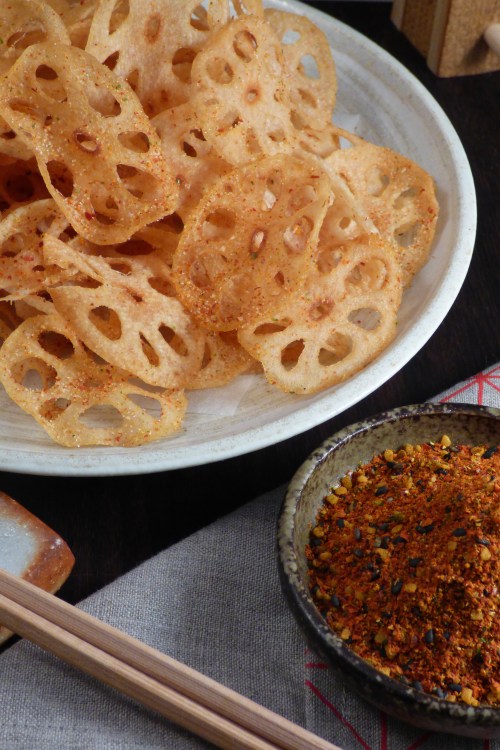
Dating back as far as the 1600s, shichimi togarashi is a vibrant condiment that started life as a medicine mixed by herb & spice dealers in Edo- old Tokyo- before becoming popular as a seasoning for food.  The combination of citrus, chilli and seaweed flavours make it a perfect accompaniment to slow cooked soups and fatty meats, or whenever you want to add a bit of freshness and heat to a dish.  There are many popular blends of shichimi togarashi (the name means ‘seven flavour chilli’ by the way) available on the market, but when made fresh at home it has a much brighter flavour, and of course you have the ability to tweak the recipe to your liking.

By mixing our shichimi with salt and sugar, we’ve made a delicious seasoning for an izakaya favourite- renkon chips.  With a flavour slightly sweeter than potato and a long history of being used medicinally, lotus root makes a perfect partner to the seasoning and when thinly sliced and fried as chips it makes a fantastic bar snack.

renkon chippu
Renkon chips dusted with our blend of spices, salt and sugar.

Continue reading “Renkon Chips with homemade Shichimi Togarashi”

Gyuu Tataki to Yuzukosho Modoki

Raw fish in the form of sashimi is quite often the first thing a foreigner thinks of when you mention Japanese food, but perhaps less well known is gyuu tataki, a lightly cooked piece of beef fillet that while seared on the outside remains completely raw in the centre.  We’ve paired our beef with a couple of citrussy accompaniments, firstly a home-made take on yuzukosho (we’ve used the word ‘modoki’ in the title, which means pseudo or mock) and then with a ponzu style dipping sauce made of lime juice and soy sauce.

Yuzukosho is a fantastically strong, fiery condiment used mainly with hotpot dishes and sashimi, made from fermented citrus fruit and green chilli peppers.  Yuzu- the traditional fruit used in the seasoning- is unfortunately for us very hard to come by in England, so we have combined a number of different fruits to craft a flavour reminiscent of the complex aroma the original has.  This zesty paste brings together sour, bitter, floral, salty and spicy flavours which all balance the beef’s natural earthiness and when used as an appetiser at the start of a meal really awakens your palate.

tataki
Seared beef with citrus and chilli yuzukosho.

Continue reading “Gyuu Tataki to Yuzukosho Modoki”

Matcha-Caramel Cookie Cream Puffs

The first time we visited Japan, we were suprised to see quite how universally loved French style patisserie was.  Many menus had cream filled choux buns nestled alongside traditional sweets like wagashi and daifuku mochi, and there were countless little bakeries on street corners selling Mont Blanc cakes and millefeuille.   This love of cakes, especially cream puffs, led to the founding of one of Japan’s most popular fast food chains- Beard Papa’s- which has become such a well known brand that their beloved mascot even appeared in the 2012 Disney film, Wreck-it Ralph.

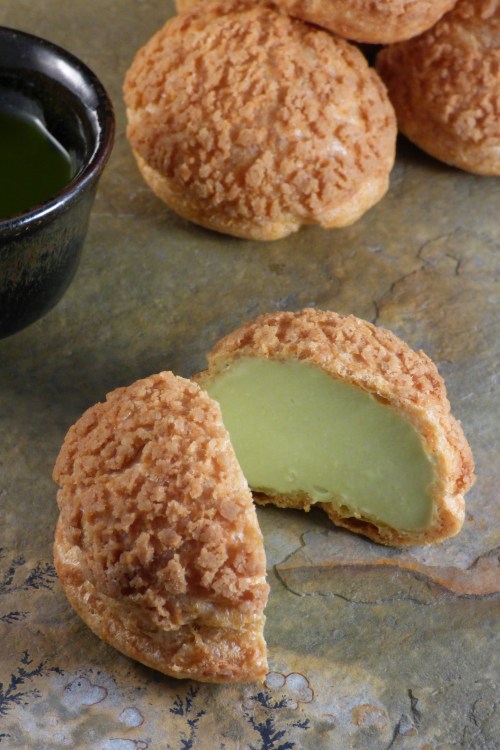
In our homage to this, we’ve combined a classic French craquelin choux bun with a filling made from milk-caramel and matcha green tea to create an understated, elegant tea-time treat with real Japanese flavour.  These little morsels have a crisp, crumbly shell on top reminiscent of another of the country’s favourite baked goods, melon-pan, and go perfectly with a cup of tea when you need to recharge towards the end of the day.

cream puffs
Sweet, crunchy choux buns with a smooth and creamy matcha filling


Continue reading “Matcha-Caramel Cookie Cream Puffs”

Shiozake Yaki-Onigiri

An onigiri (rice ball) is to Japan as a sandwich is to England.  It’s a filling and cost effective replacement for a real meal that you can grab from any convenience store before jumping on a train or rushing back to the office to work through your lunch break.  Often, you can improve a sandwich by grilling it, creating a crispy golden exterior that gives way to a warm soft inside.  By that same logic, grilling an onigiri gives you a delicious treat that enlivens a go-to snack and raises it to a new place. We have filled ours with an onigiri classic; shiozake, a kind of semi-cured salmon which we’ve infused with sake and sweet mirin.  These yaki-onigiri have an outer crust that tastes almost like a toasted senbei cracker glazed with sweet soy sauce, while the inside resembles a warm gravlax or smoked salmon.

yakioni
Crispy grilled onigiri, stuffed with sake infused salmon.

Continue reading “Shiozake Yaki-Onigiri”

Jagaimo Oyaki

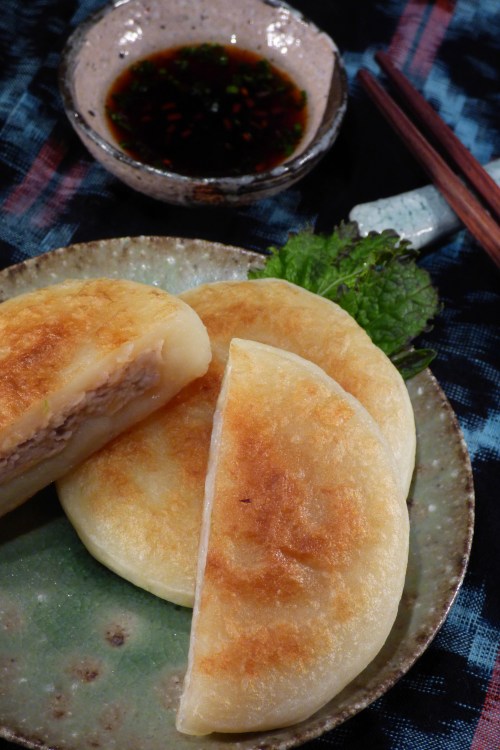
Oyaki are delicious little fried filled parcels, usually with a buckwheat outer shell but can be made with pretty much anything that you can form into a dough, in this case leftover mashed potato.  The filling of these oyaki is an attempt to recreate the flavours of some that we bought from a street vendor outside the Hachiman shrine in Tomioka, Tokyo- a mixture of chopped pork and prawns, similar to what you’d find inside everyone’s favourite little dumplings, gyoza.

oyaki
Jagaimo Oyaki, fried parcels of joy.

Continue reading “Jagaimo Oyaki”