Kitsune Udon

We’ve been visiting noodle restaurants for almost as long as I can remember, and have passed over a basic sounding dish on the menu many times, dismissing its simplicity in favour of the more showy, topping laden bowls.  That is at least, until a couple of years ago whilst on a lunchtime visit to a market in Kyoto, we stopped by an udonya and tried the curiously named Kitsune Udon (fox noodles) for the first time and became instant converts.  A deep bowl of perfectly cooked, thick white udon, a slightly smokey, fish based soup, and a single piece of inari-age, simmered in a sweet soy and mirin liquor until the sponge-like tofu had absorbed a massive amount of flavour.  The clean soup paired with the rich, sweetness of the tofu was an incredibly soothing combination, and one that we’ve tried to eat as often as possible since our first taste.

Many people like to add narutomaki or kamoboko to their kitsune udon -and feel free to if you want, they’re both delicious additions- but we like to keep ours uncomplicated and the way we’ve always eaten it in Japan; just the noodles, the broth, a sweet slab of toothsome inari-age and a mound of spicy, fresh spring onions.  Perfect comfort food if you’re feeling a little under the weather and great fuel for foxes on a night-time prowl.

kitsune udon
Kitsune Udon- a soothing bowl of soup topped with seasoned abura-age, the favoured food of Japanese foxes.

Continue reading “Kitsune Udon”

Kamo Nanban Soba

The wonderfully rich, slightly gamey flesh of duck and the intense earthy, woodland flavour of mushrooms are one of the most natural and instinctive combinations in cookery.  It’s a pairing you might expect to see in Italy, Russia, Sweden or France; countries that used to be blanketed with dense forests and vast lakes, countries that have a deep folklore and long history of woodsmen, making their living from what nature provides.  All of these features are equally true of Japan, and unsurprisingly the Japanese made the same discovery early on, that marrying wild duck with foraged mushrooms was a union worth remembering.  The other classic Japanese accompaniment to duck are the buckwheat noodles known as soba.  Deliciously nutty in flavour and with a slightly toothsome texture, soba are one of the oldest known types of noodle in Japanese cuisine, dating back over 2500 years to the Jōmon period and even further in Chinese cookery where they probably originated.

We’ve combined all three of these ingredients in a classic Kamo Nanban Soba- a dish that smells and tastes like a stroll through an ancient forest; with rich, life giving soil and a wealth of fungus sprouting from the crumbling trunks of fallen trees.  It wouldn’t be a kamo nanban without some sweet, charred spring onions, and to lift the earthy flavours slightly we’ve added a tiny hint of orange zest, perfect for cutting through the richness of the duck fat.

kamo soba
Kamo Nanban Soba- A woodland stroll in a bowl.

Continue reading “Kamo Nanban Soba”

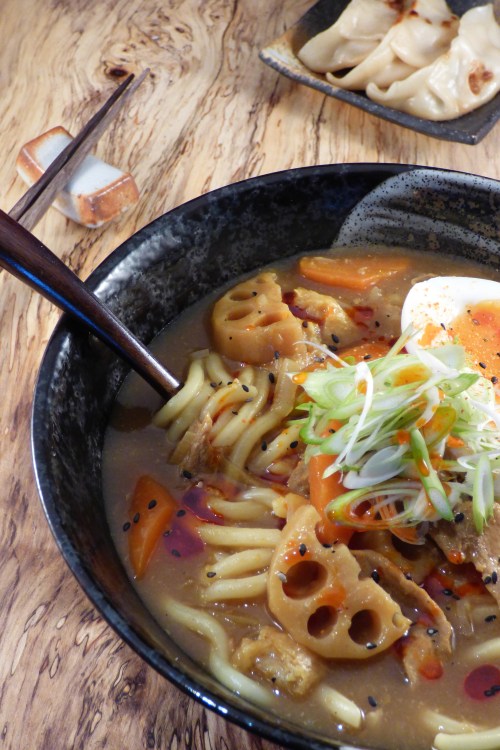
Karē Udon

Finding inventive ways to make use of leftovers is a problem home cooks have no matter what country they’re in, so it should come as no surprise that Japanese cooks have been putting their excess portions of curry to good use for decades, stretching them out as fillings for doughnut like breads or turning them into soups.  Karē udon is a perfect example of this respectful attitude towards “waste” food, by adding leftover pork and vegetable curry to a fishy broth and some thick, chewy noodles you can create a wholesome, warming dish perfect for getting you through these freezing Winter nights.  It might not seem like the obvious choice to use a dashi based stock for this soup, but it creates a wonderfully rounded savoury flavour rather than anything particularly fishy tasting.  This combination of dashi, sake, mirin and soy sauce as a soup stock is known as mentsuyu, and is the classic starting point for many udon and soba dishes, even being used as a refreshing dipping sauce for cold noodles.

Karē udon, perhaps one of the country’s most popular comfort foods, has the same effect on the Japanese as a plate of macaroni and cheese might on an American or a bowl of hotpot on a Lancastrian.  It has the incredible power of evoking nostalgic memories of childhood, relieving emotional stress and giving a feeling of the security of being at home, somewhere you belong.  Not bad for a bowl of soup.

curry udon
Kare udon, why choose between curry and noodle soup when you can have both?

Continue reading “Karē Udon”

Gojiru Setsubun soup

Oni wa soto! Fuku wa uchi!

According to the lunar calendar today is Setsubun- the day before the start of spring, a sort of New Year’s Eve. It is believed that at the start of a new year, the mortal world and the spirit world move closer together than normal, so spirits can wander more easily into our world. Because of this, people all over Japan take part in purification rituals to ward off bad fortune for the year to come, traditionally using fukumame (‘lucky beans’, roast soybeans) to chase demons and evil spirits from their homes and invite good luck in. These beans are either thrown out of the door or at a representation of an evil spirit- normally a member of the family, wearing an oni mask- whilst chanting “Oni wa soto! Fuku wa uchi!” or “Demons out! Luck in!” It is also traditional to eat a roasted soybean for each year of your life, plus an extra one for the coming year, to bring good health.

Soybeans are a ubiquitous part of Japanese cuisine, used in the production of tofu, soy sauce and miso amongst other foodstuffs. To commemorate Setsubun we’ve combined puréed soybeans and miso paste to make gojiru, a thick warming soup, full of vegetables, that’s sure to bring you health for the whole of the year.

Gojiru
Gojiru- Oni wa soto! Fuku wa uchi!

Continue reading “Gojiru Setsubun soup”

Shoyu Ramen

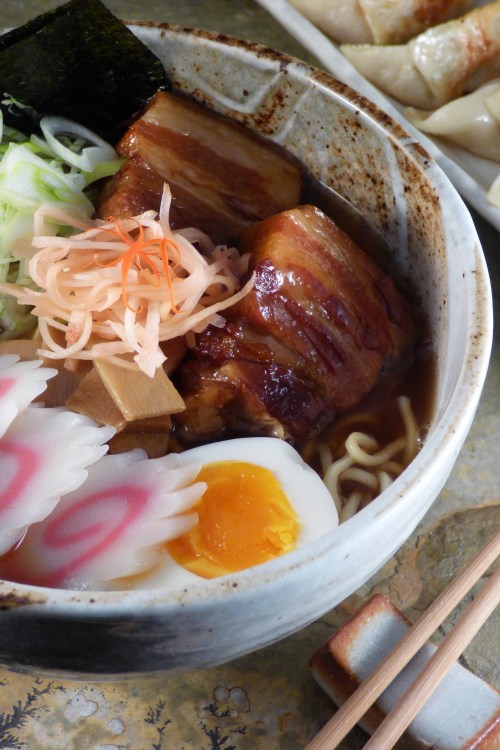
Few meals can match the allure of a rich, hot bowl of porky ramen.  Soothing, deeply flavoured broth, a tangled mass of slightly chewy noodles, slowly braised meat and a creamy boiled egg.  This now staple dish is only a relatively recent addition to the patchwork cuisine of Japan- the first ramen restaurant opened in Yokohama in 1910 and sold a simpler version of the dish called shina soba, or Chinese noodles.  Countless variations on the theme of broth, noodles and toppings have sprung up since then, many of them being extremely regional specialities that you’d have problems finding outside of a particular town.  Our favourite combination of ramen flavours is one that we’ve eaten many times in Tokyo; a soy flavoured pork broth, straight noodles, a pile of shredded spring onions, a few slices of fishcake, a boiled egg, stewed bamboo shoots and most importantly, fatty, yielding, slow cooked pork belly.  We’ve borrowed an idea from David Chang’s recipe for ramen by adding some bacon to the broth for an irresistible smoky note and to boost the pork flavour.

Making ramen at home isn’t a particularly difficult affair, but it does take a long time.  Cooking the broth and the pork are the most time consuming parts, and they’re also the components that you’ll most likely want to get just right- the broth is really the star of the show and worth every minute you can put into it, no amount of flashy toppings can make up for a bowl of ramen with under-flavoured soup.  Both the pork and broth can be made in advance and stored in the refrigerator for three to five days for convenience, once you have those ready you can put together all manner of ramen dishes in very little time.

ramen
Ramen- noodle soup Tokyo style.

Continue reading “Shoyu Ramen”

Hojichazuke

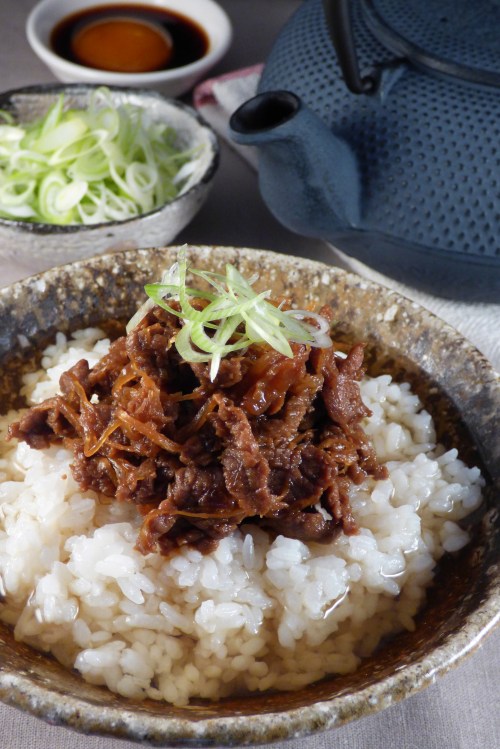
Ochazuke is a firm favourite when we want a simple warming meal, green tea poured over a bowl of rice topped with salmon.  However, tonight we wanted something darker, something sweeter and most importantly, something to use the beautiful piece of organic beef we got from our butcher.  This is what we came up with; a sweet, sticky, gingery beef tsukudani, rich and powerful with plenty of soy and sake in it.  The depth of flavour in the beef would have overpowered the green tea normally used in ochazuke, so we decided to use dashi-infused hojicha instead, and topped the whole dish off with a lightly cured egg yolk to add extra creaminess and provide a more substantial sauce for the beef and rice.  Any leftover tsukudani can be chopped up finely and used as a filling for some beef onigiri, or used as a punchy addition to a bento.

hojichazuke
Hojichazuke- sweet, salty beef over rice topped with hot tea.

Continue reading “Hojichazuke”

Oden

Oden is difficult to avoid in Japan during the colder months, sold from food carts and convenience stores; you often detect the warm, nourishing aroma on the breeze before you notice the huge vat of slowly steaming dashi in front of you, with its bobbing islands of fishcakes and vegetables.  A cheap way of getting protein into you, oden carts are a popular pit stop for salarymen before making their way back home, spicing up the myriad selection of nerimono fish pastes with a dab of sinus-clearingly hot karashi mustard.  You are free to pick your favourite items from the assortment on offer, scooping them into a bowl before having a helping of the sweet, fishy broth ladled over the top.

Oden is a great family style meal to place in the middle of the table and let everyone tuck in.  It always feels like a special dish, bountiful and overflowing with good things, and while it isn’t traditionally a celebration dish, we like to view it as such.  The selection of ingredients in your oden can be changed quite readily depending on what’s available, just make sure you have a wide range of textures, flavours and shapes.

oden
Warming oden fishcake stew

Continue reading “Oden”

Keihan chicken soup

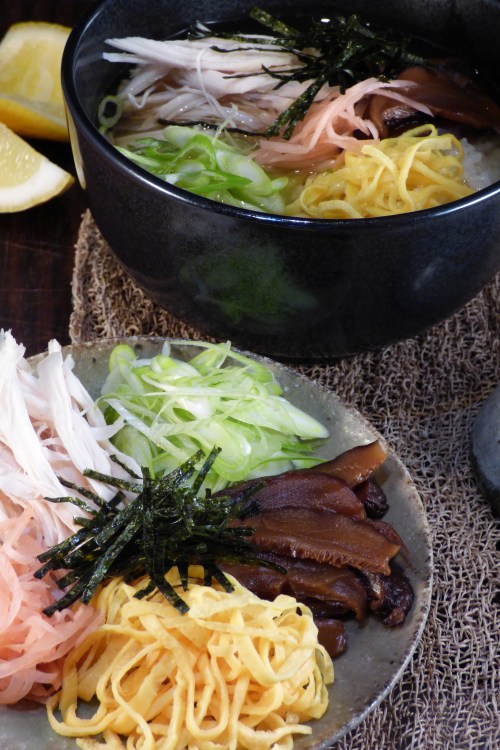
Just like ochazuke, upon which this soup is probably based, keihan is made up of a bowl of rice, topped with all manner of tasty things and then doused in a delicious, warming broth.  A dish as simple as this relies on the quality of its ingredients to shine through, so a well flavoured, properly seasoned, rich chicken stock is imperative.  The first time we tasted keihan was in a yakitoriya in the sake producing district of Fushimi, where they took a holistic approach to their chicken cooking, using every last scrap of chicken on the grill, and then the bones and any other remnants to make this wonderful soup.  The stock had a hint of sake in it, which may not be completely authentic, but we’ve decided to keep it in our recreation of the dish.

This is a great recipe for using up leftover scraps of meat from your Christmas bird, and the roast carcass makes for a fantastic stock too.

keihan
Keihan; rice topped with chicken soup, shredded omelette and mushrooms.

Continue reading “Keihan chicken soup”

Kenchinjiru

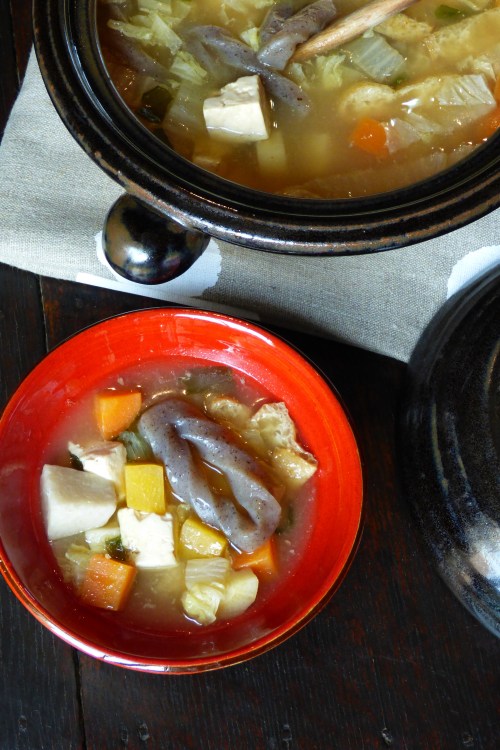
With its roots in shojin-ryori Buddhist cuisine, this hearty miso enriched soup is a great way to get more vegetables into your diet and warm you up on these windy, rainy days.  It reminds me of tonjiru, but without the porky overtones, and is the type of soup that makes you feel almost invincible after eating a bowlful.  We make ours with homemade chicken stock, which adds a medicinal chicken soup vibe to help ward off those winter bugs. You can of course keep it traditional by using vegetable stock which makes it vegan friendly and just as delicious.

kenchinjiru
Traditional winter warmer, kenchinjiru.

Continue reading “Kenchinjiru”