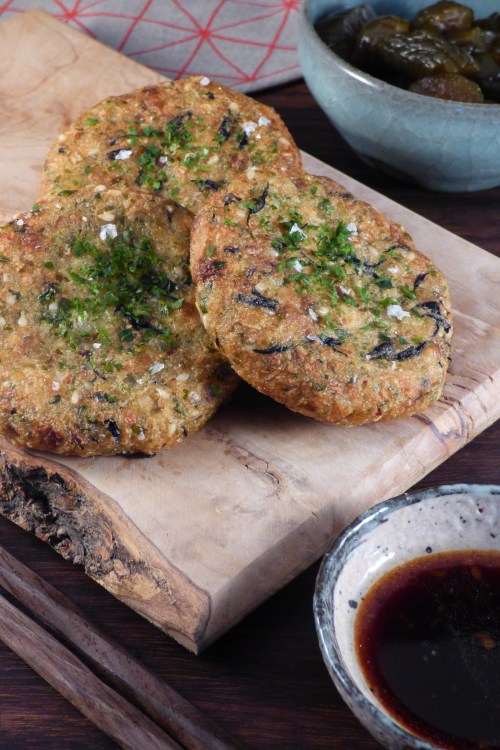
During our last visit to Arashiyama, we visited a little restaurant specialising in Kyo-ryori, or Kyoto style cuisine, where among other regional fare we ate some little fried tofu fritters. Similar to ganmodoki, these springy morsels were made of crushed tofu mixed with assorted vegetables and hijiki seaweed before being deep fried. We were immediately taken by the combination of flavours which managed to evoke being by the seashore despite being surrounded by mountains and forest. To enhance this coastal feel we’ve added a second seaweed to our version, both in the fritters and as a flavour boosting topping.
Tofu fritters with burdock, bamboo shoots and seaweed.
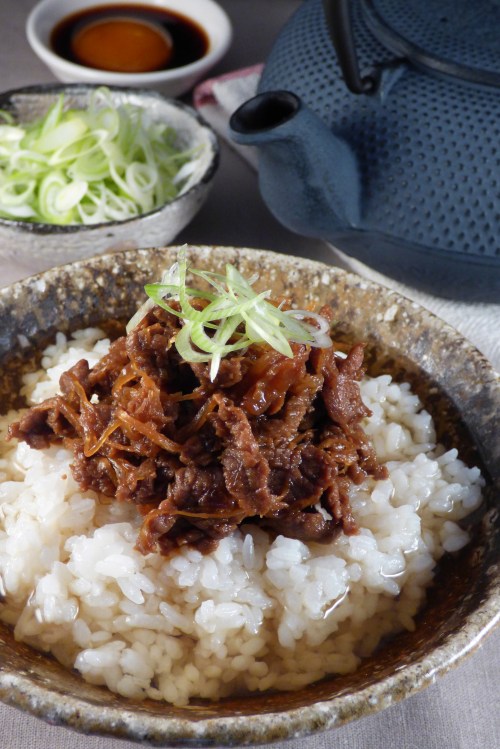
Ochazuke is a firm favourite when we want a simple warming meal, green tea poured over a bowl of rice topped with salmon. However, tonight we wanted something darker, something sweeter and most importantly, something to use the beautiful piece of organic beef we got from our butcher. This is what we came up with; a sweet, sticky, gingery beef tsukudani, rich and powerful with plenty of soy and sake in it. The depth of flavour in the beef would have overpowered the green tea normally used in ochazuke, so we decided to use dashi-infused hojicha instead, and topped the whole dish off with a lightly cured egg yolk to add extra creaminess and provide a more substantial sauce for the beef and rice. Any leftover tsukudani can be chopped up finely and used as a filling for some beef onigiri, or used as a punchy addition to a bento.
Hojichazuke- sweet, salty beef over rice topped with hot tea.
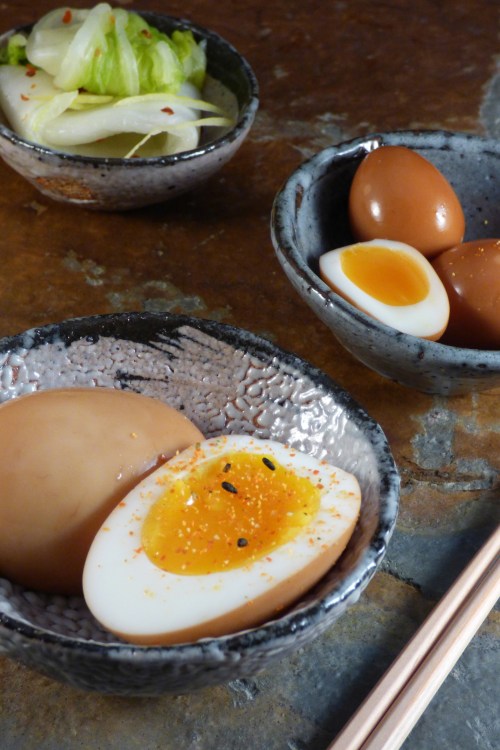
Boiled eggs feature in many dishes like oden and ramen, and they make a great snack or addition to a bento. Most often they are cooked until the yolks are solid, however we like ours to be barely set, especially with tiny quail eggs which you pop in your mouth whole and burst to release the rich gooey centre. By lightly pickling them in a sweet and sour soy liquor you can add a level of complexity to their whites and stain them an attractive glossy brown colour too. Shoyu tamago are a great replacement for use in any recipe which calls for boiled eggs, and their natural saltiness makes them a perfect accompaniment to drinks.
Hakusai no shiozuke is on the other end of the flavour spectrum, rather than being rich and gooey like the shoyu tamago it is crisp, spicy and fresh with lemon zest. Chinese cabbage is pressed and pickled for a short amount of time to provide a punchy accompaniment to meals and a perfect counterpoint to rich or fatty meats. This traditional recipe is a delicious introduction to salted pickles for those who’re a little wary of the tsukemono plate that comes with most Japanese meals.
The first time we visited Japan, we were suprised to see quite how universally loved French style patisserie was. Many menus had cream filled choux buns nestled alongside traditional sweets like wagashi and daifuku mochi, and there were countless little bakeries on street corners selling Mont Blanc cakes and millefeuille. This love of cakes, especially cream puffs, led to the founding of one of Japan’s most popular fast food chains- Beard Papa’s- which has become such a well known brand that their beloved mascot even appeared in the 2012 Disney film, Wreck-it Ralph.
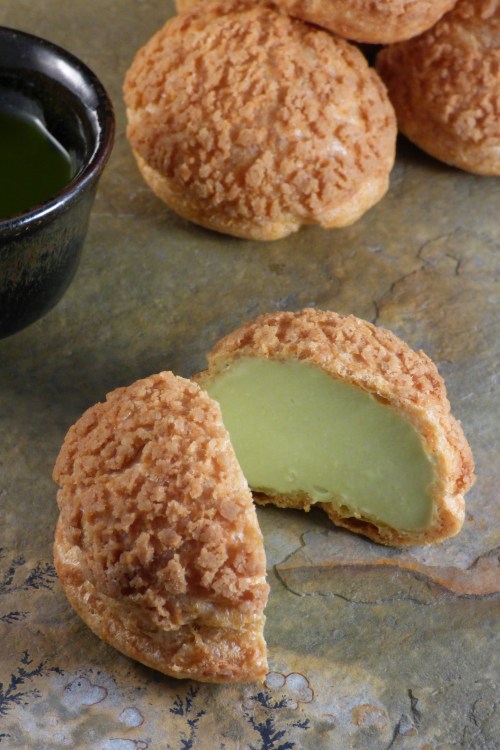
In our homage to this, we’ve combined a classic French craquelin choux bun with a filling made from milk-caramel and matcha green tea to create an understated, elegant tea-time treat with real Japanese flavour. These little morsels have a crisp, crumbly shell on top reminiscent of another of the country’s favourite baked goods, melon-pan, and go perfectly with a cup of tea when you need to recharge towards the end of the day.
Sweet, crunchy choux buns with a smooth and creamy matcha filling
Oden is difficult to avoid in Japan during the colder months, sold from food carts and convenience stores; you often detect the warm, nourishing aroma on the breeze before you notice the huge vat of slowly steaming dashi in front of you, with its bobbing islands of fishcakes and vegetables. A cheap way of getting protein into you, oden carts are a popular pit stop for salarymen before making their way back home, spicing up the myriad selection of nerimono fish pastes with a dab of sinus-clearingly hot karashi mustard. You are free to pick your favourite items from the assortment on offer, scooping them into a bowl before having a helping of the sweet, fishy broth ladled over the top.
Oden is a great family style meal to place in the middle of the table and let everyone tuck in. It always feels like a special dish, bountiful and overflowing with good things, and while it isn’t traditionally a celebration dish, we like to view it as such. The selection of ingredients in your oden can be changed quite readily depending on what’s available, just make sure you have a wide range of textures, flavours and shapes.
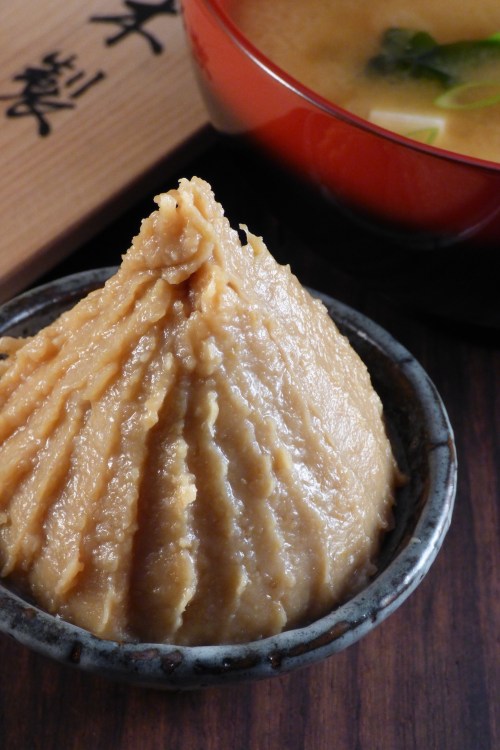
Miso is one of the cornerstones of Japanese cuisine, a protein rich paste of fermented soy beans used in making pickles, sauces, spreads and in its most well known guise as soup. Here in the middle of the UK it is pretty difficult to get hold of good miso, and when you find it you can end up paying luxury prices for a basic ingredient, so, having some home-brewing experience we decided to try making our own. A fungus called koji is grown on grains such as rice or barley before being introduced to cooked beans and salt. The salt kills off any bacteria present to make an environment conducive to fermenting, but since the koji enzymes can still function in a salty environment, they continue to do their job breaking down the carbohydrates and proteins creating the paste we know and love.
The process of making your own miso isn’t a short one, taking around two months to get a usable product, but we feel that following the journey from beans to miso is helpful in understanding Japanese food. Rice grains inoculated with koji can be bought online from a number of suppliers, otherwise all the ingredients are extremely easy to get and the hardest part of the procedure is the waiting and resisting using your paste before it’s ready. Incidentally, you also end up with a small amount of home-brewed tamari every now and then as it leaches out of the miso. We wouldn’t have been able to work out how to make miso without the help of the brilliant, but out of print, Book of Miso by William Shurtleff & Akiko Aoyagi; we highly recommend hunting down a copy if you want to experiment some more with fermenting your own miso.
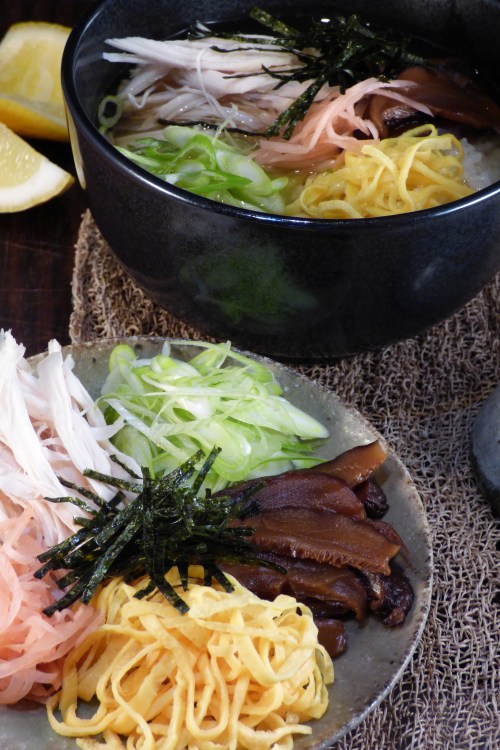
Just like ochazuke, upon which this soup is probably based, keihan is made up of a bowl of rice, topped with all manner of tasty things and then doused in a delicious, warming broth. A dish as simple as this relies on the quality of its ingredients to shine through, so a well flavoured, properly seasoned, rich chicken stock is imperative. The first time we tasted keihan was in a yakitoriya in the sake producing district of Fushimi, where they took a holistic approach to their chicken cooking, using every last scrap of chicken on the grill, and then the bones and any other remnants to make this wonderful soup. The stock had a hint of sake in it, which may not be completely authentic, but we’ve decided to keep it in our recreation of the dish.
This is a great recipe for using up leftover scraps of meat from your Christmas bird, and the roast carcass makes for a fantastic stock too.
Keihan; rice topped with chicken soup, shredded omelette and mushrooms.
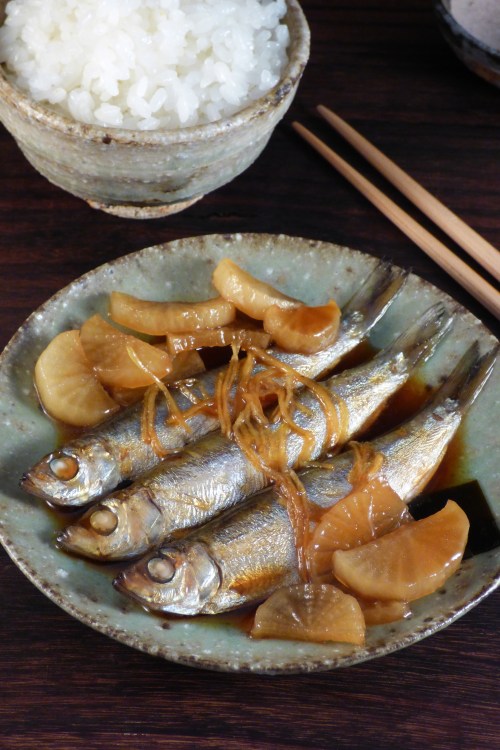
Being an island nation, Japan has always consumed a huge quantity of seafood, and up until recently this has also been true of the British Isles, a tradition that we’re sadly losing. Whilst shopping in our local fish market we came across some beautifully fresh sprats, a very typical fish in classic British cuisine and knew we could use them to make something very Japanese. Sprats, as with most small fish, have fallen out of favour in recent years as people tend to prefer larger fish with fewer bones, however they’re packed full of omega oils and B-vitamins and their flavour is well worth the little extra effort. As sprats are from the same family, these little oily fish are a perfect substitute for the sardines that would normally be used in this old fashioned dish of daikon, ginger, fish and a sweet sticky sauce.
An old Japanese trick to cook oily fish with sake to lessen the strong odours is used in this recipe, and the spicy shards of ginger cut through the richness. If you can’t get hold of sprats then use sardines and allow 2-3 fish per person for a main course.
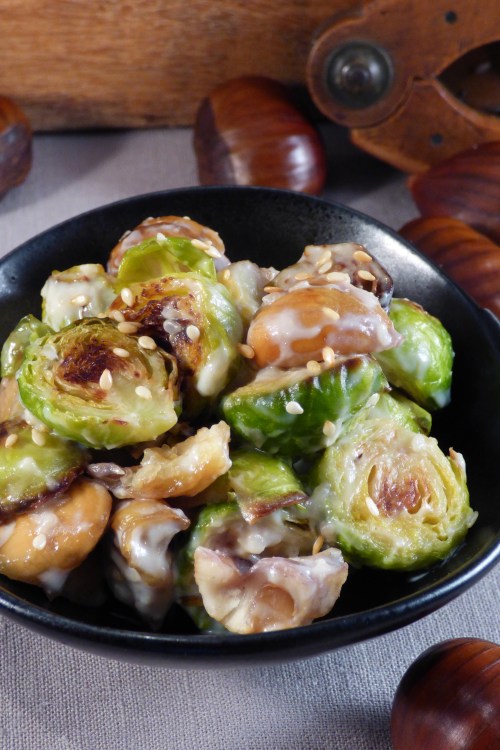
With Christmas being a week away today, the time is just right for cooking up something using some festive ingredients, namely the much maligned Brussels sprout and that street vendor classic, roast chestnuts. Sprouts aren’t that common in Japanese cuisine, but being from the cabbage family they fit into the flavour palate beautifully, and when paired with a classic shiraae dressing and the rich flavour of chestnuts they make a fantastic aemono dish.
Aemono translates roughly as ‘harmonised food’, and refers to dressed vegetable dishes, rather like cooked salads, eaten as accompaniments to main meals. The different dressings used in aemono range from mustard or vinegar to miso and sesame paste; we’re pairing our vegetables with a shiraae dressing based on tofu and white miso, to give a smooth, cool, creamy side.
Shiraae sprouts with chestnuts, a perfect accompaniment to your Christmas bird.
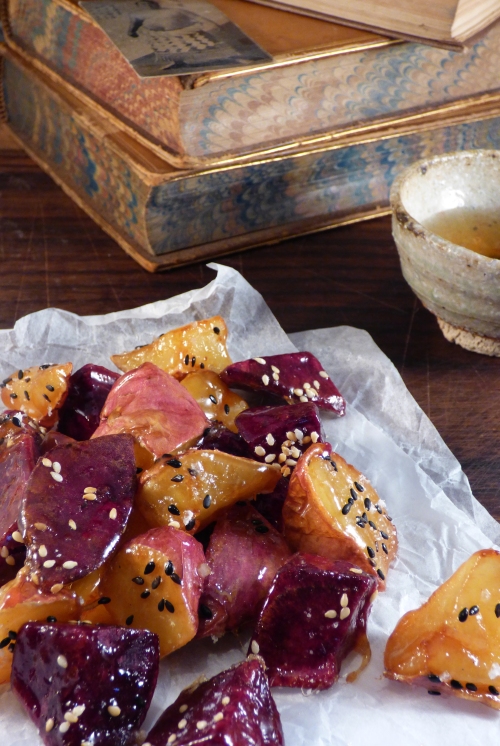
The rather cryptically named daigaku imo, or university potatoes, have been a staple snack food across the university towns of Japan since the 1920s. Deep fried sweet potatoes, tossed in caramel flavoured with soy sauce which quickly becomes brittle in the air; what’s not to love about them? The soy caramel coating brings to mind the salted caramel chocolates which have become popular in the UK over the last decade, and the glazed potatoes make me think of American Thanksgiving style candied yams. Traditionally these are made with the red-pink skinned, white fleshed sweet potatoes most common in Japan, but we ate some made with the gloriously bright purple murasaki imo in Kamakura and couldn’t resist recreating those in part here. Murasaki imo have an almost winey, lychee flavour to them which works wonderfully with the salty soy sauce.
Daigaku imo; fried sweet potatoes, glazed in soy caramel and sprinkled with gomashio.

 kakuni