Karē raisu

Although it is only a relative newcomer to the cuisine of Japan, curry and rice can be bought in any town across the country from a huge range of restaurant chains.  Karē is based upon a British Raj style curry, so has more in common with Victorian English cookery than it does true Indian cuisine, and although traditional Northern Indian style curries have recently found their way into Japan’s diet, Japanese karē remains one of the country’s most popular dishes.

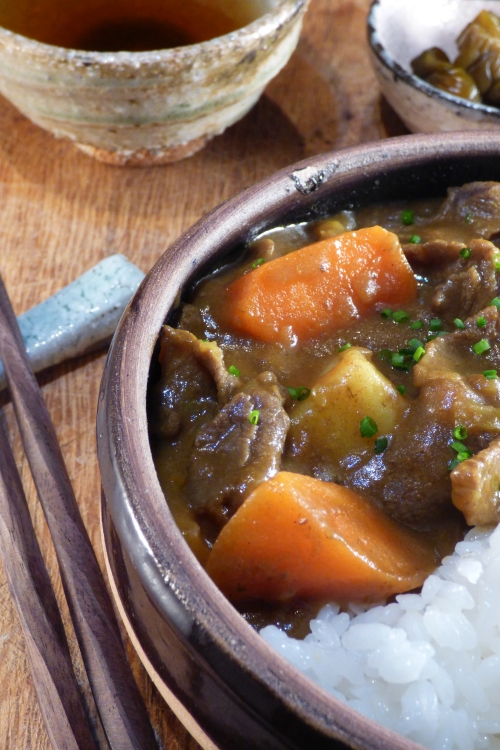
Instant karē sauces are readily available from convenience stores and supermarkets in roux form, and they’re all delicious, but we’ve chosen to make our own from scratch.  Straying slightly from the path of tradition we’ve gone for a chunkier version of karē with more vegetables and meat, but we still have the smooth, silky, sweet sauce that everyone loves.  If you leave out the vegetables and meat from our recipe you’ll have an excellent sauce for katsu-karē or a base for curry udon soup.
kare
Kare raisu; sweet, rich curry sauce with beef, potato, kabocha and carrot.


Continue reading “Karē raisu”

Shiozake Yaki-Onigiri

An onigiri (rice ball) is to Japan as a sandwich is to England.  It’s a filling and cost effective replacement for a real meal that you can grab from any convenience store before jumping on a train or rushing back to the office to work through your lunch break.  Often, you can improve a sandwich by grilling it, creating a crispy golden exterior that gives way to a warm soft inside.  By that same logic, grilling an onigiri gives you a delicious treat that enlivens a go-to snack and raises it to a new place. We have filled ours with an onigiri classic; shiozake, a kind of semi-cured salmon which we’ve infused with sake and sweet mirin.  These yaki-onigiri have an outer crust that tastes almost like a toasted senbei cracker glazed with sweet soy sauce, while the inside resembles a warm gravlax or smoked salmon.

yakioni
Crispy grilled onigiri, stuffed with sake infused salmon.

Continue reading “Shiozake Yaki-Onigiri”

Two side dishes- Tataki Kyuri & Chikuwa to negi no sarada

One of the most enjoyable things about a Japanese meal is the sheer number of plates and bowls you get, little plates of pickles, bowls of dipping sauce, salads and small vegetable sides.  In a restaurant you can think you’re ordering one basic dish and then end up with seven or eight little portions on your table per person.  In this post we’ve got recipes for two such dishes; a punchy, strong pickled cucumber, powerfully seasoned with raw garlic, and a fresh salad of chikuwa fishcake mixed with spring onions and red peppers, topped with dried bonito shavings.


chikuwa
Smashed cucumber pickled with garlic & Chikuwa salad with spring onion.

Continue reading “Two side dishes- Tataki Kyuri & Chikuwa to negi no sarada”

Inarizushi

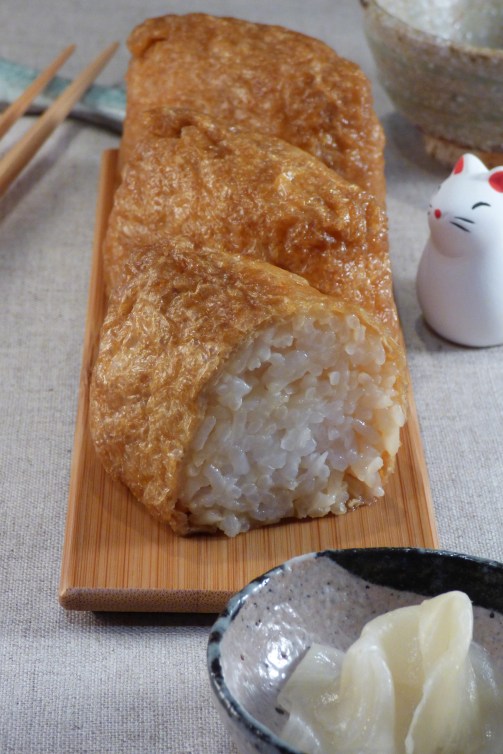
Perhaps the most popular deity in Shinto belief, Inari is the kami of fertility, prosperity, agriculture and foxes.  One of the favoured foods of Inari is abura-age or fried tofu, so these sweet pouches of fried tofu stuffed with rice have become a preferred offering at his shrines and a delicious snack for their patrons.  The largest shrine dedicated to Inari is in Fushimi, Kyoto, famous for its thousands of vermilion torii, and on the roads leading up to the shrine’s entrance you’ll find stalls selling these treats.  You can often find these in sushi restaurants, bento meals or convenience stores, but because of the foxes and their love for them they’ll always remind us of the hour and a half walk up Inari mountain and the peaceful glades found along the way.

inarizushi
Inarizushi, a favourite food of Japanese foxes, perhaps because the top corners of the pouches resemble their ears.

Continue reading “Inarizushi”

Shiro-an Taiyaki

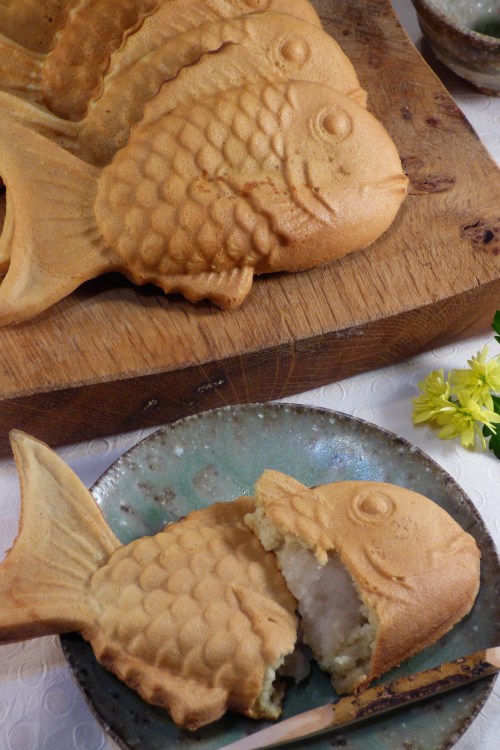
Of all of the varieties of pancake available in Japan, the fish-shaped taiyaki sold by street vendors are the ones we’re always drawn to.  A sweet, tender waffley outer shell, hiding its scalding hot filling of red bean paste or on rare occasions custard or white beans.  Historically they came about as a seasonal variation of imagawayaki during the Meiji era, changing the squat cylindrical mould into one shaped like a sea-bream, a fish that only the wealthy could afford and that was generally reserved for festivals.  The anko (red bean) filling is slightly off-putting to many westerners, so we’ve opted for the milder, smoother shiro-an (white bean) filling which has a soft marzipan texture to it and a slightly nutty taste.

To make taiyaki you’ll need a cast-iron taiyaki pan, if you don’t have one then you can use the same recipe to make shiro-an dorayaki- just fry the batter as small round pancakes and sandwich the filling between them.

taiyaki
Taiyaki, sea-bream shaped pancakes filled with sweetened white bean paste.

Continue reading “Shiro-an Taiyaki”

Cooking Japanese rice

Rice is the most important component in nearly every Japanese meal so cooking it correctly is a good skill to master if you want to regularly eat Japanese food.  When we first read about cooking rice the Japanese way, we were put off by the washing stages, thinking that they couldn’t possibly make a difference to the finished product- how wrong we were!  If you don’t wash your rice well, or even if you wash it half-heartedly, you end up with an overly starchy mass which lacks the flavour, character and definition of properly cooked rice.  In our opinion the best rice to use is Koshihikari (Megumi is an excellent brand), it has very short grains which retain a distinct bite, a beautiful pearly appearance, and a sweet flavour unrivalled by other rices.  There have been many times while eating a bowl of this rice that I have thought to myself, I could be happy eating nothing else but perfectly cooked plain white rice for three meals a day.

In Japan, nearly all rice is prepared in electric rice cookers, and while we couldn’t justify the storage space for a dedicated rice cooker, we have perfected a way to cook it in an Instant Pot electric pressure cooker that gives identical results. Don’t worry if you haven’t got an Instant Pot, we’ve included instructions for cooking rice in a saucepan too.

rice
The cornerstone of nearly all Japanese meals.


Continue reading “Cooking Japanese rice”

Kenchinjiru

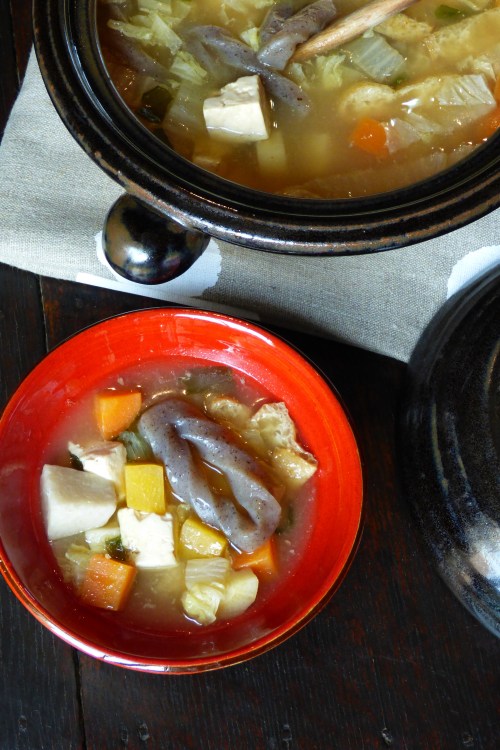
With its roots in shojin-ryori Buddhist cuisine, this hearty miso enriched soup is a great way to get more vegetables into your diet and warm you up on these windy, rainy days.  It reminds me of tonjiru, but without the porky overtones, and is the type of soup that makes you feel almost invincible after eating a bowlful.  We make ours with homemade chicken stock, which adds a medicinal chicken soup vibe to help ward off those winter bugs. You can of course keep it traditional by using vegetable stock which makes it vegan friendly and just as delicious.

kenchinjiru
Traditional winter warmer, kenchinjiru.

Continue reading “Kenchinjiru”

Yakitori assortment

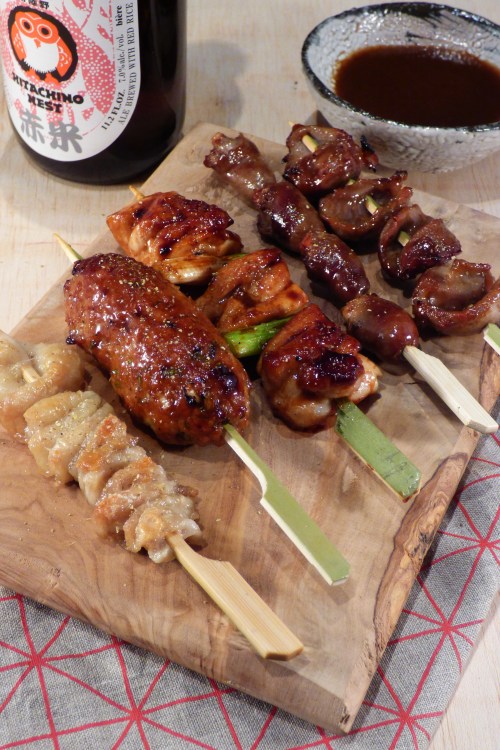
Perhaps Japan’s most ubiquitous bar food, or at least the one most well known outside of Japan, yakitori is a firm favourite with us.  Visiting a traditional yakitoriya is a daunting experience, normally lacking in menus, the bill of fare is hung from banners near the ceiling written in kanji completely indecipherable to most westerners, but they offer a fantastic insight into how the locals wind down after work.  Charcoal grilled chicken, offal and skin, served on sticks, glossed over quickly with a brush dipped in an almost magical concoction of drippings and soy sauce, the perfect accompaniment to a beer, or two.

yakitori
Yakitori, L to R: Skin, tsukune, thigh with spring onions, hearts, gizzards.

Continue reading “Yakitori assortment”

Jagaimo Oyaki

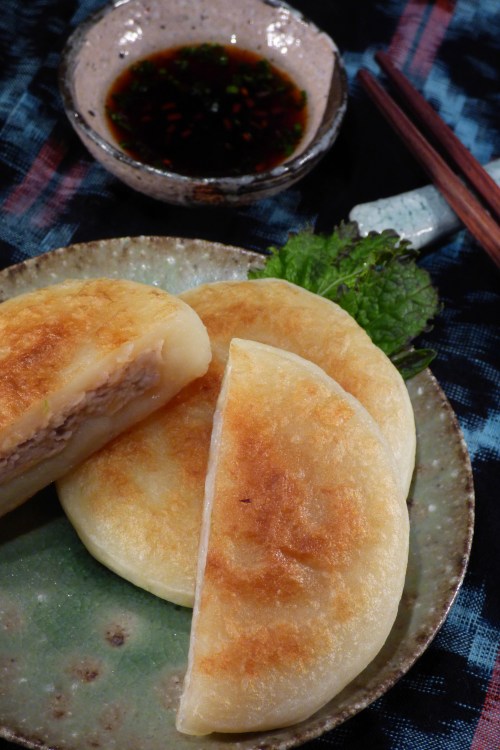
Oyaki are delicious little fried filled parcels, usually with a buckwheat outer shell but can be made with pretty much anything that you can form into a dough, in this case leftover mashed potato.  The filling of these oyaki is an attempt to recreate the flavours of some that we bought from a street vendor outside the Hachiman shrine in Tomioka, Tokyo- a mixture of chopped pork and prawns, similar to what you’d find inside everyone’s favourite little dumplings, gyoza.

oyaki
Jagaimo Oyaki, fried parcels of joy.

Continue reading “Jagaimo Oyaki”

Two ways with kabocha (kabocha namul & kabocha no miso)

With Autumn being our favourite time of year it only stands to reason that kabocha squash, being such an Autumnal vegetable, is one of our go-to ingredients when we want to eat something Japanese and comforting.  Kabocha, with its sweet yet savoury flavour makes a great main component for a meal, but works just as well as a side dish or a splash of colour in a bento.  These recipes work well with butternut squash or most other hard skinned winter squashes (crown prince is a really good match for kabocha in both flavour and texture, but it’s probably best to peel its harder outer skin away)


Kabocha Namul.

Namul (or namuru) is a family of dishes of Korean origin; shredded vegetables, seasoned with sesame and served as a side dish.  This namul works really well as a side dish to rich, sweet meat dishes such as buta no kakuni, and its nutty flavour contrasts extremely well with vinegared foods or those served with a ponzu dipping sauce.  It even makes a great coleslaw substitute in sandwiches.

kabocha namul
Kabocha Namul, delicious served with Buta no Kakuni.

Continue reading “Two ways with kabocha (kabocha namul & kabocha no miso)”