Motsunabe

Though not particularly prevalent in northern Japan and around Honshu, the south western island of Kyushu embraces the nose to tail ethos of consuming animals and has restaurants dedicated to beef and pork offal, or horumon, which you would be remiss not to visit if an opportunity arises.  To most westerners, the term offal conjures up thoughts of tough, gamey, questionable tubes hidden amongst favourable cuts of meat, perhaps encased within a pastry crust, or smothered in so much gravy that you can’t distinguish what you’re eating.  This is not the case with Japanese offal however- nearly always coming from prime wagyu cows, the organs have a rich beefy flavour, a tender bite and a slight underlying sweetness, and are generally served up in one of two popular ways:  horumon-yaki, where delicate cuts of heart, diaphragm, stomach and cheek are grilled quickly over a charcoal brazier before being plunged into a dipping sauce and eaten scaldingly hot, or as the Fukuokan speciality, motsunabe.

Motsunabe is the soul food of the Hakata district- diners huddle around a hotpot perched on a portable gas stove, the pan containing a mound of peppery white cabbage, a lightly sweetened soy based stock, short lengths of pungent garlic chives and the star of the show, beef small intestines.  The offal itself has a meltingly soft consistency, a pleasingly fatty bite and a rich, almost buttery flavour which pairs wonderfully with the vegetables and the ubiquitous cubes of tofu that you couldn’t have a nabe without.  After the chunks of vegetable, meat and tofu have been greedily picked from the pot and eaten, the heat is turned up beneath the broth and fresh ramen noodles are added to the boiling liquid, cooking in a matter of minutes, soaking up the meaty flavours of the motsunabe and thickening the sauce.  For me, this shime or ‘finishing course’ is the most anticipated part of the meal, an extra chance to savour the essence of the nabe and a final slurp of starchy noodles cooked in the fortified broth.

For the most authentic motsunabe at home, cooking the dish on a camping stove at the dining table is preferable, allowing diners to pluck morsels from the trembling liquid at various stages of tenderness and to breath in the wafts of steam that make hotpot dining so much fun.

motsunabe
Motsunabe- Hakata’s favourite offal hotpot.

Continue reading “Motsunabe”

Nikujaga

Nikujaga, which translates literally as ‘meat and potatoes’, is pure unadulterated comfort food; to many Japanese people it is a taste of home and the memory of mother’s cooking. This sweet, incredibly warming, wintery dish has an easy-to-trace heritage going back to the beef stew served by the British Royal Navy in the late 1800s, and one Japanese cadet who was sent to England to further his naval studies.  Tōgō Heihachirō, who had achieved the rank of lieutenant before returning to Japan, had developed a fondness for the cuisine of his alma mater; describing the dish to the chefs of the Imperial Navy, he had them recreate its flavours using local ingredients and according to the story, nikujaga was born.

The key components of a classic British beef stew are still present- potatoes, carrots, onions and of course beef, although the latter being in a much smaller quantity than you would expect to find in the traditional version.  The similarities end there though- the umami-rich cooking liquor being made up of the staple Japanese ingredients of soy sauce, sake, mirin and dashi fish stock and the addition of chewy, glass-like shirataki noodles to complete the dish.  Like the original, nikujaga is the perfect simple and nostalgic meal to warm you up on a cold, wet winter’s day whichever side of the world you’re on.

nikujaga
Nikujaga- Japanese Navy style beef and potato stew


Continue reading “Nikujaga”

Wafu Oroshi Hambāgu

Not to be confused with hambāgā- the French fry accompanied, grilled beef burger served in a bun the world over- hambāgu is a much lighter, juicier confection; a blend of pork and beef mince, caramelised onions and spices, shaped into an oval patty before being fried and simmered in one of a variety of different sauces.  It could be described as Japan’s take on the Salisbury steak and depending on which type of hambāgu you order in a restaurant, your patty could be smothered in a rich, thick Worcestershire style sauce,  a French-inspired red wine reduction, a beef and mushroom ‘loco moco’ gravy (nearly always partnered with a runny fried egg) or dressed in the wafu oroshi style with a zesty, tangy ponzu sauce and a heap of spicy grated daikon.  This final version is about as refreshing and light a burger as you’ll ever find; juicy from the addition of fatty pork mince, tender from the milk-soaked panko breadcrumbs and packed with bright summery flavours courtesy of the citrus dressing and the herbal notes that the shiso leaves bring.  Serve the hambāgu with a steaming bowl of rice and some light vegetable side dishes to make the perfect home-style dish for a late dinner on a sunny evening, or use cooled cooked patties with the sauce and daikon oroshi on the side as the feature components in an obento lunch.


hambagu
Hambagu- Salisbury steak, Japanese style.

Continue reading “Wafu Oroshi Hambāgu”

Gyuu Tataki to Yuzukosho Modoki

Raw fish in the form of sashimi is quite often the first thing a foreigner thinks of when you mention Japanese food, but perhaps less well known is gyuu tataki, a lightly cooked piece of beef fillet that while seared on the outside remains completely raw in the centre.  We’ve paired our beef with a couple of citrussy accompaniments, firstly a home-made take on yuzukosho (we’ve used the word ‘modoki’ in the title, which means pseudo or mock) and then with a ponzu style dipping sauce made of lime juice and soy sauce.

Yuzukosho is a fantastically strong, fiery condiment used mainly with hotpot dishes and sashimi, made from fermented citrus fruit and green chilli peppers.  Yuzu- the traditional fruit used in the seasoning- is unfortunately for us very hard to come by in England, so we have combined a number of different fruits to craft a flavour reminiscent of the complex aroma the original has.  This zesty paste brings together sour, bitter, floral, salty and spicy flavours which all balance the beef’s natural earthiness and when used as an appetiser at the start of a meal really awakens your palate.

tataki
Seared beef with citrus and chilli yuzukosho.

Continue reading “Gyuu Tataki to Yuzukosho Modoki”

Hojichazuke

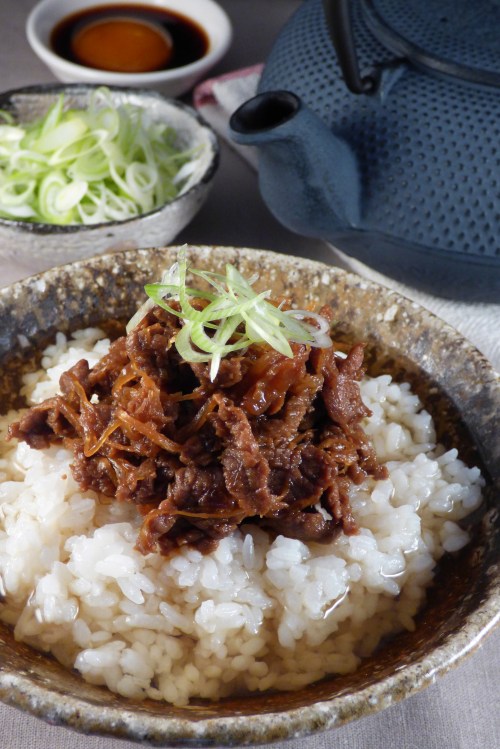
Ochazuke is a firm favourite when we want a simple warming meal, green tea poured over a bowl of rice topped with salmon.  However, tonight we wanted something darker, something sweeter and most importantly, something to use the beautiful piece of organic beef we got from our butcher.  This is what we came up with; a sweet, sticky, gingery beef tsukudani, rich and powerful with plenty of soy and sake in it.  The depth of flavour in the beef would have overpowered the green tea normally used in ochazuke, so we decided to use dashi-infused hojicha instead, and topped the whole dish off with a lightly cured egg yolk to add extra creaminess and provide a more substantial sauce for the beef and rice.  Any leftover tsukudani can be chopped up finely and used as a filling for some beef onigiri, or used as a punchy addition to a bento.

hojichazuke
Hojichazuke- sweet, salty beef over rice topped with hot tea.

Continue reading “Hojichazuke”

Karē raisu

Although it is only a relative newcomer to the cuisine of Japan, curry and rice can be bought in any town across the country from a huge range of restaurant chains.  Karē is based upon a British Raj style curry, so has more in common with Victorian English cookery than it does true Indian cuisine, and although traditional Northern Indian style curries have recently found their way into Japan’s diet, Japanese karē remains one of the country’s most popular dishes.

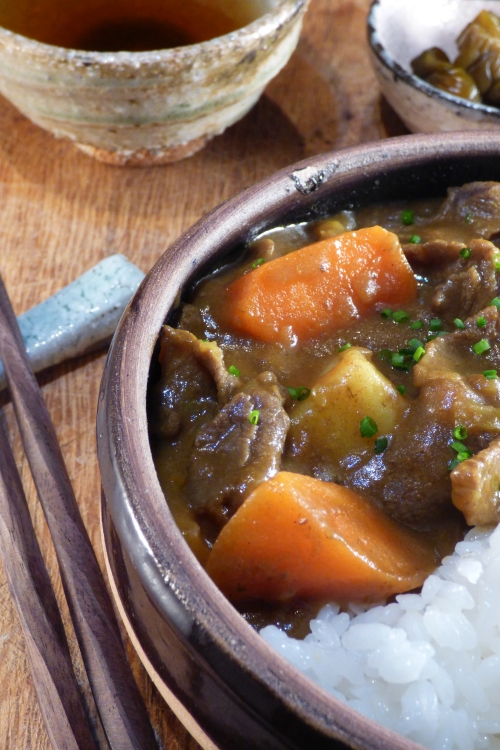
Instant karē sauces are readily available from convenience stores and supermarkets in roux form, and they’re all delicious, but we’ve chosen to make our own from scratch.  Straying slightly from the path of tradition we’ve gone for a chunkier version of karē with more vegetables and meat, but we still have the smooth, silky, sweet sauce that everyone loves.  If you leave out the vegetables and meat from our recipe you’ll have an excellent sauce for katsu-karē or a base for curry udon soup.

kare
Kare raisu; sweet, rich curry sauce with beef, potato, kabocha and carrot.


Continue reading “Karē raisu”