Sanshōsnap cookies

Usually found in little sachets within packages of kabayaki eel, served sprinkled on top of yakitori for an extra kick or as a seasoning for sushi, sanshō is Japan’s answer to the now world-famous Szechuan peppercorn from south western China.  Whilst not related to peppercorns in any way, they’re both berries from prickly ash trees and share the pepper monicker due to the spicy, fiery slow-building heat that they impart to food.  The flavour of sanshō starts with a peppery grapefruit scented awakening of the saliva glands and passes through fizzy, cooling, electric sensations before calming into an almost anaesthetic numbness, a long lasting souvenir of the food you’ve eaten.  Not an immediate heat like you would get from a chilli pepper, but a more subtle experience, delivering its nuanced qualities in waves.

This complex spice doesn’t often get to make an appearance in sweet dishes, being mostly recognised as a savoury flavour, but while experimenting with making some gingersnap cookies we stumbled across sanshō’s affinity for buttery, crisp biscuits, and haven’t been able to stop making them since.  Imagine German pfeffernüsse, kruidnoten of the Netherlands, or the gingerbread men from England, but with a zesty lemony aroma and a bit more punch and you’re getting close to these spicy little treats.  They have a firm, crisp snap, and a wonderfully crackled surface, perfect for wrapping up as a homemade gift for loved ones or for serving with a cup of tea.
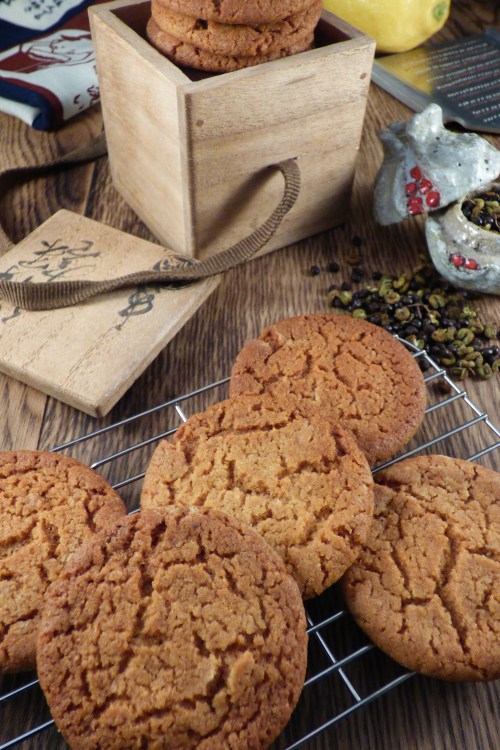
 

sanshosnaps
Sanshosnaps- fiery, lemony, gingerbread biscuits.

Continue reading “Sanshōsnap cookies”

Matcha tuile biscuits

The powdered Chinese green tea favoured by the Southern Song dynasty arrived on the shores of Japan in the late twelfth century, carried by the monk Eisai Zenji who had returned home from studying Chan Buddhism.  After two hundred years of being a purely religious beverage, Shogun Ashikaga Yoshimasa secularised the performance of making and drinking tea and it slowly evolved into the ritualistic ceremony we are familiar with today.  Whilst nearly every country the world over now drinks the later-developed steeped or infused tea, the powdered green tea known to us as matcha has remained a singularly Japanese drink, even being lost to the Chinese during the Mongol invasion.  The differences between the two types of tea are remarkable, to the extent that even some of the most enthusiastic of Western tea drinkers can sometimes find the deep green flavour and slight bitterness of matcha difficult or off-putting.  We’ve found that the easiest way to introduce the new and perhaps unexpected flavour of matcha to people is through desserts or baked goods such as these delicate, crisp tuile biscuits.  The buttery tuile batter and drizzle of rich, silky white chocolate help to balance out the mild astringent taste of the tea to create a biscuit perfect for snacking on or for accompanying a cup of your favourite brewed tea.


matcha tuiles
Crisp, buttery tuile biscuits, packed with the flavour of green tea.

Continue reading “Matcha tuile biscuits”