Reishabu salad

Theatre and diner interaction play a huge part in Japanese dining, the artistry of the tea ceremony, the DIY grilling over a hibachi when you eat yakiniku, the almost exclusively Northern dish of wanko soba where attendants deftly fling mouthfuls of noodles into your bowl as you eat, and our favourite- shabu shabu.  Named after the onomatopoeic sound of people doing laundry, flapping sheets and clothing around in a pot of bubbling water, a shabu shabu meal sees diners sat around a steaming pot of stock, individually dipping in wafer thin slices of raw meat and vegetables until cooked, then quickly anointing them with a sour ponzu dipping sauce and greedily gobbling them down before repeating the act with the next morsel.  It is one of the most entertaining, communal and theatrical of Japanese meals, but- because of the huge amounts of steam generated by the hotpot (or more correctly, hotpots, since you’re likely to be eating shabu shabu in a restaurant specialising in the dish)- only really suited to winter dining.

What happens then in the warmer, more humid months if people crave the flavours of shabu shabu but not the hour or two huddled around a pot of steaming pork and beef broth which would be so welcome later in the year?  Reishabu is the answer- a selection of Japanese leaves topped with the poached pork that would be the feature of the hotpot, along with daikon, grapes, and a citrussy dipping sauce to refresh and revitalise you on even the hottest of days.  You get all the flavours of shabu shabu, just in a lighter, cooler, balanced salad, and if you don’t dress the leaves with the ponzu until you’re ready to eat it, this makes a fantastic picnic lunch.

 

reishabu.jpg
Reishabu- Chilled shabu shabu salad


Continue reading “Reishabu salad”

Hiyayakko Tofu

As the sweltering summer days drift slowly into mild, contemplative Autumn, nature’s hues turn to yellows and reds, and we long for cooling, refreshing food to take our minds off what’s left of the oppressive heat; luckily our gardens present us with exactly what we need- a bountiful crop of round, juicy tomatoes.  Cooking with tomatoes isn’t exactly commonplace in Japan; they are however often enjoyed on their own, added to colourful salads or used as a bright topping for a cool creamy block of tofu along with something a little neba neba.

Neba neba is an onomatopoeic word used to describe foods with a sticky, slimy or stringy texture- qualities not normally desired in most Western cuisine, but looked upon as being incredibly healthy and delicious in Japan.  The spectrum of neba neba ingredients range from those suited only to the most dedicated gourmand- pungent fermented soybean natto, raw egg whites, and tororo grated mountain yam- to the entry level mozuku seaweed, nameko gelatinous mushrooms and the almost universally accepted okra.  While many cultures have fought against okra’s desire to impart a gluey consistency to dishes by soaking out the juices or refusing to cut the vegetable, Japanese chefs have embraced and even sought out ingenious ways to encourage this characteristic.

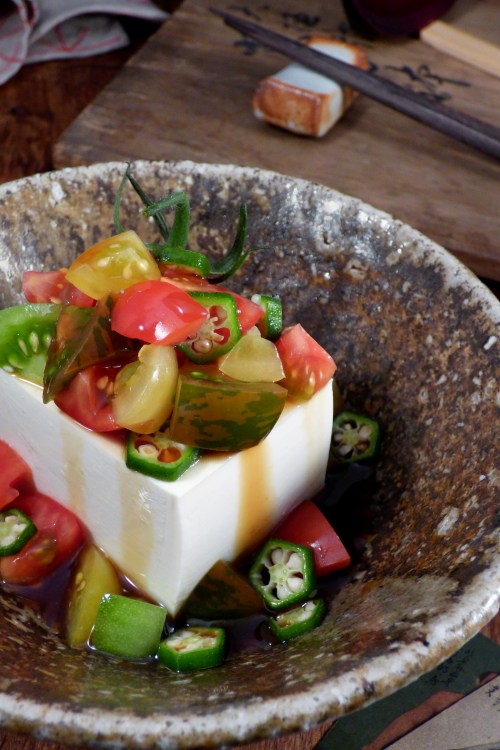
Our recipe for hiyayakko tofu is a great way to gingerly encounter neba neba food for the first time.  It combines both tomatoes and okra with a refreshingly sharp and citrussy ponzu dressing to give a dish that is both cool and creamy, but still packed with enough zingy, salty punch to liven things up a little and the slightest hint of the stringy texture that the Japanese so love.


hiyayakko-tofu
Hiyayakko Tofu- cooling, creamy tofu, sweet juicy tomatoes and a fruity dressing.


Continue reading “Hiyayakko Tofu”

Hiyashi Chūka

The last thing many people can imagine wanting to do on a hot, humid day in late Summer is to huddle over a deep bowl of ramen, with clouds of meaty steam billowing up and enveloping your face while you slurp on mouthful after mouthful of scalding hot noodles slick with unctuous pork fat.  This of course would be a huge problem for the tens of thousands of ramen-ya owners all across the country, if not for the wonderfully refreshing and reviving noodle dish Hiyashi Chūka which dominates their menus in the more oppressive months.  Sitting comfortably on the halfway-line between a crisp salad and the familiar bowl of soup noodles, hiyashi chūka keeps many of the most popular ramen toppings but adds plenty of crunchy fresh vegetables and replaces the savoury broth with a chilled vinegary dressing, making this the perfect dish for a lunchtime spent hiding from the midday heat.  Like most dishes in Japanese cuisine, the colour and temperature of the food is just as important as the flavour and texture, and in this most summery of noodle dishes they all come together harmoniously to cleanse, stimulate and revitalise the senses.

In our version of hiyashi chūka, we’ve incorporated two of the most popular toppings- crab sticks and cucumber- directly into the chūkamen themselves to create an even lighter noodle base.  We’ve crowned this tangle of enhanced noodles with a crunchy slaw made from spicy radishes and turnips, earthy carrots and crisp nashi pear to add even more freshness, and a springy, knobbly chikuwa fishcake for an extra hit of sweet ocean flavour.  All of that is doused liberally with the bracing vinegar, soy sauce and sesame dressing at the table with extra on the side for those who want a more intense, soupy mouthful.


hiyashi chuka
Hiyashi Chuka- cold noodles for a hot day

Continue reading “Hiyashi Chūka”