Furofuki Daikon

Most commonly encountered grated as a garnish for oroshi dishes or as a crunchy pickle (the Nihombashi district of Tokyo even holds an annual daikon festival every October where hundreds of vendors sell their own variation on the pickle), daikon- Japan’s unwieldy, oversized white radish- is surprisingly even tastier when used in a warm cooked dish than when eaten raw.  The mellow sweetness of the root is encouraged into the limelight by gentle stewing while the spicy, almost watercress-like flavour is ushered into a supporting role- more of an intriguing, characterful nuance than its normal in-your-face approach.  A soft, juicy disc of daikon is a prize to be found bobbing around in a steaming vat of oden along with the assorted fish cakes, or cut into tiny cubes sunk into a bowl of miso soup, but by far the best way to enjoy cooked daikon is as a tender, gently simmered ‘steak’.  Our preferred partner to a succulent piece of daikon is a classic nerimiso sauce; intensely flavoured on its own, too savoury and far too salty, but after you bite into the tender radish, it releases its juices and they combine together with the yuzu perfumed paste to create the perfect seasoning.

After a bout of illness or a long trip abroad, simmered daikon is often the first comfort food that Japanese people crave; the enveloping, warming aroma eliciting carefree childhood memories and the soothing, nostalgic taste of mothers’ homely cooking.   Whilst its close relative the turnip has fallen out of favour in British cuisine in recent years for being too old-fashioned in flavour, stewed daikon has never lost its popularity in Japan, remaining a winter favourite and an example of traditional, country style cooking at its finest.
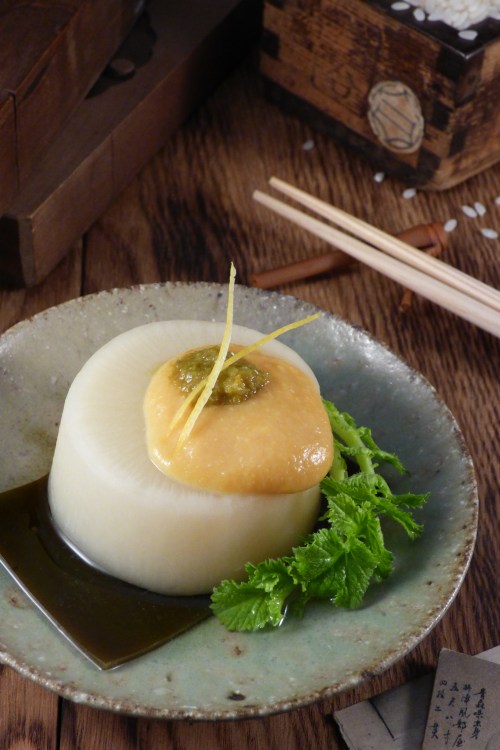
 

furofuki
Furofuki Daikon- Simmered radish with white miso sauce.


Continue reading “Furofuki Daikon”

Wafu Oroshi Hambāgu

Not to be confused with hambāgā- the French fry accompanied, grilled beef burger served in a bun the world over- hambāgu is a much lighter, juicier confection; a blend of pork and beef mince, caramelised onions and spices, shaped into an oval patty before being fried and simmered in one of a variety of different sauces.  It could be described as Japan’s take on the Salisbury steak and depending on which type of hambāgu you order in a restaurant, your patty could be smothered in a rich, thick Worcestershire style sauce,  a French-inspired red wine reduction, a beef and mushroom ‘loco moco’ gravy (nearly always partnered with a runny fried egg) or dressed in the wafu oroshi style with a zesty, tangy ponzu sauce and a heap of spicy grated daikon.  This final version is about as refreshing and light a burger as you’ll ever find; juicy from the addition of fatty pork mince, tender from the milk-soaked panko breadcrumbs and packed with bright summery flavours courtesy of the citrus dressing and the herbal notes that the shiso leaves bring.  Serve the hambāgu with a steaming bowl of rice and some light vegetable side dishes to make the perfect home-style dish for a late dinner on a sunny evening, or use cooled cooked patties with the sauce and daikon oroshi on the side as the feature components in an obento lunch.


hambagu
Hambagu- Salisbury steak, Japanese style.

Continue reading “Wafu Oroshi Hambāgu”

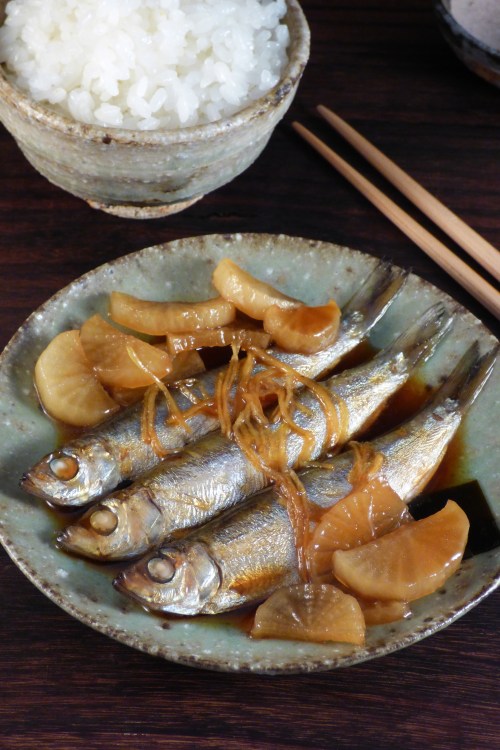
Supuratto no kanroni / Iwashi no kanroni

Being an island nation, Japan has always consumed a huge quantity of seafood, and up until recently this has also been true of the British Isles, a tradition that we’re sadly losing.  Whilst shopping in our local fish market we came across some beautifully fresh sprats, a very typical fish in classic British cuisine and knew we could use them to make something very Japanese.  Sprats, as with most small fish, have fallen out of favour in recent years as people tend to prefer larger fish with fewer bones, however they’re packed full of omega oils and B-vitamins and their flavour is well worth the little extra effort.  As sprats are from the same family, these little oily fish are a perfect substitute for the sardines that would normally be used in this old fashioned dish of daikon, ginger, fish and a sweet sticky sauce.

An old Japanese trick to cook oily fish with sake to lessen the strong odours is used in this recipe, and the spicy shards of ginger cut through the richness.  If you can’t get hold of sprats then use sardines and allow 2-3 fish per person for a main course.

Kanroni
Supuratto no kanroni: Little fish, big flavours.

Continue reading “Supuratto no kanroni / Iwashi no kanroni”