Uzura Yakitori

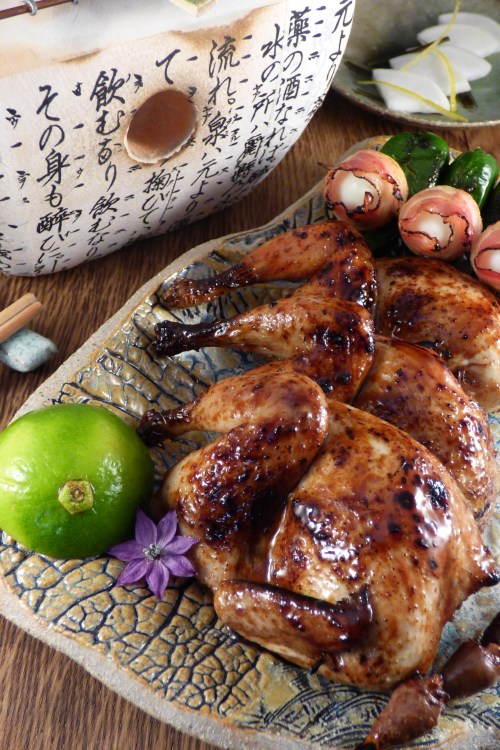
Grasslands and wooded areas surrounded the old capital of Kyoto for centuries, making the perfect hunting grounds for feeding the wealthy citizens; birds of all sorts from the large colourful pheasants and statuesque pigeons down to small songbirds were trapped by the locals before being taken to market or grilled as yakitori.  These days the term yakitori is normally used in relation to chicken, but the word literally means ‘grilled bird’, so it’s no surprise that different regions have their specialities featuring other fowl.  To the restaurants around the sacred town of Fushimi, yakitori is all about two birds, sparrows eaten whole including their bones and crunchy beaks, and the meatier and more westerner-friendly quails.  After a visit to the most well-known Inari shrine complex in the country- the Fushimi Inari Taisha- it’s almost impossible to leave the area without smelling the charcoal smoke and appetizing aroma of scorched meat wafting from the restaurants selling yakitori quail.

Eating yakitori like this is a primal meal, huddled around a dimly lit restaurant, breathing in the smoke and tearing into the grilled meat.  A slightly sweet soy glaze enhanced with the essence of all the birds cooked before yours clings lightly to your lips as you devour the perfectly cooked bird, feeling more like the fox totem of Inari happily munching on a little bird in a shaded grove, than the person you were when you sat down at the bench table.  To drink with the delicate flesh of the quails?  Beer obviously, but what else to eat?  Chicken wouldn’t be appreciated next to the delicate birds, tsukune would feel almost too processed, only one other yakitori favourite would sit harmoniously with the quails and that’s Uzura no tamago, bacon wrapped quail eggs.  The ultimate pairing of parent and child found in many Japanese dishes such as oyakodon, the creamy eggs and salty charred pancetta add delicious little bursts of richness between mouthfuls of meat, a squeeze of sharp kabosu juice and a peppery sprinkle of ground sanshō balances all the elements to perfection.
yakitori quail
Uzura Yakitori- tender, sticky, char-grilled quails.

Continue reading “Uzura Yakitori”

Onsen Tamago

Once places of legend and mystery- boiling sulphurous waters forced from deep within the earth, gouts of fiercesome steam and perhaps even home to ghosts and monsters- the onsen or spa towns that are dotted along Japan’s mountain ranges are now prime destinations for people to bathe and absorb the health giving properties of the mineral rich waters.  Tourists flock to towns such as Beppu in Kyushu to take in the eight different ‘Hells’, buy concentrated mineral salts to infuse their own baths at home and to sample local foods cooked in the steam that issues from the hillside.  These geothermally cooked foods are not just a recent invention for tourists however, locals have been utilising the naturally stable and constant temperature of the springs to prepare their food for centuries, the most popular use being for soft poached eggs, or onsen tamago.  After dropping a basket of eggs into the pool of a hot spring, they could be left unattended for an hour or two while the owner went about their other duties (or simply had a relaxing bath) before returning to collect their cooked eggs- rich, soft, custardy yolks, suspended within the silkiest of egg whites, the type of slow cooked eggs that modern restaurant reviewers rave about.

These most delicate of eggs can be made just as well at home and with no need for a volcanic hot spring, slow cooking them for three quarters of an hour at a low temperature is all that’s needed to coax the eggs to lightly set perfection.  Unlike boiled eggs which are forced into springy submission by the fierce heat of the water, onsen tamago are gently persuaded to gel into a mass that can barely hold itself together, collapsing lazily at the slightest touch of a chopstick into a creamy unctuous puddle.  They’re a staple part of a Japanese breakfast, served on top of steaming hot rice or plunged in a pool of broth, but they also make an incredible topping for a bowl of ramen, cracked open over a plate of spicy karē-raisu or dipped into batter and fried as one of the most delectable tempura imaginable.


onsen-tamago
Onsen Tamago- slow seduction and a long bath make the silkiest eggs.


Continue reading “Onsen Tamago”

Ebi Furai to Poteto Sarada

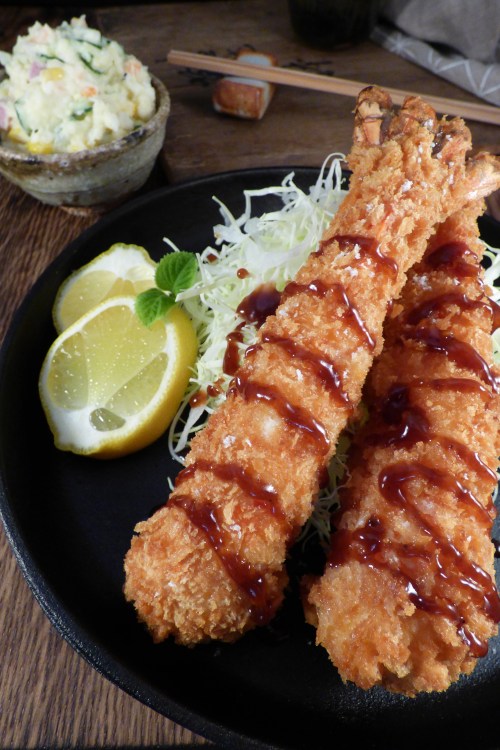
Ebi Furai- colossal, breaded, deep fried prawns- became the signature dish of Nagoya thanks to a quip made by the television comedian Tamori at the expense of the city’s dialect and accent.  Misunderstanding of this joke led to the nation believing that Nagoya excelled in making the succulent, sweet prawns coated in shatteringly crisp shards of panko, and the city was happy to adopt this modern meibutsu as their speciality.  In reality ebi furai was created during the Meiji Restoration period of the late nineteenth century in response to the increasingly popular deep fried yōshoku dishes such as tonkatsu and menchi-katsu that were being served in the larger, metropolitan cities.  Traditionally made using Kuruma ebi (Japanese imperial prawns) which can grow to a monstrous thirty centimetres in length, nowadays the more ecologically sustainable black tiger shrimp is used in making this celebration of oversized shellfish.

Breaded, fried prawns have since become one of the most common ingredients for bentō packed lunches, crammed into ebi-sando sandwiches smeared with coleslaw or even served hotdog style in long soft bread rolls topped with creamy tartar sauce. Perhaps our favourite way to eat ebi furai though is paired with another yōshoku bentō staple, the Japanese take on potato salad.  Creamier and more tangy than your typical potato salad, this version uses mashed potatoes studded with nuggets of smoked ham, crushed hard boiled eggs, salted cucumbers, and ultra sweet, exploding kernels of corn bound together with the ubiquitous Kewpie mayonnaise and a dash of vinegar.  These two dishes make a delicious light meal when combined with some thinly shredded cabbage and a drizzle of the thick Worcestershire-style sauce that goes so well with fried breaded foods, or they work wonderfully well individually as starting points for making a packed lunch.

ebi furai
Ebi Furai- colossal breaded fried prawns, served with Japanese potato salad.

Continue reading “Ebi Furai to Poteto Sarada”

Hōjicha Purin

Like a large number of foods popular in Japan today, Purin owes its name and heritage to visiting Portuguese traders who, in the sixteenth century, brought over their jiggly, set custard dessert, pudim.  Much like the French crème caramel or the Latin American flan, caramelised sugar is topped with a sweetened egg and milk mixture then steamed in a bain-marie before being inverted onto a plate and served with the caramel on top- the slightly bitter caramel sauce creating an elegant contrast of colours and offsetting the sweetness of the custard.

Although it is a staple snack or dessert all year round, purin to me marks the start of Summer; a chilled, lightly set, creamy custard has a wonderful soothing effect and refreshes your spirits after a hard day at work in sweltering temperatures.  We like to infuse the milk and cream with the toasty, almost caramel-like flavour of hōjicha, roasted green tea.  Eating just a spoonful of this dessert brings back comforting childhood memories of lifting the rim of a cereal bowl to your lips and drinking the milk after you’d finished the bowl of crunchy flakes.  You could easily swap out the hōjicha in this recipe for vanilla to create a classic European version or matcha powder to make an intensely coloured, green tea flavoured variation.  However you choose to flavour it, serve your purin with a handful of fresh seasonal berries to really highlight the time of year.


purin
Hojicha-infused Purin, the perfect refreshing summer snack.


Continue reading “Hōjicha Purin”

Duck Egg Chawanmushi

If you ever have the pleasure of eating in one of Japan’s more formal kaiseki ryōri restaurants, you’ll probably be served a futamono- “lidded course” between your sashimi and your grilled yakimono course.  Your futamono could be a small stew of seasonal ingredients, a soup such as a suimono, or our favourite, chawanmushi- a silky smooth treasure hunt of a dish.  Named after the lidded tea-cup or chawan that it is cooked in, chawanmushi is a wonderfully light, delicate egg custard, seasoned with dashi and mirin, and steamed until just set enough to encase and obscure the morsels trapped within its depths.  Each spoonful of custard is an edible lucky dip where you might bring up a firm ginkgo nut, a tender prawn, a juicy chunk of shiitake or a sour, palate cleansing bubble of yuzu pulp.

A popular, and to my mind almost compulsory addition to chawanmushi is a spoon or two of ankake sauce added moments before serving.  This mildly fishy, faintly smoky sauce adds an extra savoury oomph to each mouthful and helps you appreciate the sweetness of the steamed eggs.


chawan mushi
Duck egg chawanmushi- a lucky dip into savoury egg custard.

Continue reading “Duck Egg Chawanmushi”

Chāshūdon

Owing its heritage to char siu- the bright red, five-spice seasoned barbecued pork served in Cantonese restaurants, chāshū has become perhaps the world’s favourite ramen topping.  This is of course for good reason, meltingly tender succulent meat, braised at a low temperature for hours until the tough connective tissues and collagen have turned into silky soft gelatin, yielding to the slightest pressure from a chopstick.  The sweet, juicy layers of fat and moist, savoury meat are enhanced further by leaving them in a soy and sake seasoned broth overnight before being thinly sliced and seared in a hot pan to reawaken the glistening fats and juices hiding within the pork.

Chāshū isn’t only enjoyed with soup and noodles however, and one of our favourite ways to eat it is on top of a big bowl of rice as a chāshūdon.  Combined with other noodle toppings such as boiled eggs, pink pickled ginger and spicy Korean radish kimchi, you have a dish that gives you the same satisfaction as a deep bowl of brothy noodles but with a lot less effort.


chashudon
Chashudon- all your favourite ramen toppings, on rice.

Continue reading “Chāshūdon”

Hojichazuke

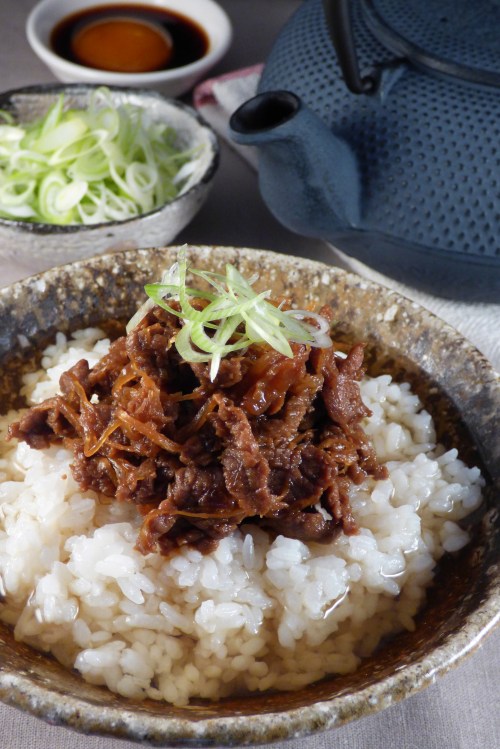
Ochazuke is a firm favourite when we want a simple warming meal, green tea poured over a bowl of rice topped with salmon.  However, tonight we wanted something darker, something sweeter and most importantly, something to use the beautiful piece of organic beef we got from our butcher.  This is what we came up with; a sweet, sticky, gingery beef tsukudani, rich and powerful with plenty of soy and sake in it.  The depth of flavour in the beef would have overpowered the green tea normally used in ochazuke, so we decided to use dashi-infused hojicha instead, and topped the whole dish off with a lightly cured egg yolk to add extra creaminess and provide a more substantial sauce for the beef and rice.  Any leftover tsukudani can be chopped up finely and used as a filling for some beef onigiri, or used as a punchy addition to a bento.

hojichazuke
Hojichazuke- sweet, salty beef over rice topped with hot tea.

Continue reading “Hojichazuke”

Shoyu tamago & Hakusai no shiozuke

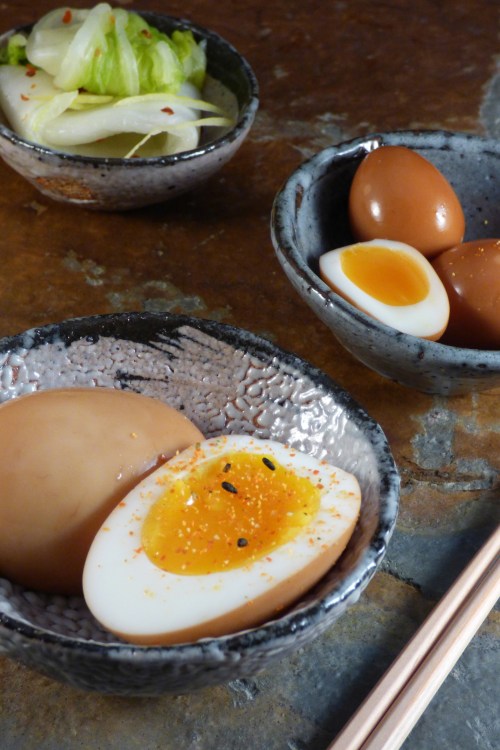
Boiled eggs feature in many dishes like oden and ramen, and they make a great snack or addition to a bento.  Most often they are cooked until the yolks are solid, however we like ours to be barely set, especially with tiny quail eggs which you pop in your mouth whole and burst to release the rich gooey centre.  By lightly pickling them in a sweet and sour soy liquor you can add a level of complexity to their whites and stain them an attractive glossy brown colour too.  Shoyu tamago are a great replacement for use in any recipe which calls for boiled eggs, and their natural saltiness makes them a perfect accompaniment to drinks.

Hakusai no shiozuke is on the other end of the flavour spectrum, rather than being rich and gooey like the shoyu tamago it is crisp, spicy and fresh with lemon zest.  Chinese cabbage is pressed and pickled for a short amount of time to provide a punchy accompaniment to meals and a perfect counterpoint to rich or fatty meats.  This traditional recipe is a delicious introduction to salted pickles for those who’re a little wary of the tsukemono plate that comes with most Japanese meals.

soy eggs
Pickles are great for adding interest to a meal

Continue reading “Shoyu tamago & Hakusai no shiozuke”