Ikameshi

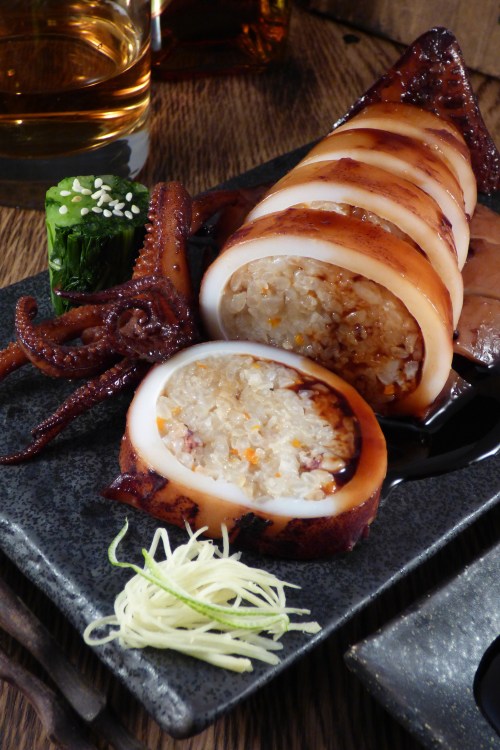
The fishing town of Mori on the eastern coast of the Oshima Peninsula is famous for three things; sweet farmed scallops, bountiful catches of Pacific herrings and an abundance of Japanese flying squid.  It was this easy-to-catch and incredibly popular squid that, with the ingenuity of a local shopkeeper, would help rice rations stretch twice as far during WWII and go on to become the regional dish of Hokkaido.  A bentō shop in Mori railway station came upon the idea of filling the cavity of the plentiful squid with the slowly dwindling rice supply before boiling it in a seasoned broth, the added bulk of the squid making the precious rice go that bit further.  As with so many other modern classic dishes, frugal cooks and wartime necessity had resulted in the creation of something delightful.

Plump, burnished squid stuffed to almost bursting point with sweet, pearlescent rice and glazed with a thick, sticky soy sauce have remained a station bentō favourite since they won their creator first prize in the annual Keio department store ekiben competition, which sought to find the best regional delicacies from around Japan.  Ikameshi makes an impressive but deceptively simple centrepiece for a meal, and is perhaps at its most hauntingly beautiful when served in a dimly lit, traditional izakaya accompanied by a handful of good friends and a glass or two of the local spirit.  We’ve shortened the preparation time of our ikameshi by steaming the rice before filling, which means that the squid cooks in about five minutes, preventing it from becoming tough.
 

ikameshi
Ikameshi- A parcel of rice wrapped in burnished squid.

Continue reading “Ikameshi”

Ebi Furai to Poteto Sarada

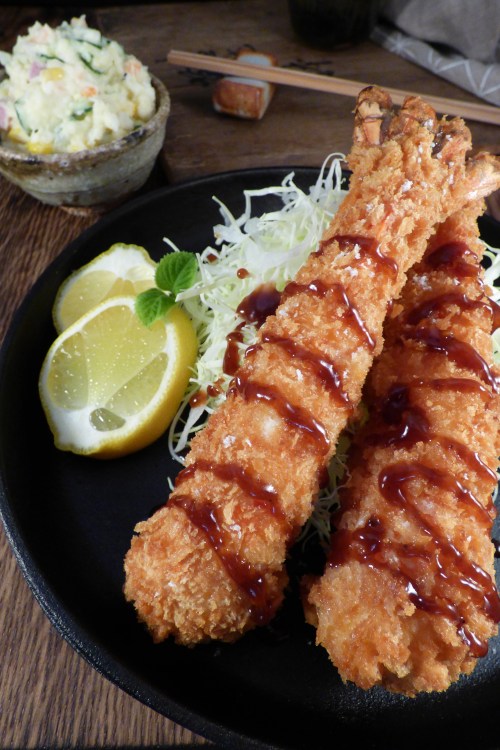
Ebi Furai- colossal, breaded, deep fried prawns- became the signature dish of Nagoya thanks to a quip made by the television comedian Tamori at the expense of the city’s dialect and accent.  Misunderstanding of this joke led to the nation believing that Nagoya excelled in making the succulent, sweet prawns coated in shatteringly crisp shards of panko, and the city was happy to adopt this modern meibutsu as their speciality.  In reality ebi furai was created during the Meiji Restoration period of the late nineteenth century in response to the increasingly popular deep fried yōshoku dishes such as tonkatsu and menchi-katsu that were being served in the larger, metropolitan cities.  Traditionally made using Kuruma ebi (Japanese imperial prawns) which can grow to a monstrous thirty centimetres in length, nowadays the more ecologically sustainable black tiger shrimp is used in making this celebration of oversized shellfish.

Breaded, fried prawns have since become one of the most common ingredients for bentō packed lunches, crammed into ebi-sando sandwiches smeared with coleslaw or even served hotdog style in long soft bread rolls topped with creamy tartar sauce. Perhaps our favourite way to eat ebi furai though is paired with another yōshoku bentō staple, the Japanese take on potato salad.  Creamier and more tangy than your typical potato salad, this version uses mashed potatoes studded with nuggets of smoked ham, crushed hard boiled eggs, salted cucumbers, and ultra sweet, exploding kernels of corn bound together with the ubiquitous Kewpie mayonnaise and a dash of vinegar.  These two dishes make a delicious light meal when combined with some thinly shredded cabbage and a drizzle of the thick Worcestershire-style sauce that goes so well with fried breaded foods, or they work wonderfully well individually as starting points for making a packed lunch.

ebi furai
Ebi Furai- colossal breaded fried prawns, served with Japanese potato salad.

Continue reading “Ebi Furai to Poteto Sarada”

Agedashi Tofu

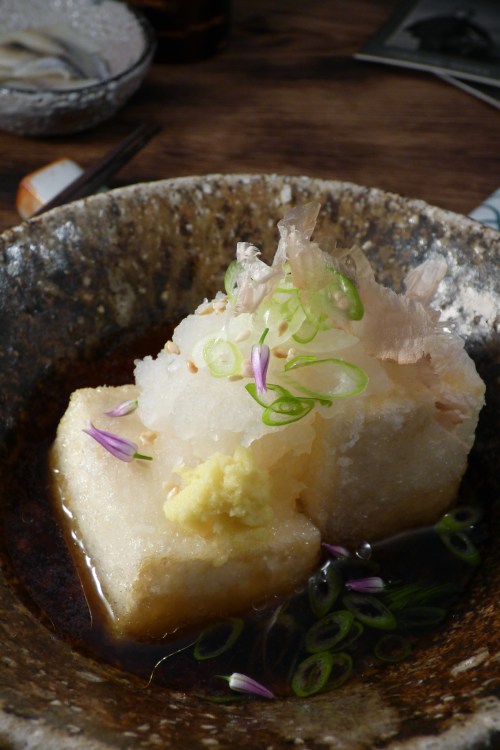
An izakaya staple and to my mind one of the most elegant ways to serve beancurd, agedashi tofu is in essence a very simple recipe- smooth, delicate kinugoshi silken tofu is dusted in potato starch, deep fried and served in a bowl of seasoned dashi broth.  A light, crisp shell gives way to a gently yielding, creamy, custard-like texture that melts in your mouth while the katakuriko gives the agedashi its distinctive soft, stretchy, jelly-like coating when immersed in the sweet, smoky soup.  The two main elements of the dish are further enhanced by a selection of toppings- normally fresh spring onions, spicy daikon oroshi, savoury katsuobushi flakes and intensely powerful grated ginger- but you can also add chopped shiso leaves, shredded sheets of nori seaweed or a citrussy chilli kick from some shichimi togarashi.

Documented as early as the 1780s in Ka Hitsujun’s Tofu Hyakuchin- an immensely popular Edo period book on tofu- the clean, harmonious flavours and ease of preparation have helped keep this unassuming, humble looking dish a favourite across all of Japan, and one that we make a beeline for whenever we see it on a restaurant menu.  The simplicity of the recipe allows each component to really shine and since they have nothing to hide behind you want to use the best quality ingredients you can find, make them all memorable and you’ll have a beautifully balanced bowl of food.


agedashi tofu
Agedashi Tofu- creamy deep fried tofu in a sweet, smoky dashi broth.


Continue reading “Agedashi Tofu”

Wafu Oroshi Hambāgu

Not to be confused with hambāgā- the French fry accompanied, grilled beef burger served in a bun the world over- hambāgu is a much lighter, juicier confection; a blend of pork and beef mince, caramelised onions and spices, shaped into an oval patty before being fried and simmered in one of a variety of different sauces.  It could be described as Japan’s take on the Salisbury steak and depending on which type of hambāgu you order in a restaurant, your patty could be smothered in a rich, thick Worcestershire style sauce,  a French-inspired red wine reduction, a beef and mushroom ‘loco moco’ gravy (nearly always partnered with a runny fried egg) or dressed in the wafu oroshi style with a zesty, tangy ponzu sauce and a heap of spicy grated daikon.  This final version is about as refreshing and light a burger as you’ll ever find; juicy from the addition of fatty pork mince, tender from the milk-soaked panko breadcrumbs and packed with bright summery flavours courtesy of the citrus dressing and the herbal notes that the shiso leaves bring.  Serve the hambāgu with a steaming bowl of rice and some light vegetable side dishes to make the perfect home-style dish for a late dinner on a sunny evening, or use cooled cooked patties with the sauce and daikon oroshi on the side as the feature components in an obento lunch.


hambagu
Hambagu- Salisbury steak, Japanese style.

Continue reading “Wafu Oroshi Hambāgu”

Karaage / Tatsuta-age

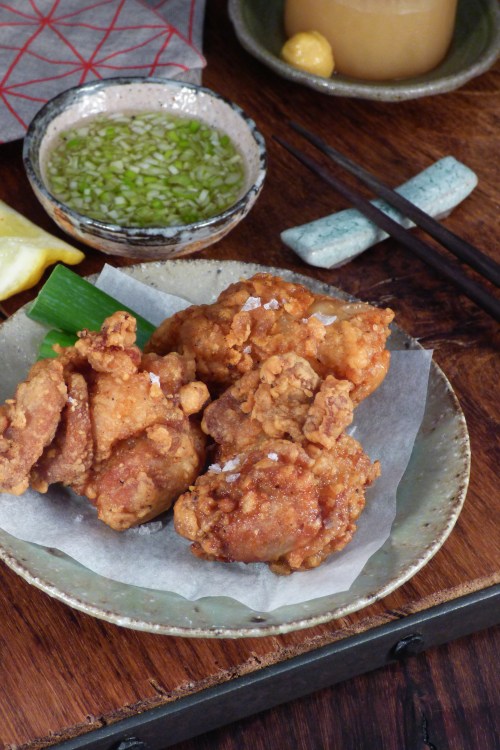
Fried chicken.  Two simple words that have the power to whet appetites across the globe and set imaginations spinning, whether you’re in Louisiana, Mali or Scotland, you know that when you order your local rendition of the dish you’ll be getting moist, juicy meat in a crisp coating packed full of flavour.  Karaage is the fried chicken of Japan- nearly always meat from the thigh of the bird, seasoned with soy sauce and ginger before being dusted in a light coating of potato starch and fried to crunchy perfection.  Unusually for Japanese cuisine, large amounts of garlic are included in the marinade for karaage, along with the addition of some sake this helps to offset the slightly gamey flavour that chickens had before post-war American birds were imported to become the mainstay of local farms.  The soy sauce used in marinating the chicken imparts a slightly reddish brown colour to the coating, which is said to resemble the reflection of maple leaves in the water of the river Tatsuta in Nara, and is how the dish received its second, more romantic name, Tatsuta-age.

We like to accompany our karaage with a fresh dipping sauce made from spring onions and shiro shoyu, or white soy sauce; brewed with more wheat than other soy sauces, it has a much milder flavour which makes it perfect for seasoning lighter meats such as chicken or seafood.

Whether you know them as karaage, Tatsuta-age or even as JFC, these two-bite-sized pieces of juicy chicken are a perfect way to start a meal or make a fantastic addition to a bento or lunch box.


karaage
Karaage- Japanese Fried Chicken

Continue reading “Karaage / Tatsuta-age”

Asari no Sakamushi to Nasu Dengaku

After receiving a present of some sake from a friend, we wanted to have a dinner themed around the gift to make the most of it, and what better food to serve than two izakaya favourites, both steeped in the delicate flavours of rice wine.  The star of the meal was Asari no Sakamushi, a mountain of fresh white clams, steamed in sake flavoured with plenty of ginger and a pungent sprinkling of garlic chives.  As is the case with many other seafood-loving nations around the world, the Japanese know that the best way to treat shellfish is to not mess around and cook them quickly with a few aromatics and a splash of regional wine.  To go with the clams we chose a side dish of Nasu Dengaku- soft, creamy baked aubergines topped with a slick of sake-enhanced miso and a nutty crunch of toasted sesame seeds.  The grilled, slightly charred vegetable providing a pleasing contrast to the delicate, steamed clams and by cooking both of the dishes with the same sake that we were going to be drinking, we were able to keep a continuity of flavours running through the meal.

sakemushi clams
Asari no Sakamushi- sake steamed clams


Continue reading “Asari no Sakamushi to Nasu Dengaku”

Renkon Chips with homemade Shichimi Togarashi

Dating back as far as the 1600s, shichimi togarashi is a vibrant condiment that started life as a medicine mixed by herb & spice dealers in Edo- old Tokyo- before becoming popular as a seasoning for food.  The combination of citrus, chilli and seaweed flavours make it a perfect accompaniment to slow cooked soups and fatty meats, or whenever you want to add a bit of freshness and heat to a dish.  There are many popular blends of shichimi togarashi (the name means ‘seven flavour chilli’ by the way) available on the market, but when made fresh at home it has a much brighter flavour, and of course you have the ability to tweak the recipe to your liking.

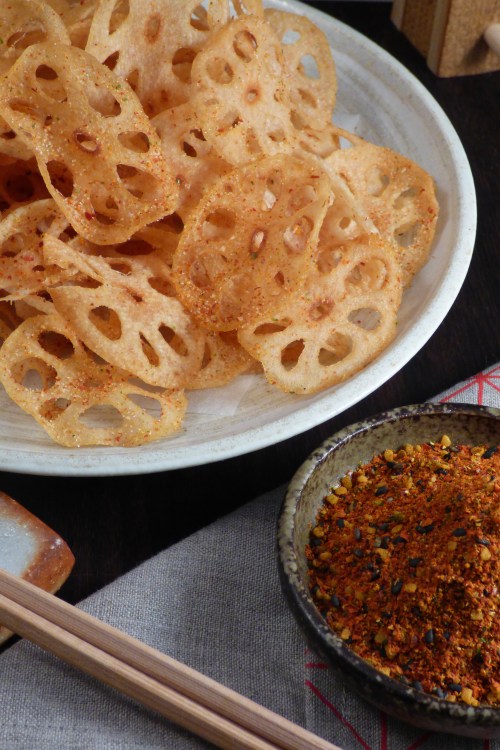
By mixing our shichimi with salt and sugar, we’ve made a delicious seasoning for an izakaya favourite- renkon chips.  With a flavour slightly sweeter than potato and a long history of being used medicinally, lotus root makes a perfect partner to the seasoning and when thinly sliced and fried as chips it makes a fantastic bar snack.

renkon chippu
Renkon chips dusted with our blend of spices, salt and sugar.

Continue reading “Renkon Chips with homemade Shichimi Togarashi”

Gyuu Tataki to Yuzukosho Modoki

Raw fish in the form of sashimi is quite often the first thing a foreigner thinks of when you mention Japanese food, but perhaps less well known is gyuu tataki, a lightly cooked piece of beef fillet that while seared on the outside remains completely raw in the centre.  We’ve paired our beef with a couple of citrussy accompaniments, firstly a home-made take on yuzukosho (we’ve used the word ‘modoki’ in the title, which means pseudo or mock) and then with a ponzu style dipping sauce made of lime juice and soy sauce.

Yuzukosho is a fantastically strong, fiery condiment used mainly with hotpot dishes and sashimi, made from fermented citrus fruit and green chilli peppers.  Yuzu- the traditional fruit used in the seasoning- is unfortunately for us very hard to come by in England, so we have combined a number of different fruits to craft a flavour reminiscent of the complex aroma the original has.  This zesty paste brings together sour, bitter, floral, salty and spicy flavours which all balance the beef’s natural earthiness and when used as an appetiser at the start of a meal really awakens your palate.

tataki
Seared beef with citrus and chilli yuzukosho.

Continue reading “Gyuu Tataki to Yuzukosho Modoki”

Yakitori assortment

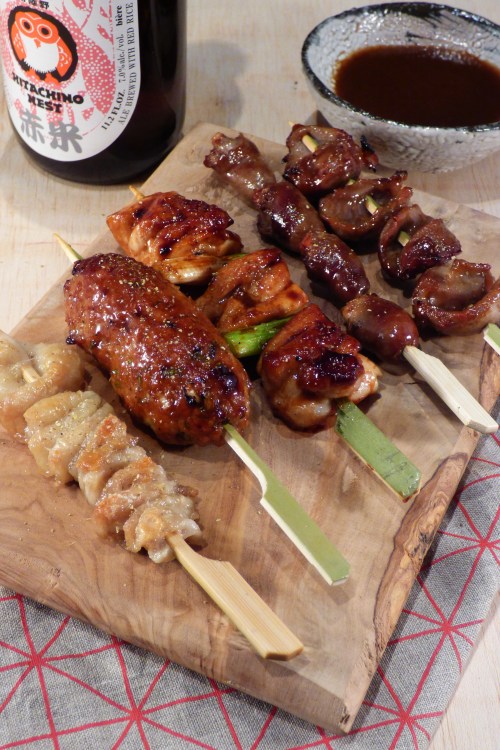
Perhaps Japan’s most ubiquitous bar food, or at least the one most well known outside of Japan, yakitori is a firm favourite with us.  Visiting a traditional yakitoriya is a daunting experience, normally lacking in menus, the bill of fare is hung from banners near the ceiling written in kanji completely indecipherable to most westerners, but they offer a fantastic insight into how the locals wind down after work.  Charcoal grilled chicken, offal and skin, served on sticks, glossed over quickly with a brush dipped in an almost magical concoction of drippings and soy sauce, the perfect accompaniment to a beer, or two.

yakitori
Yakitori, L to R: Skin, tsukune, thigh with spring onions, hearts, gizzards.

Continue reading “Yakitori assortment”