Tonkatsu

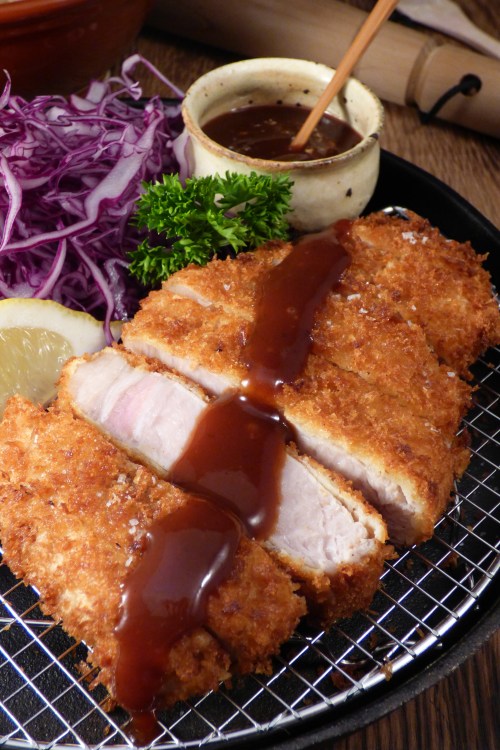
Of all the little rituals and practices involved in Japanese dining, my favourite is associated with preparing the sauce that accompanies crispy, deep fried pork at nearly all good tonkatsu restaurants.  The sound of a wooden surikogi grinding against the coarse, ribbed ceramic suribachi evokes images of craftsmen and traditions long lost to history; the nutty aroma of the sesame seeds pulverised between stick and bowl rise to meet your nose and do just as much to ready your appetite as the smell of the meat itself.  You dampen the crumbly powdered seeds with a ladle or two of tangy sōsu from a dark glazed pot, swirl it briefly with a stroke of your surikogi, then plunge a scalding hot nugget of pork into the marbled sauce on its way towards your mouth.  The simple but delicate act of adjusting the flavour of the sauce you’re about to eat creates an emotional connection to the food that makes you far more appreciative of it; it no longer feels like a quick bite to eat, it’s a feast that you’ve helped to make in some small way.  Each mouthful feels more satisfying and precious than it would have if you’d been served the seeds ready ground- and the flavour, far greater still.

Of course, this act of grinding your own seeds isn’t the only element that makes a tonkatsu meal so enticing; the incredibly hot, crisply crumbed, juicy fried pork steaks; the mountain of crunchy, cooling shredded cabbage (which normally comes with unlimited refills); the sticky, perfectly cooked blend of rice and barley mounded up in your bowl; and the ability to choose between the fattier more flavourful rosu and the tender and cleaner tasting hire cuts of pork all help make it one of our favourite meals to eat in Japan.

You can follow the same technique described below with a flattened out chicken breast to make torikatsu, a variation of tonkatsu which has become even more popular in the UK than the original, and frequently served with karē sauce.
 

tonkatsu
Tonkatsu- Juicy fried pork perfection.

Continue reading “Tonkatsu”

Onsen Tamago

Once places of legend and mystery- boiling sulphurous waters forced from deep within the earth, gouts of fiercesome steam and perhaps even home to ghosts and monsters- the onsen or spa towns that are dotted along Japan’s mountain ranges are now prime destinations for people to bathe and absorb the health giving properties of the mineral rich waters.  Tourists flock to towns such as Beppu in Kyushu to take in the eight different ‘Hells’, buy concentrated mineral salts to infuse their own baths at home and to sample local foods cooked in the steam that issues from the hillside.  These geothermally cooked foods are not just a recent invention for tourists however, locals have been utilising the naturally stable and constant temperature of the springs to prepare their food for centuries, the most popular use being for soft poached eggs, or onsen tamago.  After dropping a basket of eggs into the pool of a hot spring, they could be left unattended for an hour or two while the owner went about their other duties (or simply had a relaxing bath) before returning to collect their cooked eggs- rich, soft, custardy yolks, suspended within the silkiest of egg whites, the type of slow cooked eggs that modern restaurant reviewers rave about.

These most delicate of eggs can be made just as well at home and with no need for a volcanic hot spring, slow cooking them for three quarters of an hour at a low temperature is all that’s needed to coax the eggs to lightly set perfection.  Unlike boiled eggs which are forced into springy submission by the fierce heat of the water, onsen tamago are gently persuaded to gel into a mass that can barely hold itself together, collapsing lazily at the slightest touch of a chopstick into a creamy unctuous puddle.  They’re a staple part of a Japanese breakfast, served on top of steaming hot rice or plunged in a pool of broth, but they also make an incredible topping for a bowl of ramen, cracked open over a plate of spicy karē-raisu or dipped into batter and fried as one of the most delectable tempura imaginable.


onsen-tamago
Onsen Tamago- slow seduction and a long bath make the silkiest eggs.


Continue reading “Onsen Tamago”

Hokkaido Butter Ramen

When one thinks of ramen, deep steaming bowls of unctuous porky broth often spring to mind, accompanied by slices of meltingly fatty meat, perhaps a haphazard pile of spicy spring onions and some savoury marinated menma.  By no means is this the only way the Japanese crave their soup noodle fix though, with areas of the country creating their own specialities reflecting their own tastes and regional produce.  One version of the dish we were recently introduced to and have reproduced here is the poetically named Kitano Megumi Ramen, or the Blessing of the North Ramen; a creamy, soothing concoction that rejoices in using everything good from the most northerly island- Hokkaido.

Thanks to its cooler climate and the massive expanses of pasture land that cover Hokkaido- the least developed of the main islands- it is able to support a thriving dairy industry.  Smooth milk and rich, creamy butter from the island command a high price because of their superior quality- they proudly display their heritage and nearly always have the iconic outline of Hokkaido prominent on their packaging.  Similarly, prime examples of sweetcorn grow in abundance on the rich, volcanic soil and the kernels are often found bobbing around playfully in the salty, miso based ramen broths favoured in Sapporo, surprising your palate with a pop of freshness.  Particularly juicy cooked hams crafted from Sangen pigs complete this cornucopia of produce from the rugged north, creating a uniquely Hokkaidoan interpretation of the classic ramen.

To compliment the savoury, milky soup we’ve created a dashi flavoured compound butter to crown the ramen, but don’t feel limited to using it on just this dish- a pat or two of the smoky, seaweed infusion makes a fantastic oozy topping for a rib-eye steak or pork chop, and when tossed into steamed greens it lifts a relatively basic vegetable and turns it into something very special.


butter-ramen
Hokkaido Butter Ramen- creamy blessings from the North


Continue reading “Hokkaido Butter Ramen”

Nikujaga

Nikujaga, which translates literally as ‘meat and potatoes’, is pure unadulterated comfort food; to many Japanese people it is a taste of home and the memory of mother’s cooking. This sweet, incredibly warming, wintery dish has an easy-to-trace heritage going back to the beef stew served by the British Royal Navy in the late 1800s, and one Japanese cadet who was sent to England to further his naval studies.  Tōgō Heihachirō, who had achieved the rank of lieutenant before returning to Japan, had developed a fondness for the cuisine of his alma mater; describing the dish to the chefs of the Imperial Navy, he had them recreate its flavours using local ingredients and according to the story, nikujaga was born.

The key components of a classic British beef stew are still present- potatoes, carrots, onions and of course beef, although the latter being in a much smaller quantity than you would expect to find in the traditional version.  The similarities end there though- the umami-rich cooking liquor being made up of the staple Japanese ingredients of soy sauce, sake, mirin and dashi fish stock and the addition of chewy, glass-like shirataki noodles to complete the dish.  Like the original, nikujaga is the perfect simple and nostalgic meal to warm you up on a cold, wet winter’s day whichever side of the world you’re on.

nikujaga
Nikujaga- Japanese Navy style beef and potato stew


Continue reading “Nikujaga”

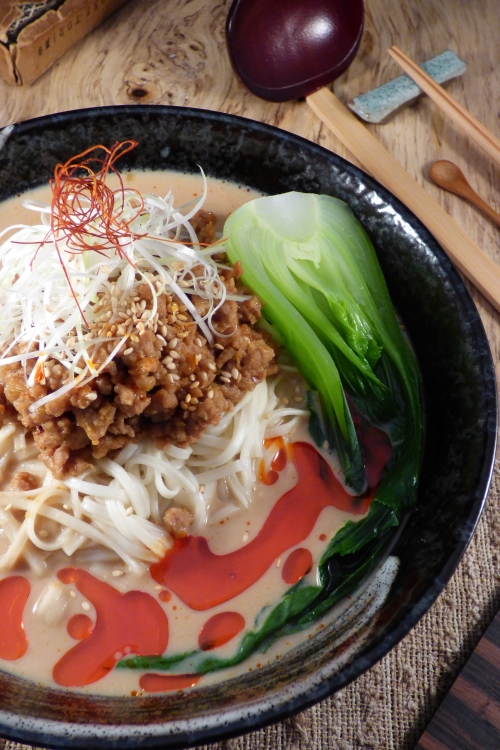
Tantanmen

Our first encounter with tantanmen- the Japanese version of the chilli laced, sesame sauced Sichuan noodle dish dandanmian- came in a cramped ramenya down a nondescript backstreet in the Tokyo district of Shibuya.  Sat at a dimly lit wooden counter where the thick varnish had been worn away by decades of jostling elbows from hungry diners, the chef placed before us two deep bowls of noodles sunken beneath blush ivory coloured broth, swirled with a bright red slick of rāyu and a scattering of fried pork.  After the initial shock of the vibrant colours against the dark bowls we were struck by the rich, earthy sesame aroma followed by the sweet smell of long-simmered chicken stock.  One messy, clumsily slurped mouthful was all it took for us to fall head over heels for this red-faced cousin of the classic pork ramen; the tingly chilli-kissed lips only helped our feelings grow stronger.

Little known outside of Japan, tantanmen has become a staple in many noodle restaurants and as a quick to prepare dinner for rushed parents to whip up for their ever-hungry children after school.  Much like most other styles of ramen, a powerfully flavoured broth assisted by a couple of well cast supporting characters is the key to a memorable meal.  Homemade chicken stock is enhanced with creamy, nutty sesame paste to give an incredibly rounded flavour, then poured over deliciously toothsome chukamen noodles before being topped with intense, salty pork mince seasoned with miso and sake.  The whole dish is then drenched (or perhaps merely drizzled, depending on your feelings towards spiciness) in chilli infused rāyu oil to not only increase the heat levels, but also to boost the savoury flavours and add the fat needed to smooth out the consistency and texture of your noodles.

Incidentally, the miso seasoned pork mince is a fantastic meaty component to a bento, or it works incredibly well alongside some scrambled eggs as a topping for a bowl of rice to make an easy version of the classic soboro-don.

tantanmen
Tantanmen- as creamy and nutty as it is spicy and intense.


Continue reading “Tantanmen”

Satsuma Imo Yōkan

Wagashi- traditional Japanese confectionery- tends to be an elegant and artistic representation of the season.   As we’ve recently passed the equinox and the cooler nights are starting to extend, nature is gradually turning from green to red and it’s time to embrace the change and eat something a little more Autumnal.  Alongside kabocha, mushrooms and persimmons, sweet potatoes are one of the key flavours that the Japanese look forward to eating during shokuyoku no aki or ‘the increased appetite of autumn’ and one of most popular ways to enjoy them is as a smooth, firm bar of imo yōkan.

Yōkan is one of the oldest forms of sweet still eaten regularly across Japan and is essentially a block of jellied mashed azuki beans, or in this case, mashed sweet potatoes.  We’ve enhanced our yōkan further with the addition of pieces of intense, almost chestnut-tasting, candied sweet potato to exaggerate the earthy, woodland flavour and add an extra texture to the jelly.  This delicately coloured, refreshing treat is the perfect accompaniment to a cup of matcha both in looks and taste, the sweet gel coating your mouth, balancing and rounding out the bitterness of the tea.


satsuma-imo-yokan
Satsuma Imo Yokan- the perfect autumnal accompaniment to a cup of matcha.


Continue reading “Satsuma Imo Yōkan”

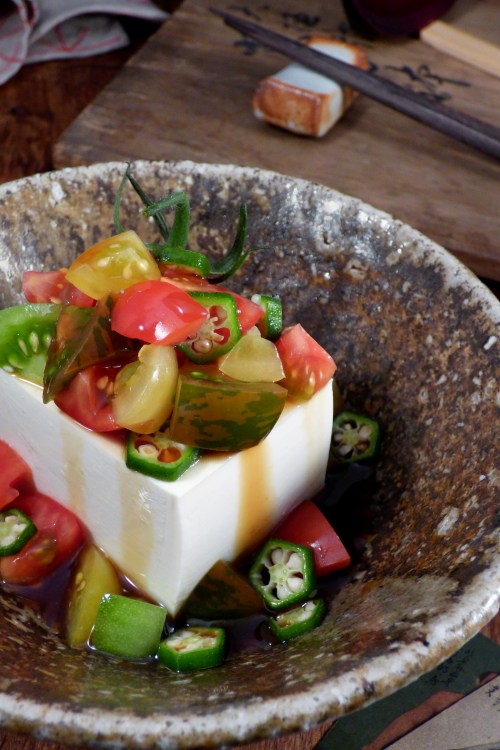
Hiyayakko Tofu

As the sweltering summer days drift slowly into mild, contemplative Autumn, nature’s hues turn to yellows and reds, and we long for cooling, refreshing food to take our minds off what’s left of the oppressive heat; luckily our gardens present us with exactly what we need- a bountiful crop of round, juicy tomatoes.  Cooking with tomatoes isn’t exactly commonplace in Japan; they are however often enjoyed on their own, added to colourful salads or used as a bright topping for a cool creamy block of tofu along with something a little neba neba.

Neba neba is an onomatopoeic word used to describe foods with a sticky, slimy or stringy texture- qualities not normally desired in most Western cuisine, but looked upon as being incredibly healthy and delicious in Japan.  The spectrum of neba neba ingredients range from those suited only to the most dedicated gourmand- pungent fermented soybean natto, raw egg whites, and tororo grated mountain yam- to the entry level mozuku seaweed, nameko gelatinous mushrooms and the almost universally accepted okra.  While many cultures have fought against okra’s desire to impart a gluey consistency to dishes by soaking out the juices or refusing to cut the vegetable, Japanese chefs have embraced and even sought out ingenious ways to encourage this characteristic.

Our recipe for hiyayakko tofu is a great way to gingerly encounter neba neba food for the first time.  It combines both tomatoes and okra with a refreshingly sharp and citrussy ponzu dressing to give a dish that is both cool and creamy, but still packed with enough zingy, salty punch to liven things up a little and the slightest hint of the stringy texture that the Japanese so love.


hiyayakko-tofu
Hiyayakko Tofu- cooling, creamy tofu, sweet juicy tomatoes and a fruity dressing.


Continue reading “Hiyayakko Tofu”

Kurobuta Miso

The most popular meat in modern Japan- with yearly sales surpassing both chicken and beef combined- is without a doubt, pork.  Ever since the wild boar was domesticated during the iron age, it has made up a large part of the country’s diet; even during the Warring States years of samurai rule and national adherence to Buddhism, when the eating of four-legged beasts was particularly frowned upon, the descriptive euphemisms “mountain whale” and “walking vegetable” were used to tiptoe around the rules denying the people their favourite meat.  Much like prohibition pharmacists in the US selling whisky to patients with enough money, unscrupulous Edo period doctors would prescribe pork as a health food for its stamina building properties and a black market trade developed up until the 1900s.  The twentieth century saw the government’s opinion of meat change dramatically- advisors decided that it was the vast amounts of meat consumed by Europeans that made them grow large and powerful; so for them to not be left behind in the changing world, it became of great national importance that the Japanese took up eating pork again.

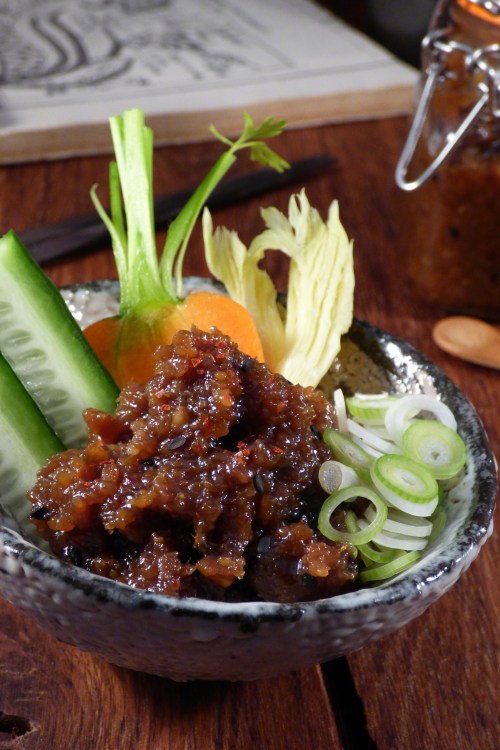
The Kagoshima region on the south-western tip of Kyūshū is home to the most acclaimed pork in all of Japan; bred from Okinawan Berkshire pigs, Kurobuta pork has particularly fine muscle fibres, a rich delicate flavour and above all, light, non-sticky and incredibly tasty fat.  Besides the regular pork dishes found across the country, Kagoshima has a number of delicacies that are almost impossible to find anywhere else, our favourite of these is a sticky variation on niku miso, packed with the savoury black pork that the region prides itself on.  Darkly sweet from unrefined brown sugar, salty and umami-rich from the mugimiso and deeply satisfying and savoury from slowly simmered pork, kurobuta miso is Japan’s answer to bacon jam.  It can be enjoyed smeared across an onigiri, packed into a sandwich, spooned over hot steamed rice, dropped into a bowl of ramen like a savoury depth charge or used as a simple sauce for a vegetable stir fry.  Perhaps the best way to eat it though is with crudités, scooped up greedily on a stick of raw cucumber or carrot, the cooling crunch of the vegetables offsetting the rich, intensity of the miso perfectly.


kurobutamiso
Kurobuta Miso- thick and sticky, salty pork jam.

Continue reading “Kurobuta Miso”

Ikameshi

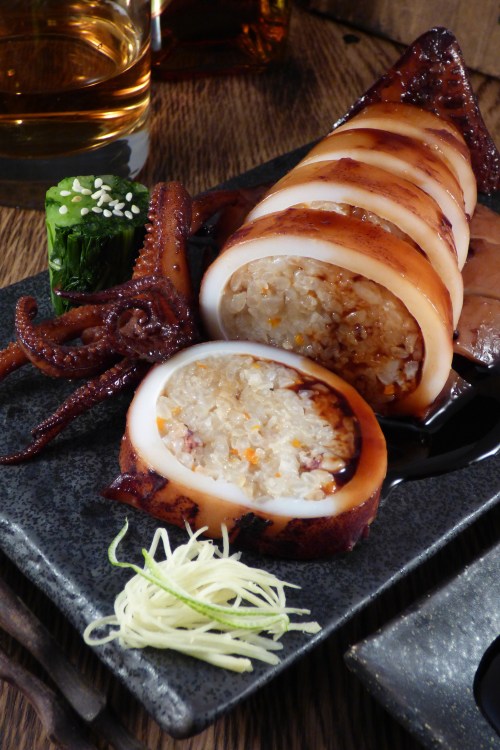
The fishing town of Mori on the eastern coast of the Oshima Peninsula is famous for three things; sweet farmed scallops, bountiful catches of Pacific herrings and an abundance of Japanese flying squid.  It was this easy-to-catch and incredibly popular squid that, with the ingenuity of a local shopkeeper, would help rice rations stretch twice as far during WWII and go on to become the regional dish of Hokkaido.  A bentō shop in Mori railway station came upon the idea of filling the cavity of the plentiful squid with the slowly dwindling rice supply before boiling it in a seasoned broth, the added bulk of the squid making the precious rice go that bit further.  As with so many other modern classic dishes, frugal cooks and wartime necessity had resulted in the creation of something delightful.

Plump, burnished squid stuffed to almost bursting point with sweet, pearlescent rice and glazed with a thick, sticky soy sauce have remained a station bentō favourite since they won their creator first prize in the annual Keio department store ekiben competition, which sought to find the best regional delicacies from around Japan.  Ikameshi makes an impressive but deceptively simple centrepiece for a meal, and is perhaps at its most hauntingly beautiful when served in a dimly lit, traditional izakaya accompanied by a handful of good friends and a glass or two of the local spirit.  We’ve shortened the preparation time of our ikameshi by steaming the rice before filling, which means that the squid cooks in about five minutes, preventing it from becoming tough.


ikameshi
Ikameshi- A parcel of rice wrapped in burnished squid.

Continue reading “Ikameshi”

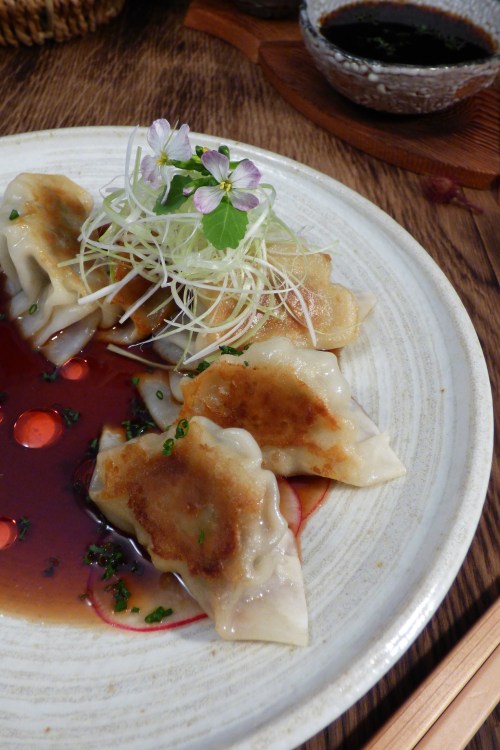
Tofu and Mushroom Gyoza

Thanks mainly to a nationwide on-again-off-again relationship with Buddhism and vegetarianism, Japanese chefs have become adept at transforming soy beans into incredibly realistic mock-meat products.  These are not just commercially made, industrial scaled foodstuffs though- even the smallest of farmsteads with minimal equipment and space can create tofu with the most delicate flavour and the silkiest of textures to rival the technologically advanced, multinational corporations, resulting in a wealth of artisanal and regional tofus across the country.  Mount Kōya, in the Wakayama prefecture, has been the home of Shingon Buddhism in Japan for over a thousand years and according to legend, the birthplace of freeze-dried Kōyadofu.  During the Edo period, a monk is said to have unintentionally left an offering of tofu outside overnight; being eight hundred metres up a mountain, the beancurd quickly froze in the night air and was forgotten about until the next morning.  Upon discovering his mistake the monk allowed the frozen block of tofu to defrost before eating it as normal, which is when he noticed the structural changes and intensified flavour resulting from the overnight chilling.

By freezing and defrosting, you reduce the amount of water that it can hold within its gel-like structure, turning the tofu into a spongy, crumbly mass similar in texture to cooked minced pork.  Fried lightly in a little oil to increase the fat content and with the addition of some finely chopped mushrooms to boost the savoury umami flavour, you end up with the perfect base for a vegan-friendly version of the classic gyoza that even the most tofu-phobic of people will enjoy.


tofu gyoza
Tofu and mushroom gyoza, a vegan version of the porky classic.

Continue reading “Tofu and Mushroom Gyoza”