Asa Teishoku

If time allows in the busy schedules of modern city living, one of the most harmonious and revitalizing meals you could possibly enjoy can be found in the traditional Japanese breakfast, or asa teishoku.  Built around the structural concept of ichijusansai, meaning one soup and three dishes, the standard spread for a Japanese breakfast includes miso soup, salted grilled fish, a piece of rolled omelette, and a couple of small vegetable dishes, all accompanied by the ubiquitous bowl of rice and plate of pickles.  Much like a full English breakfast it contains all of the necessary nutrients and calories for a productive morning’s work, but unlike its British cousin doesn’t make you sluggish or weigh you down with unwieldy amounts of meat, and it even contains a large amount of your daily recommended fruit and vegetable intake.

At first glance, a breakfast feast of nine or more components may seem like far too much work to undertake on a day-to-day basis (and in many respects it is- most modern Japanese people now eat a Western-style breakfast of bread or pancakes more often than a traditional spread) but most of the dishes are served either cold or at room temperature so can be made in advance and kept refrigerated until required, with only the soup and rice really needing to be cooked fresh in the morning.  All of the dishes from this typical breakfast also work incredibly well when used in a bento lunch or as side dishes to an evening meal.
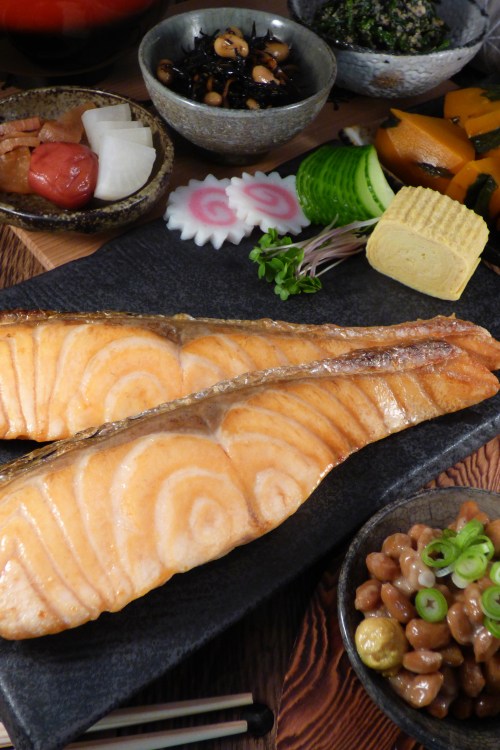
wachoshoku
Asa Teishoku- the Japanese way to start the day.

Continue reading “Asa Teishoku”

Karē raisu

Although it is only a relative newcomer to the cuisine of Japan, curry and rice can be bought in any town across the country from a huge range of restaurant chains.  Karē is based upon a British Raj style curry, so has more in common with Victorian English cookery than it does true Indian cuisine, and although traditional Northern Indian style curries have recently found their way into Japan’s diet, Japanese karē remains one of the country’s most popular dishes.

Instant karē sauces are readily available from convenience stores and supermarkets in roux form, and they’re all delicious, but we’ve chosen to make our own from scratch.  Straying slightly from the path of tradition we’ve gone for a chunkier version of karē with more vegetables and meat, but we still have the smooth, silky, sweet sauce that everyone loves.  If you leave out the vegetables and meat from our recipe you’ll have an excellent sauce for katsu-karē or a base for curry udon soup.

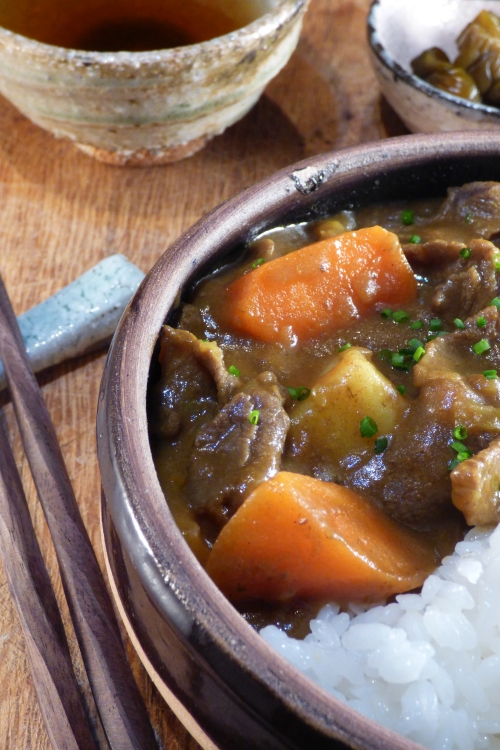
kare
Kare raisu; sweet, rich curry sauce with beef, potato, kabocha and carrot.


Continue reading “Karē raisu”

Two ways with kabocha (kabocha namul & kabocha no miso)

With Autumn being our favourite time of year it only stands to reason that kabocha squash, being such an Autumnal vegetable, is one of our go-to ingredients when we want to eat something Japanese and comforting.  Kabocha, with its sweet yet savoury flavour makes a great main component for a meal, but works just as well as a side dish or a splash of colour in a bento.  These recipes work well with butternut squash or most other hard skinned winter squashes (crown prince is a really good match for kabocha in both flavour and texture, but it’s probably best to peel its harder outer skin away)


Kabocha Namul.

Namul (or namuru) is a family of dishes of Korean origin; shredded vegetables, seasoned with sesame and served as a side dish.  This namul works really well as a side dish to rich, sweet meat dishes such as buta no kakuni, and its nutty flavour contrasts extremely well with vinegared foods or those served with a ponzu dipping sauce.  It even makes a great coleslaw substitute in sandwiches.

kabocha namul
Kabocha Namul, delicious served with Buta no Kakuni.

Continue reading “Two ways with kabocha (kabocha namul & kabocha no miso)”