Furofuki Daikon

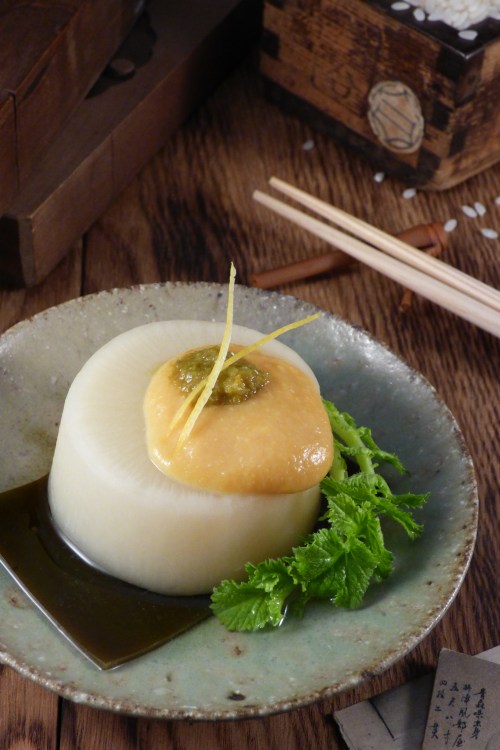
Most commonly encountered grated as a garnish for oroshi dishes or as a crunchy pickle (the Nihombashi district of Tokyo even holds an annual daikon festival every October where hundreds of vendors sell their own variation on the pickle), daikon- Japan’s unwieldy, oversized white radish- is surprisingly even tastier when used in a warm cooked dish than when eaten raw.  The mellow sweetness of the root is encouraged into the limelight by gentle stewing while the spicy, almost watercress-like flavour is ushered into a supporting role- more of an intriguing, characterful nuance than its normal in-your-face approach.  A soft, juicy disc of daikon is a prize to be found bobbing around in a steaming vat of oden along with the assorted fish cakes, or cut into tiny cubes sunk into a bowl of miso soup, but by far the best way to enjoy cooked daikon is as a tender, gently simmered ‘steak’.  Our preferred partner to a succulent piece of daikon is a classic nerimiso sauce; intensely flavoured on its own, too savoury and far too salty, but after you bite into the tender radish, it releases its juices and they combine together with the yuzu perfumed paste to create the perfect seasoning.

After a bout of illness or a long trip abroad, simmered daikon is often the first comfort food that Japanese people crave; the enveloping, warming aroma eliciting carefree childhood memories and the soothing, nostalgic taste of mothers’ homely cooking.   Whilst its close relative the turnip has fallen out of favour in British cuisine in recent years for being too old-fashioned in flavour, stewed daikon has never lost its popularity in Japan, remaining a winter favourite and an example of traditional, country style cooking at its finest.
 

furofuki
Furofuki Daikon- Simmered radish with white miso sauce.


Continue reading “Furofuki Daikon”

Hokkaido Butter Ramen

When one thinks of ramen, deep steaming bowls of unctuous porky broth often spring to mind, accompanied by slices of meltingly fatty meat, perhaps a haphazard pile of spicy spring onions and some savoury marinated menma.  By no means is this the only way the Japanese crave their soup noodle fix though, with areas of the country creating their own specialities reflecting their own tastes and regional produce.  One version of the dish we were recently introduced to and have reproduced here is the poetically named Kitano Megumi Ramen, or the Blessing of the North Ramen; a creamy, soothing concoction that rejoices in using everything good from the most northerly island- Hokkaido.

Thanks to its cooler climate and the massive expanses of pasture land that cover Hokkaido- the least developed of the main islands- it is able to support a thriving dairy industry.  Smooth milk and rich, creamy butter from the island command a high price because of their superior quality- they proudly display their heritage and nearly always have the iconic outline of Hokkaido prominent on their packaging.  Similarly, prime examples of sweetcorn grow in abundance on the rich, volcanic soil and the kernels are often found bobbing around playfully in the salty, miso based ramen broths favoured in Sapporo, surprising your palate with a pop of freshness.  Particularly juicy cooked hams crafted from Sangen pigs complete this cornucopia of produce from the rugged north, creating a uniquely Hokkaidoan interpretation of the classic ramen.

To compliment the savoury, milky soup we’ve created a dashi flavoured compound butter to crown the ramen, but don’t feel limited to using it on just this dish- a pat or two of the smoky, seaweed infusion makes a fantastic oozy topping for a rib-eye steak or pork chop, and when tossed into steamed greens it lifts a relatively basic vegetable and turns it into something very special.


butter-ramen
Hokkaido Butter Ramen- creamy blessings from the North


Continue reading “Hokkaido Butter Ramen”

Tantanmen

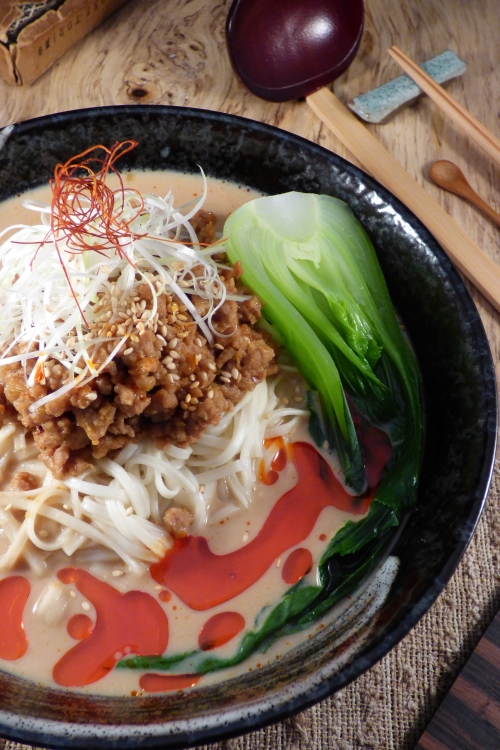
Our first encounter with tantanmen- the Japanese version of the chilli laced, sesame sauced Sichuan noodle dish dandanmian- came in a cramped ramenya down a nondescript backstreet in the Tokyo district of Shibuya.  Sat at a dimly lit wooden counter where the thick varnish had been worn away by decades of jostling elbows from hungry diners, the chef placed before us two deep bowls of noodles sunken beneath blush ivory coloured broth, swirled with a bright red slick of rāyu and a scattering of fried pork.  After the initial shock of the vibrant colours against the dark bowls we were struck by the rich, earthy sesame aroma followed by the sweet smell of long-simmered chicken stock.  One messy, clumsily slurped mouthful was all it took for us to fall head over heels for this red-faced cousin of the classic pork ramen; the tingly chilli-kissed lips only helped our feelings grow stronger.

Little known outside of Japan, tantanmen has become a staple in many noodle restaurants and as a quick to prepare dinner for rushed parents to whip up for their ever-hungry children after school.  Much like most other styles of ramen, a powerfully flavoured broth assisted by a couple of well cast supporting characters is the key to a memorable meal.  Homemade chicken stock is enhanced with creamy, nutty sesame paste to give an incredibly rounded flavour, then poured over deliciously toothsome chukamen noodles before being topped with intense, salty pork mince seasoned with miso and sake.  The whole dish is then drenched (or perhaps merely drizzled, depending on your feelings towards spiciness) in chilli infused rāyu oil to not only increase the heat levels, but also to boost the savoury flavours and add the fat needed to smooth out the consistency and texture of your noodles.

Incidentally, the miso seasoned pork mince is a fantastic meaty component to a bento, or it works incredibly well alongside some scrambled eggs as a topping for a bowl of rice to make an easy version of the classic soboro-don.

tantanmen
Tantanmen- as creamy and nutty as it is spicy and intense.


Continue reading “Tantanmen”

Kurobuta Miso

The most popular meat in modern Japan- with yearly sales surpassing both chicken and beef combined- is without a doubt, pork.  Ever since the wild boar was domesticated during the iron age, it has made up a large part of the country’s diet; even during the Warring States years of samurai rule and national adherence to Buddhism, when the eating of four-legged beasts was particularly frowned upon, the descriptive euphemisms “mountain whale” and “walking vegetable” were used to tiptoe around the rules denying the people their favourite meat.  Much like prohibition pharmacists in the US selling whisky to patients with enough money, unscrupulous Edo period doctors would prescribe pork as a health food for its stamina building properties and a black market trade developed up until the 1900s.  The twentieth century saw the government’s opinion of meat change dramatically- advisors decided that it was the vast amounts of meat consumed by Europeans that made them grow large and powerful; so for them to not be left behind in the changing world, it became of great national importance that the Japanese took up eating pork again.

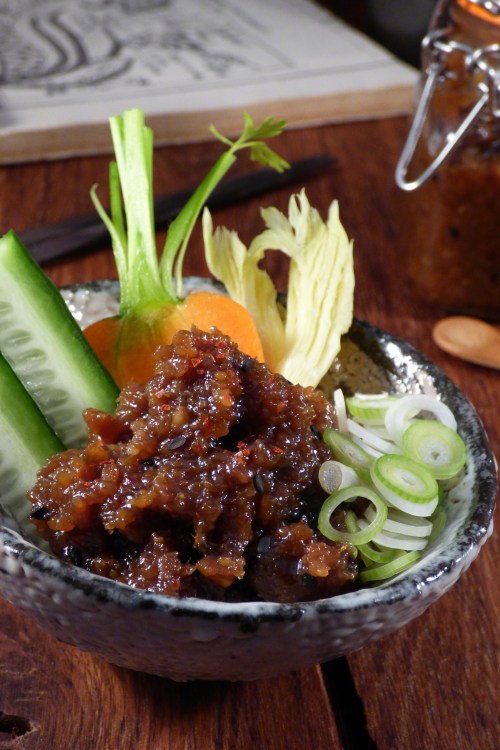
The Kagoshima region on the south-western tip of Kyūshū is home to the most acclaimed pork in all of Japan; bred from Okinawan Berkshire pigs, Kurobuta pork has particularly fine muscle fibres, a rich delicate flavour and above all, light, non-sticky and incredibly tasty fat.  Besides the regular pork dishes found across the country, Kagoshima has a number of delicacies that are almost impossible to find anywhere else, our favourite of these is a sticky variation on niku miso, packed with the savoury black pork that the region prides itself on.  Darkly sweet from unrefined brown sugar, salty and umami-rich from the mugimiso and deeply satisfying and savoury from slowly simmered pork, kurobuta miso is Japan’s answer to bacon jam.  It can be enjoyed smeared across an onigiri, packed into a sandwich, spooned over hot steamed rice, dropped into a bowl of ramen like a savoury depth charge or used as a simple sauce for a vegetable stir fry.  Perhaps the best way to eat it though is with crudités, scooped up greedily on a stick of raw cucumber or carrot, the cooling crunch of the vegetables offsetting the rich, intensity of the miso perfectly.


kurobutamiso
Kurobuta Miso- thick and sticky, salty pork jam.

Continue reading “Kurobuta Miso”

Ninniku no Misozuke

Tsukemono- preserved vegetables- pop up nearly every time food is consumed in Japan but can easily go unnoticed; they’re served with sushi to cleanse the palate in between flavours, as a snack with beers after a long day at work, used to top a bowl of rice and garnish dishes or as a course all of their own in a traditional kaiseki meal.  These pickles help bring balance and harmony to a meal, they awaken the senses and excite the mouth preventing flavour fatigue and they add textures and colours that are otherwise missing from the foods that they accompany; samurai even used them for a quick energy boost during battle- and that alone is a good enough endorsement for me.

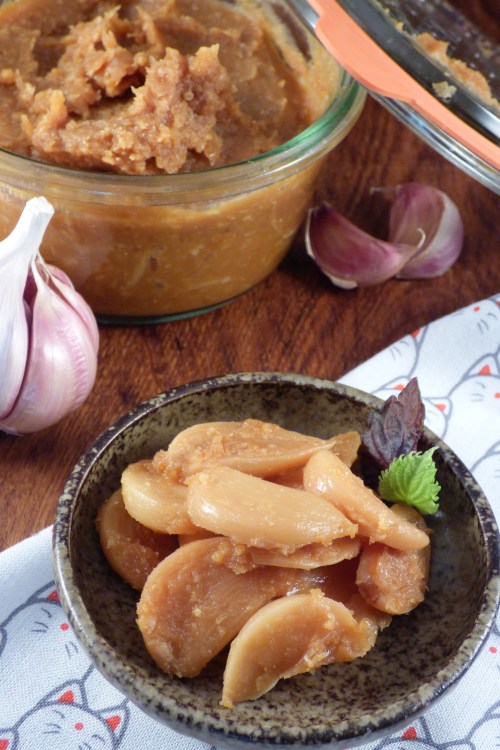
Unlike most Western pickles, those of Japan don’t rely purely on salt or vinegar to take care of the preservation of the main ingredient- tsukemono can be made with leftover lees from brewing sake, rice bran, mustard, soy sauce or as in this recipe, miso.  These misozuke pickles are perhaps the most intensely savoury of all the tsukemono, garlic cloves are buried in a finger-licking mixture of miso, sake and mirin before being left for months to slowly transform.  The miso helps temper the fiery flavour of the garlic which in turn mellows out the saltiness of the miso, resulting in two beautifully balanced condiments; a crunchy, umami-rich pickled garlic that’s a perfect accompaniment to meat or fish dishes, and a garlic enhanced nerimiso that’s just crying out to be stirred into a soup, spooned over hot steamed vegetables or smeared onto a crispy, lightly singed yaki onigiri.  Oishii!


ninniku
Ninniku Misozuke- deeply savoury, highly addictive miso-pickled garlic.

Continue reading “Ninniku no Misozuke”

Homemade Miso

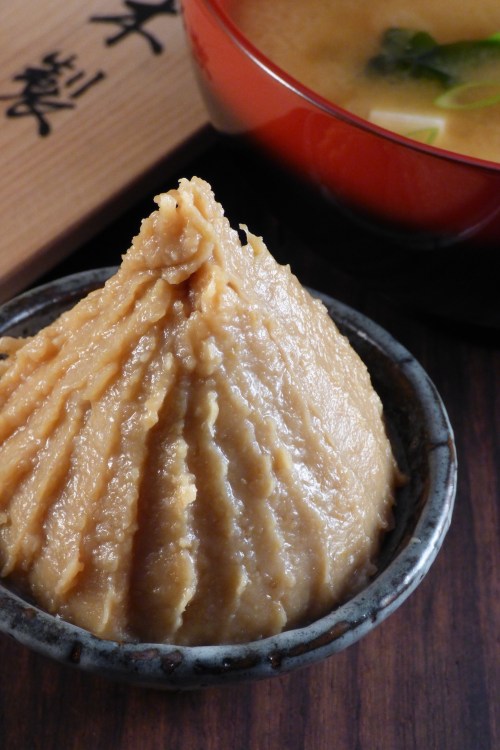
Miso is one of the cornerstones of Japanese cuisine, a protein rich paste of fermented soy beans used in making pickles, sauces, spreads and in its most well known guise as soup.  Here in the middle of the UK it is pretty difficult to get hold of good miso, and when you find it you can end up paying luxury prices for a basic ingredient, so, having some home-brewing experience we decided to try making our own.  A fungus called koji is grown on grains such as rice or barley before being introduced to cooked beans and salt.  The salt kills off any bacteria present to make an environment conducive to fermenting, but since the koji enzymes can still function in a salty environment, they continue to do their job breaking down the carbohydrates and proteins creating the paste we know and love.

The process of making your own miso isn’t a short one, taking around two months to get a usable product, but we feel that following the journey from beans to miso is helpful in understanding Japanese food.  Rice grains inoculated with koji can be bought online from a number of suppliers, otherwise all the ingredients are extremely easy to get and the hardest part of the procedure is the waiting and resisting using your paste before it’s ready.  Incidentally, you also end up with a small amount of home-brewed tamari every now and then as it leaches out of the miso.  We wouldn’t have been able to work out how to make miso without the help of the brilliant, but out of print, Book of Miso by William Shurtleff & Akiko Aoyagi; we highly recommend hunting down a copy if you want to experiment some more with fermenting your own miso.

miso
Homemade Miso


Continue reading “Homemade Miso”