Yaki Udon

Yaki Udon is a Fukuoka variation on one of Japan’s most beloved street foods- yakisoba, or fried noodles.  A colourful mixture of lightly wilted but still crunchy vegetables, a mound of chewy noodles and a scattering of meat or seafood, all fried together and coated in a sweet, fruity and slightly spicy sauce.  At festivals and in parks up and down Japan you’ll find yatai food carts serving yakisoba, the smell of the sōsu caramelizing on the huge iron hot-plates enticing you over and tempting you into having a bowlful.  Despite the name suggesting it should be made from buckwheat soba noodles, most of the country makes yakisoba with long, thin wheat noodles similar to ramen, while the people of Fukuoka have elevated the dish to an even more substantial place by making it with our personal favourite noodle, the thick and toothsome udon.

A seafood yaki udon was perhaps the first Japanese meal we ever ate, back in 2001, and it has remained a firm favourite since then.  Not many weeks pass by without us making a panful at least once, loaded with vegetables for a quick after-work evening meal.  It’s an almost infinitely flexible dish, add whatever vegetables or meat you like to it, just make sure that they’re bright, colourful and full of varied flavours and textures.

yakiudon
Fukuoka style yaki udon- more satisfying than the thinner, but equally delicious yakisoba.

Continue reading “Yaki Udon”

Okonomiyaki

Bearing more similarities to rösti or bubble and squeak than pizza, as it is often compared, okonomiyaki is to my mind one of the best ways to eat cabbage and a great example of wartime necessity creating fantastic food.  During World War II, when rice supplies were at their lowest, inexpensive wheat flour was made into a thick batter, mixed with shredded cabbage and fried as filling, savoury pancakes.  Seventy years and numerous adaptations to the original recipe later and we now have one of Japan’s most popular dishes.  Nagaimo (a type of yam from a climbing vine) is often added to the batter nowadays to enhance the consistency with its unique sticky, foamy texture.  If you can’t find nagaimo in an oriental supermarket, beating some air into the two egg whites in the recipe will help to make the okonomiyaki fluffier and closer to the real thing.

The word okonomi translates as ‘what you like’ and yaki to ‘grilled’, and as the name suggests, you can add whatever toppings you like to this dish, our favourite combination being prawns and smoked bacon.  Whatever extra ingredients you choose, just make sure to top the pancake with aonori seaweed, dried bonito flakes, Japanese mayonnaise and the punchy, fruity brown sauce known as sōsu or okonomi sauce.


okonomiyaki
Kansai style Okonomiyaki

Continue reading “Okonomiyaki”

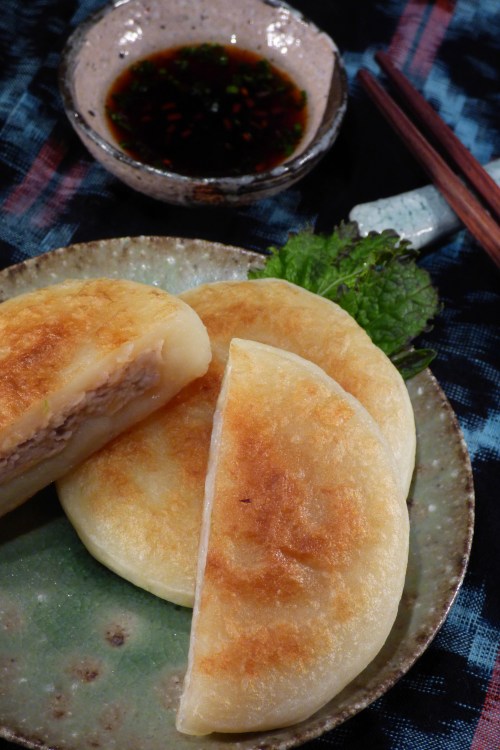
Jagaimo Oyaki

Oyaki are delicious little fried filled parcels, usually with a buckwheat outer shell but can be made with pretty much anything that you can form into a dough, in this case leftover mashed potato.  The filling of these oyaki is an attempt to recreate the flavours of some that we bought from a street vendor outside the Hachiman shrine in Tomioka, Tokyo- a mixture of chopped pork and prawns, similar to what you’d find inside everyone’s favourite little dumplings, gyoza.

oyaki
Jagaimo Oyaki, fried parcels of joy.

Continue reading “Jagaimo Oyaki”