Nikujaga

Nikujaga, which translates literally as ‘meat and potatoes’, is pure unadulterated comfort food; to many Japanese people it is a taste of home and the memory of mother’s cooking. This sweet, incredibly warming, wintery dish has an easy-to-trace heritage going back to the beef stew served by the British Royal Navy in the late 1800s, and one Japanese cadet who was sent to England to further his naval studies.  Tōgō Heihachirō, who had achieved the rank of lieutenant before returning to Japan, had developed a fondness for the cuisine of his alma mater; describing the dish to the chefs of the Imperial Navy, he had them recreate its flavours using local ingredients and according to the story, nikujaga was born.

The key components of a classic British beef stew are still present- potatoes, carrots, onions and of course beef, although the latter being in a much smaller quantity than you would expect to find in the traditional version.  The similarities end there though- the umami-rich cooking liquor being made up of the staple Japanese ingredients of soy sauce, sake, mirin and dashi fish stock and the addition of chewy, glass-like shirataki noodles to complete the dish.  Like the original, nikujaga is the perfect simple and nostalgic meal to warm you up on a cold, wet winter’s day whichever side of the world you’re on.

nikujaga
Nikujaga- Japanese Navy style beef and potato stew


Continue reading “Nikujaga”

Ebi Furai to Poteto Sarada

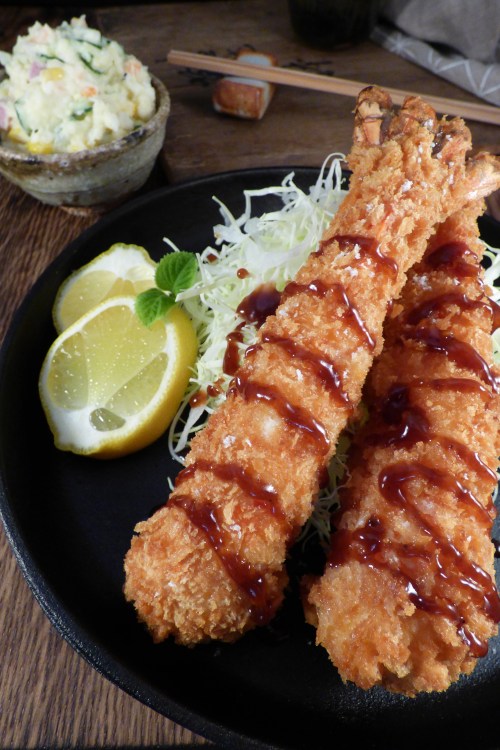
Ebi Furai- colossal, breaded, deep fried prawns- became the signature dish of Nagoya thanks to a quip made by the television comedian Tamori at the expense of the city’s dialect and accent.  Misunderstanding of this joke led to the nation believing that Nagoya excelled in making the succulent, sweet prawns coated in shatteringly crisp shards of panko, and the city was happy to adopt this modern meibutsu as their speciality.  In reality ebi furai was created during the Meiji Restoration period of the late nineteenth century in response to the increasingly popular deep fried yōshoku dishes such as tonkatsu and menchi-katsu that were being served in the larger, metropolitan cities.  Traditionally made using Kuruma ebi (Japanese imperial prawns) which can grow to a monstrous thirty centimetres in length, nowadays the more ecologically sustainable black tiger shrimp is used in making this celebration of oversized shellfish.

Breaded, fried prawns have since become one of the most common ingredients for bentō packed lunches, crammed into ebi-sando sandwiches smeared with coleslaw or even served hotdog style in long soft bread rolls topped with creamy tartar sauce. Perhaps our favourite way to eat ebi furai though is paired with another yōshoku bentō staple, the Japanese take on potato salad.  Creamier and more tangy than your typical potato salad, this version uses mashed potatoes studded with nuggets of smoked ham, crushed hard boiled eggs, salted cucumbers, and ultra sweet, exploding kernels of corn bound together with the ubiquitous Kewpie mayonnaise and a dash of vinegar.  These two dishes make a delicious light meal when combined with some thinly shredded cabbage and a drizzle of the thick Worcestershire-style sauce that goes so well with fried breaded foods, or they work wonderfully well individually as starting points for making a packed lunch.

ebi furai
Ebi Furai- colossal breaded fried prawns, served with Japanese potato salad.

Continue reading “Ebi Furai to Poteto Sarada”

Ebi Katsu Burger with Onipote

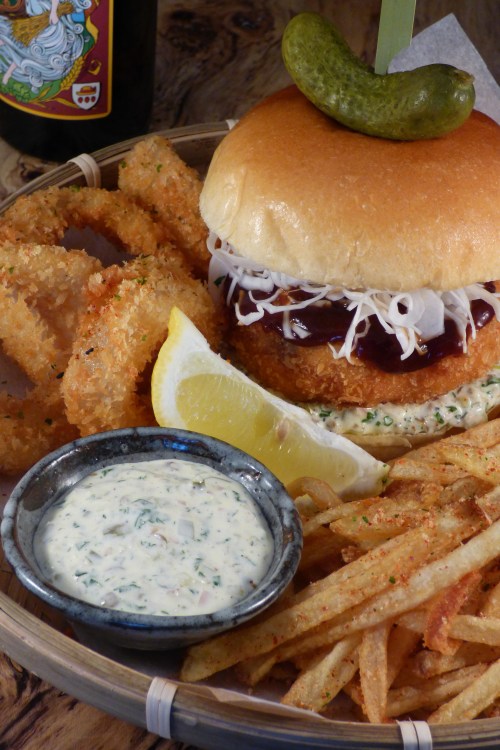
Food in Japan is divided into two distinct categories; Washoku, the native, traditional cuisine that dates back many hundreds if not thousands of years, and Yōshoku (or seiyōshoku), Western style dishes that started being imported into Japan’s culinary tapestry during the Meiji restoration.  Along with firm favourites such as karē, tonkatsu, and ramen, ebi furai- or breaded, fried prawns lie firmly within the yōshoku camp, probably owing their heritage to Portuguese traders who introduced crumb coated pork cutlets to Japan during the late 1880s.  Much later, an enterprising chef combined two of the most popular yōshoku, ebi furai and hambāgā to create an ebi katsu burger, chopped prawns shaped into a patty, breaded and then deep fried before being served in a soft buttery bun with the traditional furai accompaniments of tartare and tonkatsu sauces.   We’ve adapted this modern classic slightly by mixing our prawn meat with minced hanpen, a very airy fishcake made from pollock and nagaimo yam, which gives the burger a particularly light, bouncy, juicy texture without detracting from the sweet, delicate flavour of the prawn.

Onipote (a contraction of the words onion and potato) is a half portion of onion rings served with a half portion of fries, a dish we first came across in an Akihabara branch of MOSBurger, Japan’s largest fast food chain.  Why chose between both of these classic sides when you can have a little of each?  Rather than batter our onion rings we’ve opted for the same crunchy panko crumbs that we used on our ebi burger and then dredged both these and the super skinny fries with a sweet and spicy shichimi togarashi salt. Perfect!


ebi katsu burger
Ebi Katsu Burger- crisp breadcrumbs on the outside and juicy, sweet prawns on the inside.

Continue reading “Ebi Katsu Burger with Onipote”

Murasaki Imo Tarts

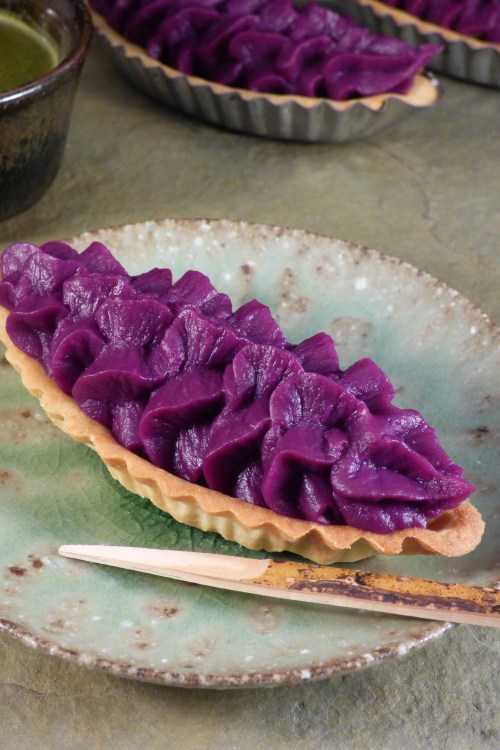
Every now and then you come across an ingredient that you fall head-over-heels in love with, you cook everything imaginable with it and spend hours dreaming about how to get just one more recipe out of it.  For us, that ingredient is murasaki imo, or purple sweet potato.  Similar to the pale yellow or white fleshed sweet potatoes usually favoured by the Japanese, these purple potatoes have more dry matter than the orange fleshed American variety, and a much stronger taste.  A rich, fruity, almost winey flavour, an otherworldly, deep purple colour and the added bonus that they are packed full of vitamins make them a winner in our books for savoury dishes or desserts.

Japanese meals do not traditionally have a dessert course or end with something sweet.  The time for a sweet treat is at around either 10am or 3pm, as a contrasting flavour to go with the slightly bitter green tea that workers would normally stop for.  The confections served with tea vary from moulded higashi of sugar and rice flour to fresh fruits, and from jelly-like warabi mochi made from bracken starch to small French style cakes and tarts such as this Okinawan creation.  Murasaki imo is mashed, enriched with cream, butter and sugar then piped into crisp pastry cases, just enough for three or four bites before you get back to work.

murasaki-imo tart
Sweet potato pie, Okinawa style.

Continue reading “Murasaki Imo Tarts”

Daigaku imo

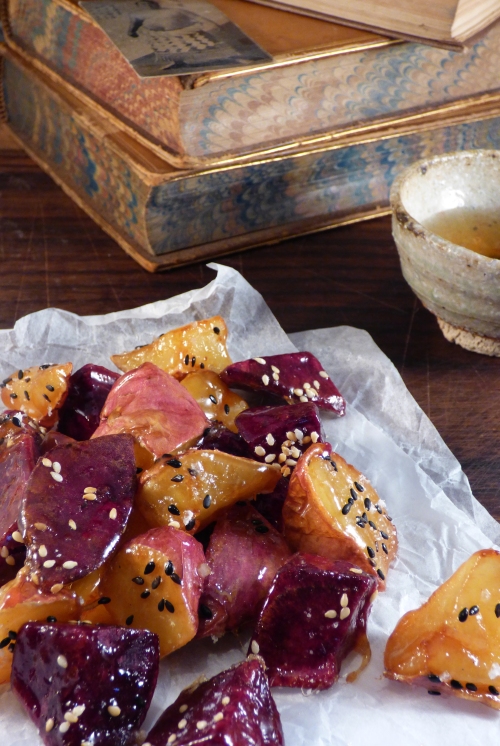
The rather cryptically named daigaku imo, or university potatoes, have been a staple snack food across the university towns of Japan since the 1920s.  Deep fried sweet potatoes, tossed in caramel flavoured with soy sauce which quickly becomes brittle in the air; what’s not to love about them?  The soy caramel coating brings to mind the salted caramel chocolates which have become popular in the UK over the last decade, and the glazed potatoes make me think of American Thanksgiving style candied yams.  Traditionally these are made with the red-pink skinned, white fleshed sweet potatoes most common in Japan, but we ate some made with the gloriously bright purple murasaki imo in Kamakura and couldn’t resist recreating those in part here.  Murasaki imo have an almost winey, lychee flavour to them which works wonderfully with the salty soy sauce.

daigaku imo
Daigaku imo; fried sweet potatoes, glazed in soy caramel and sprinkled with gomashio.

Continue reading “Daigaku imo”

Karē raisu

Although it is only a relative newcomer to the cuisine of Japan, curry and rice can be bought in any town across the country from a huge range of restaurant chains.  Karē is based upon a British Raj style curry, so has more in common with Victorian English cookery than it does true Indian cuisine, and although traditional Northern Indian style curries have recently found their way into Japan’s diet, Japanese karē remains one of the country’s most popular dishes.

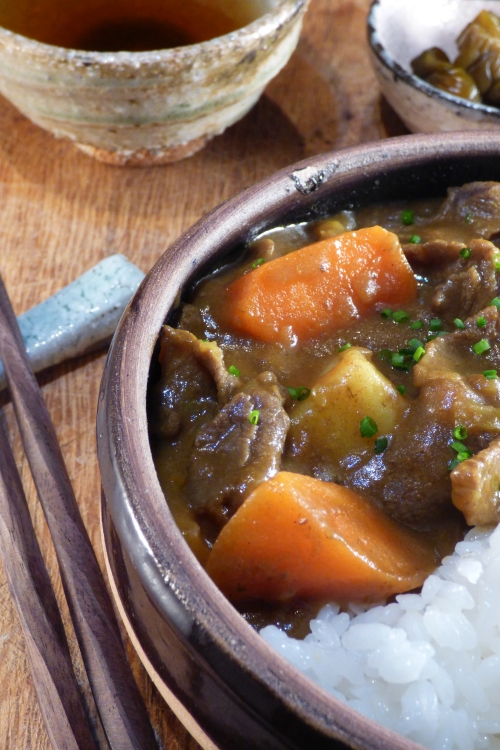
Instant karē sauces are readily available from convenience stores and supermarkets in roux form, and they’re all delicious, but we’ve chosen to make our own from scratch.  Straying slightly from the path of tradition we’ve gone for a chunkier version of karē with more vegetables and meat, but we still have the smooth, silky, sweet sauce that everyone loves.  If you leave out the vegetables and meat from our recipe you’ll have an excellent sauce for katsu-karē or a base for curry udon soup.

kare
Kare raisu; sweet, rich curry sauce with beef, potato, kabocha and carrot.


Continue reading “Karē raisu”

Jagaimo Oyaki

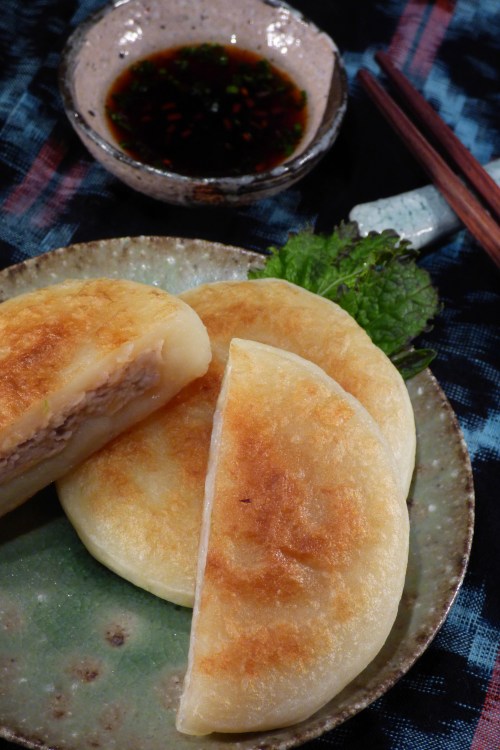
Oyaki are delicious little fried filled parcels, usually with a buckwheat outer shell but can be made with pretty much anything that you can form into a dough, in this case leftover mashed potato.  The filling of these oyaki is an attempt to recreate the flavours of some that we bought from a street vendor outside the Hachiman shrine in Tomioka, Tokyo- a mixture of chopped pork and prawns, similar to what you’d find inside everyone’s favourite little dumplings, gyoza.

oyaki
Jagaimo Oyaki, fried parcels of joy.

Continue reading “Jagaimo Oyaki”