Tōgan Soboro Ankake

Summer fatigue or natsubate can be a big problem during the humid middle months of the year; people become lethargic, have trouble sleeping, lose their appetites and in the workplace, productivity hits an annual low.  The Japanese way to combat this starts with the copious amounts of air conditioning installed within practically every home and building, but the most effective treatment against overheating comes through the application of food.  You could follow in the habits of the kappa- a fart-loving mythical water dwelling creature, and enjoy a salty, marinated cucumber on a stick, perhaps sit down to a mound of shaved ice topped with mashed beans and fruity syrups or greedily devour a wedge of melon, but snacking can only get you so far through the day and eventually you’ll want to eat a real meal.  A dish of simmered and chilled tōgan- a close relative of both the cucumber and watermelon, can provide the relief needed to get you through the most oppressive of summer days.  Known across much of Asia as Winter Melon because it is one of the only fresh vegetables still available by that season, tōgan is recognised in both Ayurvedic and Yakuzen schools of medicine as being able to remove excess heat from the body and revive flagging energy.  After being cooked briefly in dashi and dressed with minced prawns and chicken, also known in folk remedies for its restorative qualities, this chilled tōgan makes a light but sustaining meal with a crisp bite and a soothingly cool sauce that makes even the hottest, stuffiest weather that little bit more manageable.



soboro ankake
Winter melon with shrimp and chicken ankake sauce- simple cooling food for hot summer days


Continue reading “Tōgan Soboro Ankake”

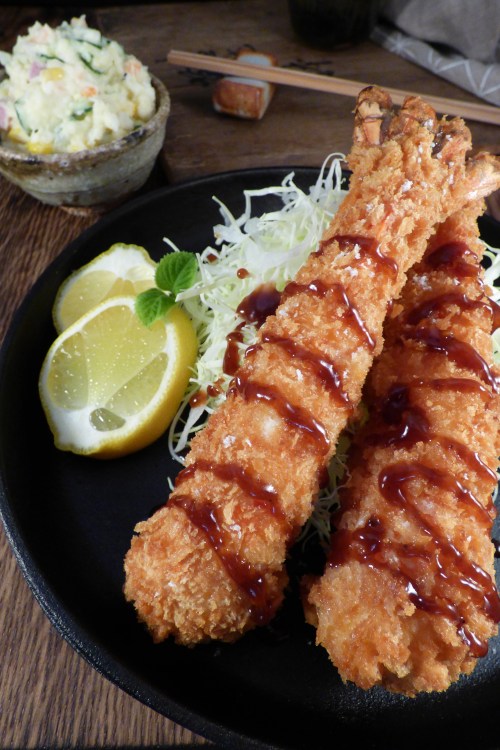
Ebi Furai to Poteto Sarada

Ebi Furai- colossal, breaded, deep fried prawns- became the signature dish of Nagoya thanks to a quip made by the television comedian Tamori at the expense of the city’s dialect and accent.  Misunderstanding of this joke led to the nation believing that Nagoya excelled in making the succulent, sweet prawns coated in shatteringly crisp shards of panko, and the city was happy to adopt this modern meibutsu as their speciality.  In reality ebi furai was created during the Meiji Restoration period of the late nineteenth century in response to the increasingly popular deep fried yōshoku dishes such as tonkatsu and menchi-katsu that were being served in the larger, metropolitan cities.  Traditionally made using Kuruma ebi (Japanese imperial prawns) which can grow to a monstrous thirty centimetres in length, nowadays the more ecologically sustainable black tiger shrimp is used in making this celebration of oversized shellfish.

Breaded, fried prawns have since become one of the most common ingredients for bentō packed lunches, crammed into ebi-sando sandwiches smeared with coleslaw or even served hotdog style in long soft bread rolls topped with creamy tartar sauce. Perhaps our favourite way to eat ebi furai though is paired with another yōshoku bentō staple, the Japanese take on potato salad.  Creamier and more tangy than your typical potato salad, this version uses mashed potatoes studded with nuggets of smoked ham, crushed hard boiled eggs, salted cucumbers, and ultra sweet, exploding kernels of corn bound together with the ubiquitous Kewpie mayonnaise and a dash of vinegar.  These two dishes make a delicious light meal when combined with some thinly shredded cabbage and a drizzle of the thick Worcestershire-style sauce that goes so well with fried breaded foods, or they work wonderfully well individually as starting points for making a packed lunch.

ebi furai
Ebi Furai- colossal breaded fried prawns, served with Japanese potato salad.

Continue reading “Ebi Furai to Poteto Sarada”

Yaki Udon

Yaki Udon is a Fukuoka variation on one of Japan’s most beloved street foods- yakisoba, or fried noodles.  A colourful mixture of lightly wilted but still crunchy vegetables, a mound of chewy noodles and a scattering of meat or seafood, all fried together and coated in a sweet, fruity and slightly spicy sauce.  At festivals and in parks up and down Japan you’ll find yatai food carts serving yakisoba, the smell of the sōsu caramelizing on the huge iron hot-plates enticing you over and tempting you into having a bowlful.  Despite the name suggesting it should be made from buckwheat soba noodles, most of the country makes yakisoba with long, thin wheat noodles similar to ramen, while the people of Fukuoka have elevated the dish to an even more substantial place by making it with our personal favourite noodle, the thick and toothsome udon.

A seafood yaki udon was perhaps the first Japanese meal we ever ate, back in 2001, and it has remained a firm favourite since then.  Not many weeks pass by without us making a panful at least once, loaded with vegetables for a quick after-work evening meal.  It’s an almost infinitely flexible dish, add whatever vegetables or meat you like to it, just make sure that they’re bright, colourful and full of varied flavours and textures.

yakiudon
Fukuoka style yaki udon- more satisfying than the thinner, but equally delicious yakisoba.

Continue reading “Yaki Udon”

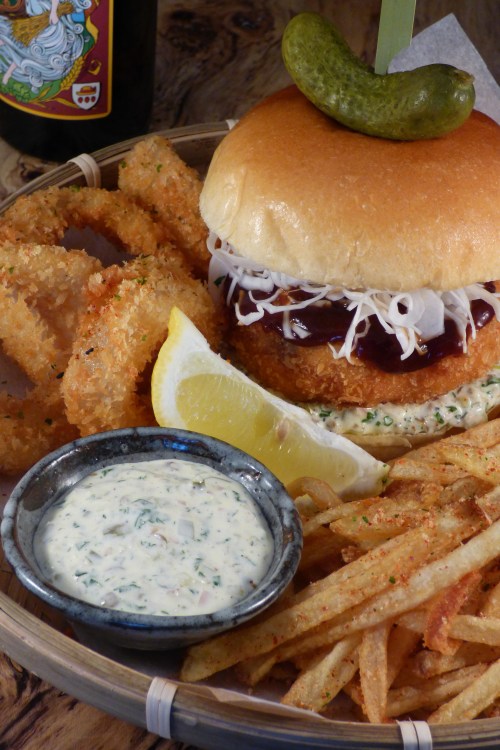
Ebi Katsu Burger with Onipote

Food in Japan is divided into two distinct categories; Washoku, the native, traditional cuisine that dates back many hundreds if not thousands of years, and Yōshoku (or seiyōshoku), Western style dishes that started being imported into Japan’s culinary tapestry during the Meiji restoration.  Along with firm favourites such as karē, tonkatsu, and ramen, ebi furai- or breaded, fried prawns lie firmly within the yōshoku camp, probably owing their heritage to Portuguese traders who introduced crumb coated pork cutlets to Japan during the late 1880s.  Much later, an enterprising chef combined two of the most popular yōshoku, ebi furai and hambāgā to create an ebi katsu burger, chopped prawns shaped into a patty, breaded and then deep fried before being served in a soft buttery bun with the traditional furai accompaniments of tartare and tonkatsu sauces.   We’ve adapted this modern classic slightly by mixing our prawn meat with minced hanpen, a very airy fishcake made from pollock and nagaimo yam, which gives the burger a particularly light, bouncy, juicy texture without detracting from the sweet, delicate flavour of the prawn.

Onipote (a contraction of the words onion and potato) is a half portion of onion rings served with a half portion of fries, a dish we first came across in an Akihabara branch of MOSBurger, Japan’s largest fast food chain.  Why chose between both of these classic sides when you can have a little of each?  Rather than batter our onion rings we’ve opted for the same crunchy panko crumbs that we used on our ebi burger and then dredged both these and the super skinny fries with a sweet and spicy shichimi togarashi salt. Perfect!


ebi katsu burger
Ebi Katsu Burger- crisp breadcrumbs on the outside and juicy, sweet prawns on the inside.

Continue reading “Ebi Katsu Burger with Onipote”