Asa Teishoku

If time allows in the busy schedules of modern city living, one of the most harmonious and revitalizing meals you could possibly enjoy can be found in the traditional Japanese breakfast, or asa teishoku.  Built around the structural concept of ichijusansai, meaning one soup and three dishes, the standard spread for a Japanese breakfast includes miso soup, salted grilled fish, a piece of rolled omelette, and a couple of small vegetable dishes, all accompanied by the ubiquitous bowl of rice and plate of pickles.  Much like a full English breakfast it contains all of the necessary nutrients and calories for a productive morning’s work, but unlike its British cousin doesn’t make you sluggish or weigh you down with unwieldy amounts of meat, and it even contains a large amount of your daily recommended fruit and vegetable intake.

At first glance, a breakfast feast of nine or more components may seem like far too much work to undertake on a day-to-day basis (and in many respects it is- most modern Japanese people now eat a Western-style breakfast of bread or pancakes more often than a traditional spread) but most of the dishes are served either cold or at room temperature so can be made in advance and kept refrigerated until required, with only the soup and rice really needing to be cooked fresh in the morning.  All of the dishes from this typical breakfast also work incredibly well when used in a bento lunch or as side dishes to an evening meal.
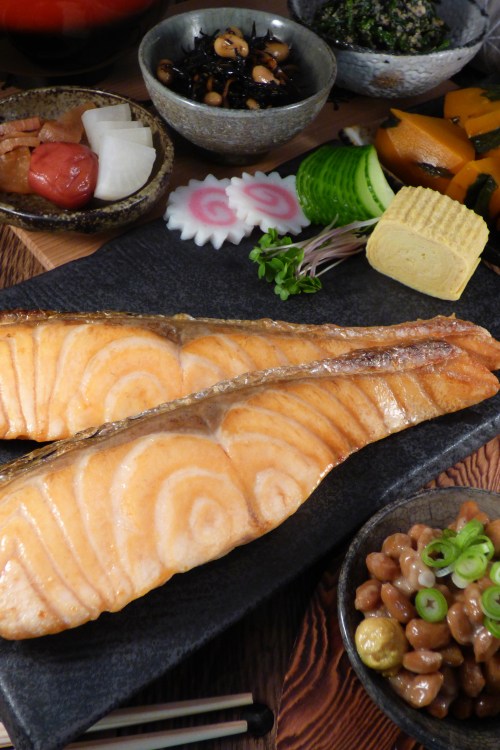
wachoshoku
Asa Teishoku- the Japanese way to start the day.

Continue reading “Asa Teishoku”

Homemade Furikake

Originally created as a calcium rich dietary supplement to combat malnutrition in the working classes and the soldiers of the First World War, furikake rice topping has since become a store-cupboard staple found in nearly every Japanese household.  First marketed by pharmacists during the 1910s, it went by many names including ‘Kore Wa Umai’ or ‘This is Good’ before it was christened furikake in the late 1950s.  Since then the make-up of the seasoning has evolved down multiple pathways creating an almost endless variety of flavours, nearly all of them based around the standard elements of seaweed, sesame seeds, salt and dried fish products.

The first step of many Japanese recipes is making dashi, a mellow broth of kombu and katsuobushi that forms a solid foundation upon which you base the rest of your dish.  Once the stock has been drained and used, the seaweed and bonito flakes are normally discarded, but they contain far too much flavour to simply throw away, so we like to recycle these unwanted ingredients into our own homemade furikake.  When combined with toasted sesame seeds, soy sauce and mirin the result is a deeply savoury condiment with a hint of smoky nuttiness that’s perfect for topping a bowl of hot steamed rice, mixing into an onigiri or even scattering over a fresh batch of popcorn.


furikake
Homemade furikake: rice’s best friend.

Continue reading “Homemade Furikake”