Duck Egg Chawanmushi

If you ever have the pleasure of eating in one of Japan’s more formal kaiseki ryōri restaurants, you’ll probably be served a futamono- “lidded course” between your sashimi and your grilled yakimono course.  Your futamono could be a small stew of seasonal ingredients, a soup such as a suimono, or our favourite, chawanmushi- a silky smooth treasure hunt of a dish.  Named after the lidded tea-cup or chawan that it is cooked in, chawanmushi is a wonderfully light, delicate egg custard, seasoned with dashi and mirin, and steamed until just set enough to encase and obscure the morsels trapped within its depths.  Each spoonful of custard is an edible lucky dip where you might bring up a firm ginkgo nut, a tender prawn, a juicy chunk of shiitake or a sour, palate cleansing bubble of yuzu pulp.

A popular, and to my mind almost compulsory addition to chawanmushi is a spoon or two of ankake sauce added moments before serving.  This mildly fishy, faintly smoky sauce adds an extra savoury oomph to each mouthful and helps you appreciate the sweetness of the steamed eggs.

 

chawan mushi
Duck egg chawanmushi- a lucky dip into savoury egg custard.

Continue reading “Duck Egg Chawanmushi”

Ramson Gyoza Suimono

For me, spring only truly starts when the first foods of the season are ready to harvest or forage, and one of the plants that I most eagerly look out for each year is wild garlic or ramsons.  Ten minutes walk from our house is a small brook, its banks lined with a stretch of woodland that provides a welcome glimpse of nature among the noise and rush of the city.  Within the dappled light of these woods lies a patch of ramson plants, carpeting the edges of pathways and giving off their distinctive pungent aroma whenever they’re lightly brushed by a passing bird or walker.  The leaves of this shamefully overlooked and short-lived plant provide a powerful garlic hit along with a spring onion-like flavour that makes it perfect for mixing into dipping sauces and dumpling fillings, and if you’re lucky enough to find some plants with open flowers they offer up an edible garnish of such intense flavour you won’t believe it came from such a delicate looking thing.

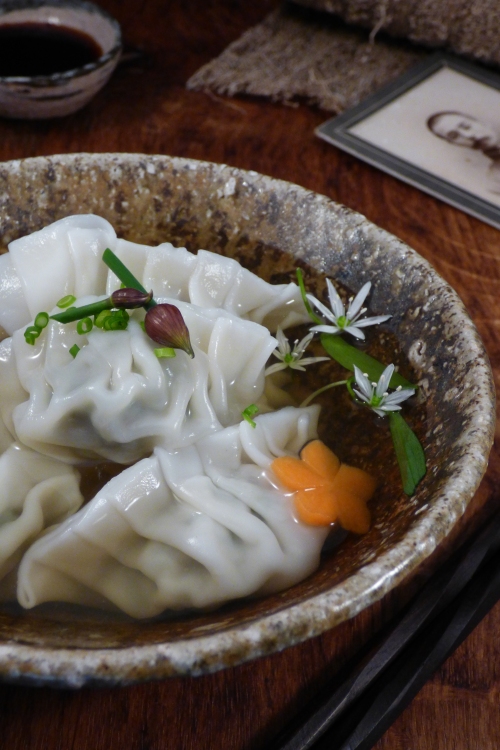
Seasonality and the use of local produce are two of the main cornerstones of Japanese cuisine so these wild ramsons are the perfect ingredient to use in the kaiseki style dish of suimono or clear soup.  A delicate, lightly seasoned broth that allows you to focus on the flavours of the individual elements that it contains, in this case a pile of carefully crimped duck and wild garlic gyoza and a scattering of flowers and leaves from both the foraged ramsons and some young chives.

gyoza suimono
Clear soup with duck gyoza and wild garlic flowers.

Continue reading “Ramson Gyoza Suimono”

Yasai no Agebitashi

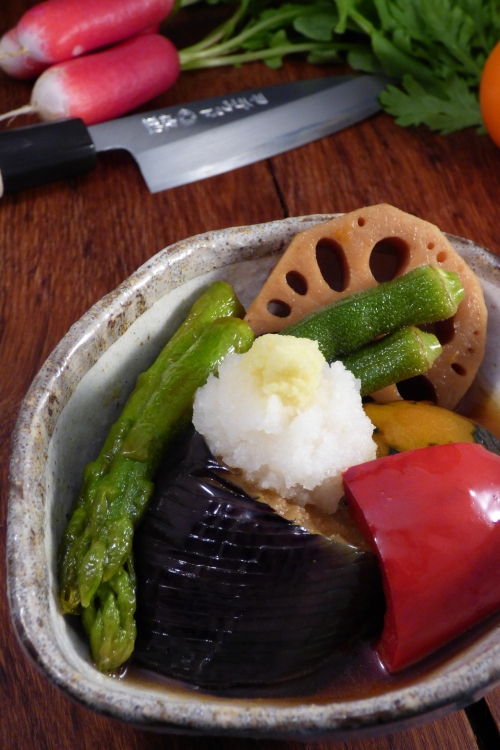
Every now and then you come across a side dish so vibrant, flavoursome and bountiful that it could be- and often is in our household- a main meal in itself.  Yasai no Agebitashi, or ‘fried and soaked vegetables’ to translate its name, is one such dish.  Nearly always made with aubergine as the main ingredient, a selection of firm vegetables are deep fried quickly without any form of coating, ‘suage’ style.  The fierce heat of the oil causes the insides of the vegetables to steam through before they get marinated in a sweetened dashi broth; the tender, cooked vegetables absorb the liquid like a sponge, carrying the flavour throughout.  This technique creates silky, creamy aubergines that melt in your mouth, while crisper vegetables like the lotus root and red peppers retain just the right amount of bite, providing a fantastic contrast of textures.  Topped off with a spicy mound of grated daikon and ginger to counter the richness of the vegetables and the sweetness of the broth, this is the perfect appetiser or side dish to go with nearly any meal, and by changing the dashi to a kombu broth you can easily make a vegan or vegetarian version.

agebitashi
Yasai no Agebitashi: Fried vegetables soaked in a sweet soy broth.

Continue reading “Yasai no Agebitashi”

Unadon to Samphire Gomaae

Hugely popular from its creation in the late Edo period, to modern times, Unadon- or Unagi Donburi to give the dish its full name- is one of the most common ways to eat freshwater eels in Japan.  An oversized lacquer bowl, a mound of perfectly cooked, pearly white rice, and a fillet of eel, glazed to a rich mahogany colour with a mixture of soy and mirin, caramelised and slightly charred.  The first time we ate unadon was early one Summer’s morning in Shibuya.  After a dawn visit to the Meiji shrine complex we needed a hearty breakfast to boost our flagging energy, knowing little Japanese at the time we stumbled across a restaurant that was open where we recognised the word for ‘eel’ and decided to give it a go.  It proved to be the ultimate reviver, the sugary, salty kabayaki glaze along with the big hit of protein and fat got us back on our feet in no time and it has gone on to become one of our favourite breakfast dishes.

Despite being traditionally eaten all over the UK, getting fresh eels nowadays is a little difficult, so over the years we’ve experimented with cooking different native fishes in the kabayaki style.  The closest match we’ve been able to find is the locally abundant garfish, long and silvery with a fine flesh and just a little fat, it even looks pretty similar to an eel and should be easy to get hold of in most fishmongers.  Whilst at our fishmongers we also saw some beautiful samphire for sale and knew that this vibrant, salty, shoreline succulent would make the perfect gomaae accompaniment to the unadon; while these are both classic breakfast dishes, they’re delicious for any meal of the day.

unadon
Unadon served with sesame dressed samphire.

Continue reading “Unadon to Samphire Gomaae”

Hanetsuki gyoza

Steaming hot crescent moons, an aromatic mixture of juicy pork, cabbage and garlic chives encased within a chewy skin, fried on one side until shatteringly crisp and served with a slightly sour dipping sauce.  Gyoza have become an integral and hugely popular part of nearly every ramenya’s menu, finding their place as an almost essential accompaniment to the deep, nourishing bowls of noodles.  When cooked poorly they can drag down a memorable dish of ramen, but if cooked well, with consideration and care, they have the power to raise a lacklustre meal to giddy heights, providing a contrasting texture to the silky noodles and soothing broth.  High quality frozen gyoza wrappers are available in most oriental supermarkets these days, meaning that home-made dumplings are more achievable than ever before, and while the filling and pleating of the little parcels can take a while to get used to, there’s a huge amount of satisfaction to be had when you gaze upon a tray of your handiwork.

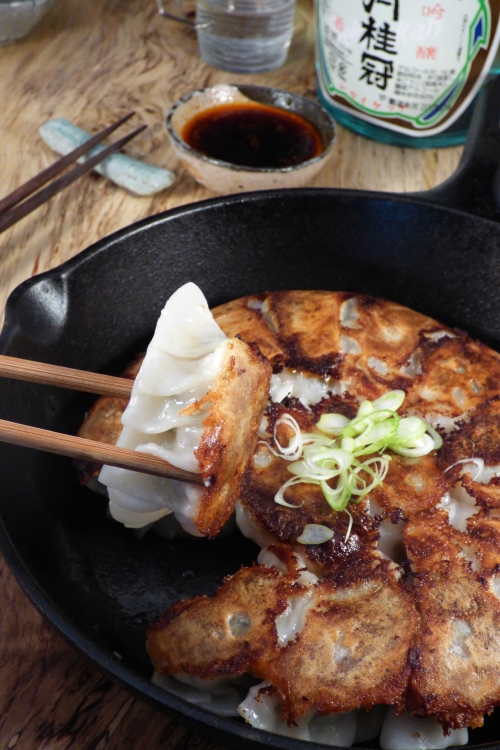
Hanetsuki gyoza are a recent variation of these classic pot-stickers, where a number of plump, steamed dumplings are fused together in a hot pan with a thin mixture of flour and water.  This batter crisps and darkens to form lacey skirts or wings (hane) around the edges of each dumpling, creating more surface area for crunchy, brittle bubbles to form and when placed in the middle of the table, it makes a fantastic tear-and-share style dish, perfect for relaxed dining with friends.


hanetsuki gyoza
Hanetsuki- winged gyoza

Continue reading “Hanetsuki gyoza”

Kani Meshi

Crustaceans have always played a large part in the cuisine of Japan and one of our favourite uses of them is in kani meshi.  It belongs to a family of dishes known as takikomi gohan which translates roughly as ‘cooked with rice’.  In a similar way to a pilaf or kedgeree, takikomi dishes usually involve cooking rice in a seasoned broth to introduce extra layers of flavour along with the addition of vegetables or meat; in the case of kani meshi, this is the sweet juicy white flesh of a crab.

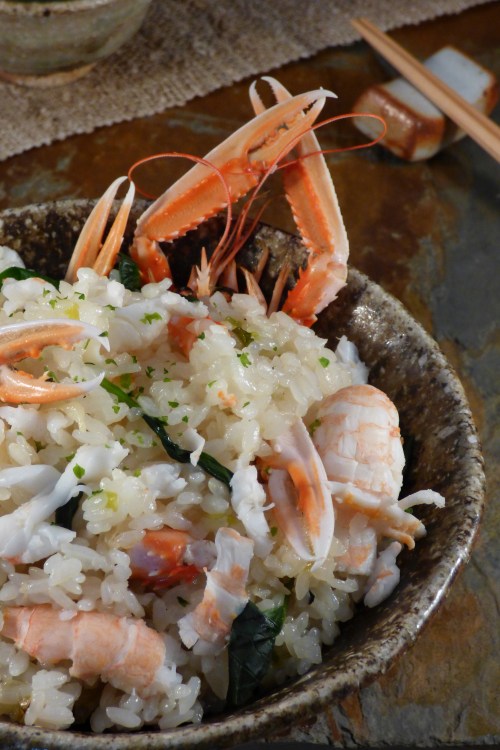
Whilst shopping for our kani meshi, we were distracted by some incredible looking Scottish langoustines, they were too perfect to resist- miniature, eight inch lobsters, fiercely armed and packed with a delicately perfumed flesh not dissimilar to prawns.  We decided on the spot that they would make a fantastic variation on the standard crab kani meshi, and to compliment their sweet briny flavour we’ve added some seaweed and dried bonito to create a subtly flavoured rice that reminds us of holidays by the coast, both here in the UK and in Japan.  Our kani meshi makes a great side dish in place of regular rice, and there’s a deliciously tactile pleasure in cracking the claws open and picking out the morsels of flesh from inside.

kanimeshi
Langoustine Kani Meshi.

Continue reading “Kani Meshi”

Karaage / Tatsuta-age

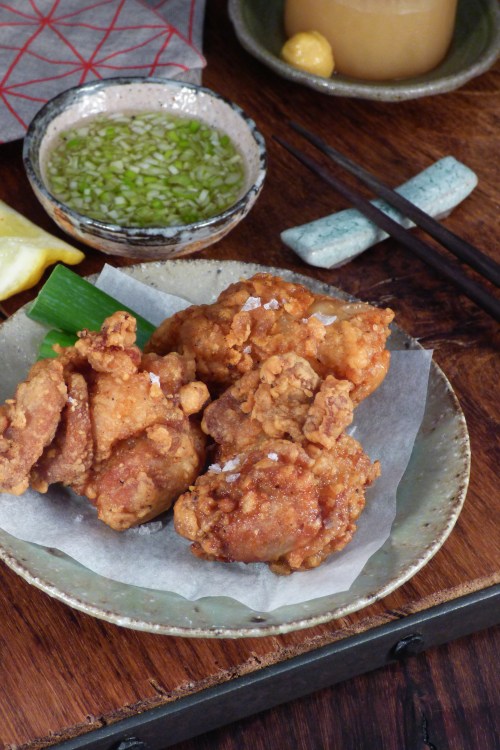
Fried chicken.  Two simple words that have the power to whet appetites across the globe and set imaginations spinning, whether you’re in Louisiana, Mali or Scotland, you know that when you order your local rendition of the dish you’ll be getting moist, juicy meat in a crisp coating packed full of flavour.  Karaage is the fried chicken of Japan- nearly always meat from the thigh of the bird, seasoned with soy sauce and ginger before being dusted in a light coating of potato starch and fried to crunchy perfection.  Unusually for Japanese cuisine, large amounts of garlic are included in the marinade for karaage, along with the addition of some sake this helps to offset the slightly gamey flavour that chickens had before post-war American birds were imported to become the mainstay of local farms.  The soy sauce used in marinating the chicken imparts a slightly reddish brown colour to the coating, which is said to resemble the reflection of maple leaves in the water of the river Tatsuta in Nara, and is how the dish received its second, more romantic name, Tatsuta-age.

We like to accompany our karaage with a fresh dipping sauce made from spring onions and shiro shoyu, or white soy sauce; brewed with more wheat than other soy sauces, it has a much milder flavour which makes it perfect for seasoning lighter meats such as chicken or seafood.

Whether you know them as karaage, Tatsuta-age or even as JFC, these two-bite-sized pieces of juicy chicken are a perfect way to start a meal or make a fantastic addition to a bento or lunch box.


karaage
Karaage- Japanese Fried Chicken

Continue reading “Karaage / Tatsuta-age”

Kakuni Manjū

Simultaneously being both the lightest, most delicate, cloud-like bun imaginable and the richest, sweetest, most succulent pork belly possible, kakuni manjū are perhaps the ultimate variation on a bacon sandwich and frankly, I can’t think of a better combination of meat and bread that I’ve ever eaten.

Like the sweet, soy braised pork that fills them, manjū– or hirata buns to give them their recently adopted American name- owe their heritage to Chinese steamed buns such as the snowy white stars of many a dim sum menu, char siu bao.  During the two hundred and twenty year period of isolation, Japan closed off its borders to the outside world, and the only way in or out was through Nagasaki, which quickly became what is now the country’s oldest Chinatown.  Workers and traders travelling through the port took with them their favourite home comforts which were quickly adopted by local restaurants and yatai (food carts) before spreading across the country.  Slow braised dongpo pork from Eastern China and pillowy mantou steamed bread from the North were two such dishes that arrived in this influx of unfamiliar cuisine, and were the culinary parents of this most delicious of sandwiches (perhaps with a little matchmaking courtesy of both Japan and China’s occupation of Taiwan and its now famous gua bao split steamed buns).

Breaking from tradition, we’ve added a few extras to our kakuni manjū- the creaminess of the mayonnaise and the crisp, refreshing bite of cucumber and shredded spring onions help to lift and round out the flavour of the bun.  Eat them on their own with a few drinks, or as is now common practice, as an accompaniment to a deep, meaty bowl of ramen for the ultimate pork filled meal.


kakuni manju
Kakuni Manju- a Nagasaki street food classic.

Continue reading “Kakuni Manjū”

Asari no Sakamushi to Nasu Dengaku

After receiving a present of some sake from a friend, we wanted to have a dinner themed around the gift to make the most of it, and what better food to serve than two izakaya favourites, both steeped in the delicate flavours of rice wine.  The star of the meal was Asari no Sakamushi, a mountain of fresh white clams, steamed in sake flavoured with plenty of ginger and a pungent sprinkling of garlic chives.  As is the case with many other seafood-loving nations around the world, the Japanese know that the best way to treat shellfish is to not mess around and cook them quickly with a few aromatics and a splash of regional wine.  To go with the clams we chose a side dish of Nasu Dengaku- soft, creamy baked aubergines topped with a slick of sake-enhanced miso and a nutty crunch of toasted sesame seeds.  The grilled, slightly charred vegetable providing a pleasing contrast to the delicate, steamed clams and by cooking both of the dishes with the same sake that we were going to be drinking, we were able to keep a continuity of flavours running through the meal.

sakemushi clams
Asari no Sakamushi- sake steamed clams


Continue reading “Asari no Sakamushi to Nasu Dengaku”

Tofu Hijiki Fritters

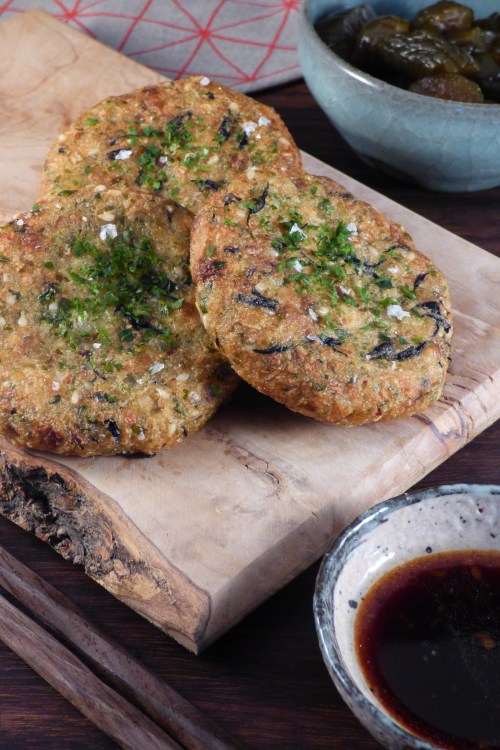
During our last visit to Arashiyama, we visited a little restaurant specialising in Kyo-ryori, or Kyoto style cuisine, where among other regional fare we ate some little fried tofu fritters.  Similar to ganmodoki, these springy morsels were made of crushed tofu mixed with assorted vegetables and hijiki seaweed before being deep fried.  We were immediately taken by the combination of flavours which managed to evoke being by the seashore despite being surrounded by mountains and forest.  To enhance this coastal feel we’ve added a second seaweed to our version, both in the fritters and as a flavour boosting topping.

ganmodoki
Tofu fritters with burdock, bamboo shoots and seaweed.

Continue reading “Tofu Hijiki Fritters”