Of all the little rituals and practices involved in Japanese dining, my favourite is associated with preparing the sauce that accompanies crispy, deep fried pork at nearly all good tonkatsu restaurants. The sound of a wooden surikogi grinding against the coarse, ribbed ceramic suribachi evokes images of craftsmen and traditions long lost to history; the nutty aroma of the sesame seeds pulverised between stick and bowl rise to meet your nose and do just as much to ready your appetite as the smell of the meat itself. You dampen the crumbly powdered seeds with a ladle or two of tangy sōsu from a dark glazed pot, swirl it briefly with a stroke of your surikogi, then plunge a scalding hot nugget of pork into the marbled sauce on its way towards your mouth. The simple but delicate act of adjusting the flavour of the sauce you’re about to eat creates an emotional connection to the food that makes you far more appreciative of it; it no longer feels like a quick bite to eat, it’s a feast that you’ve helped to make in some small way. Each mouthful feels more satisfying and precious than it would have if you’d been served the seeds ready ground- and the flavour, far greater still.
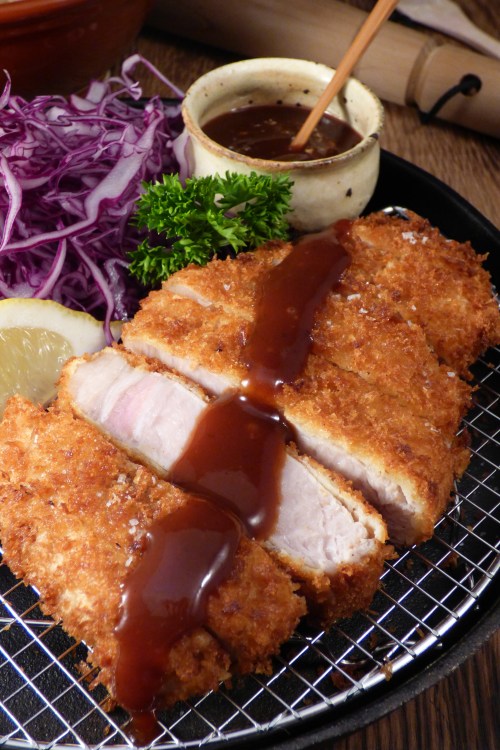
Of course, this act of grinding your own seeds isn’t the only element that makes a tonkatsu meal so enticing; the incredibly hot, crisply crumbed, juicy fried pork steaks; the mountain of crunchy, cooling shredded cabbage (which normally comes with unlimited refills); the sticky, perfectly cooked blend of rice and barley mounded up in your bowl; and the ability to choose between the fattier more flavourful rosu and the tender and cleaner tasting hire cuts of pork all help make it one of our favourite meals to eat in Japan.
You can follow the same technique described below with a flattened out chicken breast to make torikatsu, a variation of tonkatsu which has become even more popular in the UK than the original, and frequently served with karē sauce.

 kakuni