Sakura Parfait

Of all the flowers one could associate with Japan, from the chrysanthemum of the royal throne to the short lived morning glories and the ume which marks the official start of spring, the sakura or cherry blossom is the flower that most captures the hearts of the people.  A stark black skeleton of a tree stretching limbs skywards, wreathed in soft pink garlands that delicately flutter from its fingertips creating a carpet of blush snow underfoot- one of the most celebrated images signalling the progression of the seasons, and catching a glimpse of this natural wonder has been a national obsession since the eighth century.  Poetry is composed, love is declared and sake is drunk (often in excessive quantities) as people party in the shade of the cherry trees and take part in one of Japan’s favourite pastimes- Hanami, or ‘looking at flowers’.  School children, salarymen, old ladies, weather beaten fishermen, celebrities and priests alike all stop to view the beauty of the sakura blossoms, and like the ethereal blossoms themselves, contemplate the fleeting nature of existence and the meaning of life.

The sakura petals are used in all manner of foods, from the salted preserved flowers pressed into cookies and wagashi, to brightly coloured syrups added to lattes and ice creams.  The flower itself has a complex but delicate flavour and a hint of bitterness somewhere between the sour cherries that one would assume it tastes of, and its close cousin the almond; even when eaten, this most philosophical of flowers manages to echo Japan’s cultural beliefs.

As our tribute to these beautiful blossoms that herald the forthcoming warmer weather, we’ve composed a parfait dessert combining sweet, sour, bitter and creamy elements along with cubes of soft sponge cake and brittle shards of nutty caramel- the perfect sundae to eat whilst reclining on the floor, wishing you were in the shade of a gnarled old cherry tree.  Although there are a lot of components in this recipe, they can nearly all be made in advance and stored until needed, meaning that a tasty reminder of spring can be whipped together in a matter of minutes.


sakura parfait
Sakura Parfait- a nation’s love for cherry blossoms, in a dessert bowl.


Continue reading “Sakura Parfait”

Chirashizushi

The four heavenly creatures in Japanese mythology are: Seiryu the blue-green dragon, Suzaku the vermilion bird, Byakko the white tiger and Genbu the black turtle.  They govern over the four points of the compass, appear as major constellations in the night sky, embody four of the five classical elements and are representatives of the four seasons.  These godly animals are honoured annually with festivals held for each of them throughout Japan, but their presence can also be felt watching over you more subtly during other times of the year, if you know where to look.

One of the most well known events of Spring is Hinamatsuri, or Doll’s day- red fabric-draped platforms appear in houses, shrines and businesses, and atop these pedestals sit ornamental dolls in the form of the Emperor, Empress, ministers, musicians and other courtly attendants.  People celebrate, pray for the health and happiness of girls in their family, drink shirozake, and most popularly, eat bowls of seasoned rice strewn with a confetti of celebratory toppings.  Literally meaning ‘scattered sushi’, chirashizushi -whilst not only being delicious- pays tribute to the four heavenly creatures by means of their respective colours; blue, red, white and black, all of which are present in the toppings: crisp, tangy vinegared renkon for Byakko; savoury, umami packed shreds of nori and mushrooms for Genbu; crunchy, fresh pieces of mangetout for Seiryu; and finally the saline, bursting bubbles of ikura for Suzaku.  Like the dolls of the festival, these toppings perch on a carpet of shredded sweetened omelette, laid over a platform of seasoned su meshi rice, creating a meal perfectly balanced in textures and flavours.

By far one of the simplest sushi dishes to make in the home, chirashizushi doesn’t require any of the precision slicing or delicate wrapping of seaweed commonly associated with the cuisine, yet it makes a fantastic, vibrant dish to bring to the table for celebrations of all kinds.  It also works incredibly well packed as a bento lunch for those special occasions when you won’t be at home, and is perfect for taking to a tranquil spot in the countryside for a leaf or blossom viewing party.

chirashizushi
Chirashizushi- glistening pearls of salmon roe scattered over sushi rice.

Continue reading “Chirashizushi”

Ramson Gyoza Suimono

For me, spring only truly starts when the first foods of the season are ready to harvest or forage, and one of the plants that I most eagerly look out for each year is wild garlic or ramsons.  Ten minutes walk from our house is a small brook, its banks lined with a stretch of woodland that provides a welcome glimpse of nature among the noise and rush of the city.  Within the dappled light of these woods lies a patch of ramson plants, carpeting the edges of pathways and giving off their distinctive pungent aroma whenever they’re lightly brushed by a passing bird or walker.  The leaves of this shamefully overlooked and short-lived plant provide a powerful garlic hit along with a spring onion-like flavour that makes it perfect for mixing into dipping sauces and dumpling fillings, and if you’re lucky enough to find some plants with open flowers they offer up an edible garnish of such intense flavour you won’t believe it came from such a delicate looking thing.

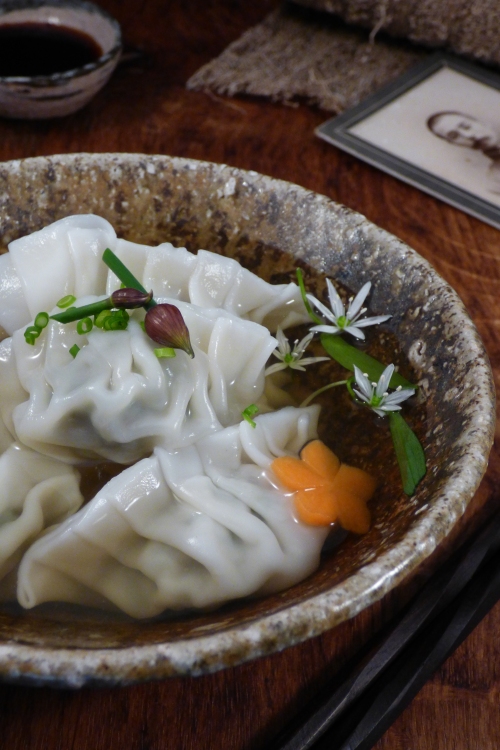
Seasonality and the use of local produce are two of the main cornerstones of Japanese cuisine so these wild ramsons are the perfect ingredient to use in the kaiseki style dish of suimono or clear soup.  A delicate, lightly seasoned broth that allows you to focus on the flavours of the individual elements that it contains, in this case a pile of carefully crimped duck and wild garlic gyoza and a scattering of flowers and leaves from both the foraged ramsons and some young chives.

gyoza suimono
Clear soup with duck gyoza and wild garlic flowers.

Continue reading “Ramson Gyoza Suimono”