Karaage / Tatsuta-age

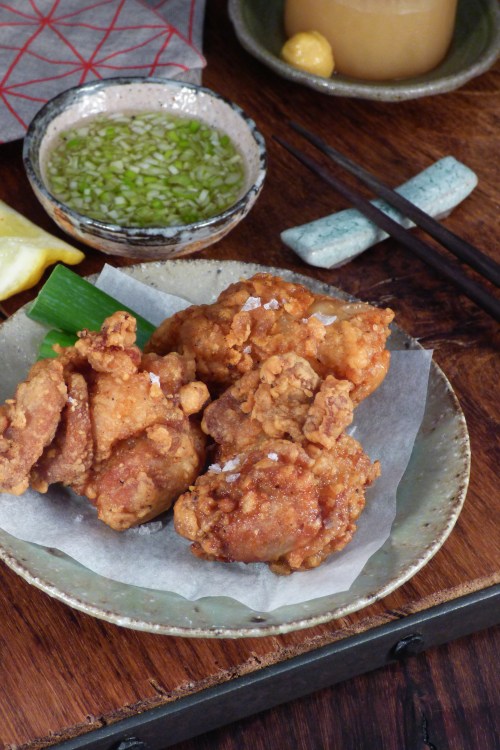
Fried chicken.  Two simple words that have the power to whet appetites across the globe and set imaginations spinning, whether you’re in Louisiana, Mali or Scotland, you know that when you order your local rendition of the dish you’ll be getting moist, juicy meat in a crisp coating packed full of flavour.  Karaage is the fried chicken of Japan- nearly always meat from the thigh of the bird, seasoned with soy sauce and ginger before being dusted in a light coating of potato starch and fried to crunchy perfection.  Unusually for Japanese cuisine, large amounts of garlic are included in the marinade for karaage, along with the addition of some sake this helps to offset the slightly gamey flavour that chickens had before post-war American birds were imported to become the mainstay of local farms.  The soy sauce used in marinating the chicken imparts a slightly reddish brown colour to the coating, which is said to resemble the reflection of maple leaves in the water of the river Tatsuta in Nara, and is how the dish received its second, more romantic name, Tatsuta-age.

We like to accompany our karaage with a fresh dipping sauce made from spring onions and shiro shoyu, or white soy sauce; brewed with more wheat than other soy sauces, it has a much milder flavour which makes it perfect for seasoning lighter meats such as chicken or seafood.

Whether you know them as karaage, Tatsuta-age or even as JFC, these two-bite-sized pieces of juicy chicken are a perfect way to start a meal or make a fantastic addition to a bento or lunch box.
 

karaage
Karaage- Japanese Fried Chicken

Continue reading “Karaage / Tatsuta-age”

Kakuni Manjū

Simultaneously being both the lightest, most delicate, cloud-like bun imaginable and the richest, sweetest, most succulent pork belly possible, kakuni manjū are perhaps the ultimate variation on a bacon sandwich and frankly, I can’t think of a better combination of meat and bread that I’ve ever eaten.

Like the sweet, soy braised pork that fills them, manjū– or hirata buns to give them their recently adopted American name- owe their heritage to Chinese steamed buns such as the snowy white stars of many a dim sum menu, char siu bao.  During the two hundred and twenty year period of isolation, Japan closed off its borders to the outside world, and the only way in or out was through Nagasaki, which quickly became what is now the country’s oldest Chinatown.  Workers and traders travelling through the port took with them their favourite home comforts which were quickly adopted by local restaurants and yatai (food carts) before spreading across the country.  Slow braised dongpo pork from Eastern China and pillowy mantou steamed bread from the North were two such dishes that arrived in this influx of unfamiliar cuisine, and were the culinary parents of this most delicious of sandwiches (perhaps with a little matchmaking courtesy of both Japan and China’s occupation of Taiwan and its now famous gua bao split steamed buns).

Breaking from tradition, we’ve added a few extras to our kakuni manjū- the creaminess of the mayonnaise and the crisp, refreshing bite of cucumber and shredded spring onions help to lift and round out the flavour of the bun.  Eat them on their own with a few drinks, or as is now common practice, as an accompaniment to a deep, meaty bowl of ramen for the ultimate pork filled meal.


kakuni manju
Kakuni Manju- a Nagasaki street food classic.

Continue reading “Kakuni Manjū”

Ebi Katsu Burger with Onipote

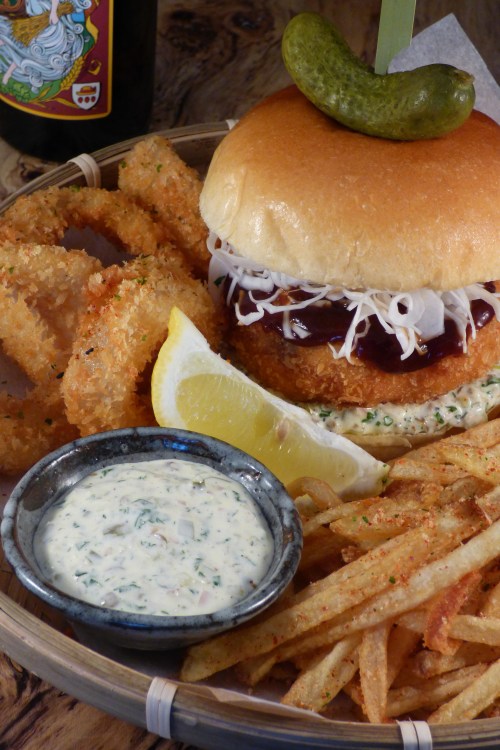
Food in Japan is divided into two distinct categories; Washoku, the native, traditional cuisine that dates back many hundreds if not thousands of years, and Yōshoku (or seiyōshoku), Western style dishes that started being imported into Japan’s culinary tapestry during the Meiji restoration.  Along with firm favourites such as karē, tonkatsu, and ramen, ebi furai- or breaded, fried prawns lie firmly within the yōshoku camp, probably owing their heritage to Portuguese traders who introduced crumb coated pork cutlets to Japan during the late 1880s.  Much later, an enterprising chef combined two of the most popular yōshoku, ebi furai and hambāgā to create an ebi katsu burger, chopped prawns shaped into a patty, breaded and then deep fried before being served in a soft buttery bun with the traditional furai accompaniments of tartare and tonkatsu sauces.   We’ve adapted this modern classic slightly by mixing our prawn meat with minced hanpen, a very airy fishcake made from pollock and nagaimo yam, which gives the burger a particularly light, bouncy, juicy texture without detracting from the sweet, delicate flavour of the prawn.

Onipote (a contraction of the words onion and potato) is a half portion of onion rings served with a half portion of fries, a dish we first came across in an Akihabara branch of MOSBurger, Japan’s largest fast food chain.  Why chose between both of these classic sides when you can have a little of each?  Rather than batter our onion rings we’ve opted for the same crunchy panko crumbs that we used on our ebi burger and then dredged both these and the super skinny fries with a sweet and spicy shichimi togarashi salt. Perfect!


ebi katsu burger
Ebi Katsu Burger- crisp breadcrumbs on the outside and juicy, sweet prawns on the inside.

Continue reading “Ebi Katsu Burger with Onipote”

Okinawan black sugar steamed cakes

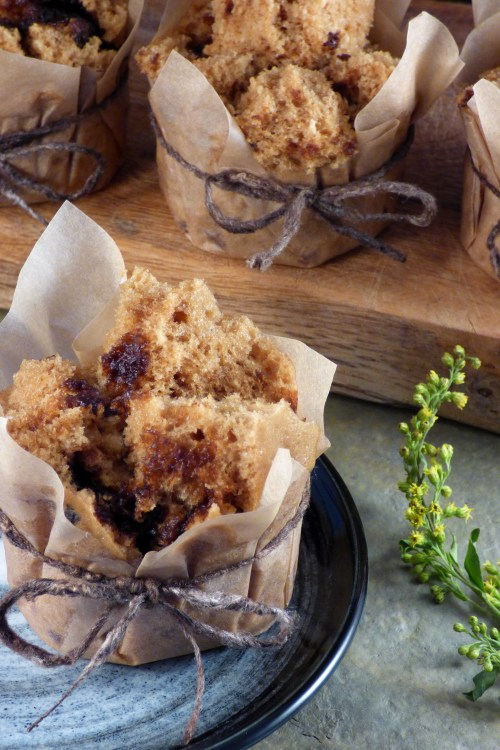
A dark, unrefined, deeply caramel flavoured ‘black’ sugar is cultivated and processed on the Southern Japanese island of Okinawa.  The almost constant sunshine, volcanic soils and nutrients provided by sea spray have created the ideal growing conditions for producing this mineral rich sweetener which has, quite naturally, found its way into a lot of both island and mainland Japanese cuisine.  Pieces of the dense, almost raisiny tasting sugar are often consumed as a sweet along with green tea, or used as a flavouring in rafute pork stew, but our favourite way to use it is in these steamed cakes that we first encountered in a Tokyo depachika.  Fresh from the steamer these light, airy cakes remind me of the geothermal, mountainous areas of Japan- their craggy, ruptured exterior, internal veins of rich gooey syrup and vents issuing jets of hot air.  They are best eaten greedily, while still scalding hot, to really enjoy the texture and contrasting flavours of the delicate dough and the random nuggets of sugar.


steamed cakes
Steamed cakes flavoured with Okinawan ‘black’ sugar.

Continue reading “Okinawan black sugar steamed cakes”

Okonomiyaki

Bearing more similarities to rösti or bubble and squeak than pizza, as it is often compared, okonomiyaki is to my mind one of the best ways to eat cabbage and a great example of wartime necessity creating fantastic food.  During World War II, when rice supplies were at their lowest, inexpensive wheat flour was made into a thick batter, mixed with shredded cabbage and fried as filling, savoury pancakes.  Seventy years and numerous adaptations to the original recipe later and we now have one of Japan’s most popular dishes.  Nagaimo (a type of yam from a climbing vine) is often added to the batter nowadays to enhance the consistency with its unique sticky, foamy texture.  If you can’t find nagaimo in an oriental supermarket, beating some air into the two egg whites in the recipe will help to make the okonomiyaki fluffier and closer to the real thing.

The word okonomi translates as ‘what you like’ and yaki to ‘grilled’, and as the name suggests, you can add whatever toppings you like to this dish, our favourite combination being prawns and smoked bacon.  Whatever extra ingredients you choose, just make sure to top the pancake with aonori seaweed, dried bonito flakes, Japanese mayonnaise and the punchy, fruity brown sauce known as sōsu or okonomi sauce.


okonomiyaki
Kansai style Okonomiyaki

Continue reading “Okonomiyaki”

Renkon Chips with homemade Shichimi Togarashi

Dating back as far as the 1600s, shichimi togarashi is a vibrant condiment that started life as a medicine mixed by herb & spice dealers in Edo- old Tokyo- before becoming popular as a seasoning for food.  The combination of citrus, chilli and seaweed flavours make it a perfect accompaniment to slow cooked soups and fatty meats, or whenever you want to add a bit of freshness and heat to a dish.  There are many popular blends of shichimi togarashi (the name means ‘seven flavour chilli’ by the way) available on the market, but when made fresh at home it has a much brighter flavour, and of course you have the ability to tweak the recipe to your liking.

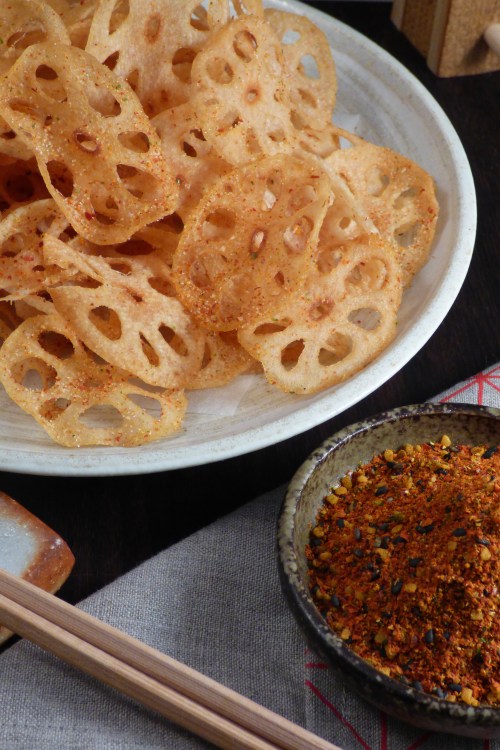
By mixing our shichimi with salt and sugar, we’ve made a delicious seasoning for an izakaya favourite- renkon chips.  With a flavour slightly sweeter than potato and a long history of being used medicinally, lotus root makes a perfect partner to the seasoning and when thinly sliced and fried as chips it makes a fantastic bar snack.

renkon chippu
Renkon chips dusted with our blend of spices, salt and sugar.

Continue reading “Renkon Chips with homemade Shichimi Togarashi”

Tofu Hijiki Fritters

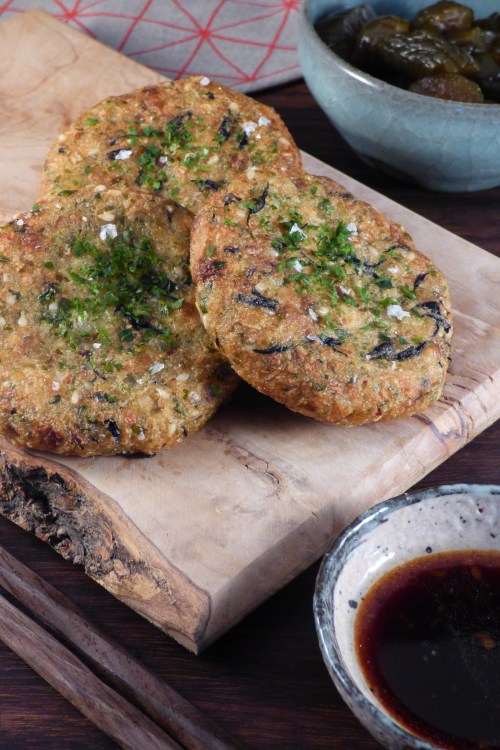
During our last visit to Arashiyama, we visited a little restaurant specialising in Kyo-ryori, or Kyoto style cuisine, where among other regional fare we ate some little fried tofu fritters.  Similar to ganmodoki, these springy morsels were made of crushed tofu mixed with assorted vegetables and hijiki seaweed before being deep fried.  We were immediately taken by the combination of flavours which managed to evoke being by the seashore despite being surrounded by mountains and forest.  To enhance this coastal feel we’ve added a second seaweed to our version, both in the fritters and as a flavour boosting topping.

ganmodoki
Tofu fritters with burdock, bamboo shoots and seaweed.

Continue reading “Tofu Hijiki Fritters”

Oden

Oden is difficult to avoid in Japan during the colder months, sold from food carts and convenience stores; you often detect the warm, nourishing aroma on the breeze before you notice the huge vat of slowly steaming dashi in front of you, with its bobbing islands of fishcakes and vegetables.  A cheap way of getting protein into you, oden carts are a popular pit stop for salarymen before making their way back home, spicing up the myriad selection of nerimono fish pastes with a dab of sinus-clearingly hot karashi mustard.  You are free to pick your favourite items from the assortment on offer, scooping them into a bowl before having a helping of the sweet, fishy broth ladled over the top.

Oden is a great family style meal to place in the middle of the table and let everyone tuck in.  It always feels like a special dish, bountiful and overflowing with good things, and while it isn’t traditionally a celebration dish, we like to view it as such.  The selection of ingredients in your oden can be changed quite readily depending on what’s available, just make sure you have a wide range of textures, flavours and shapes.

oden
Warming oden fishcake stew

Continue reading “Oden”

Daigaku imo

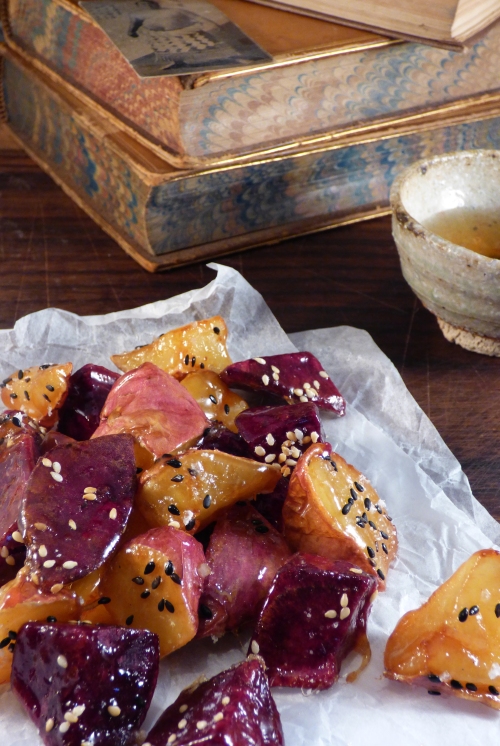
The rather cryptically named daigaku imo, or university potatoes, have been a staple snack food across the university towns of Japan since the 1920s.  Deep fried sweet potatoes, tossed in caramel flavoured with soy sauce which quickly becomes brittle in the air; what’s not to love about them?  The soy caramel coating brings to mind the salted caramel chocolates which have become popular in the UK over the last decade, and the glazed potatoes make me think of American Thanksgiving style candied yams.  Traditionally these are made with the red-pink skinned, white fleshed sweet potatoes most common in Japan, but we ate some made with the gloriously bright purple murasaki imo in Kamakura and couldn’t resist recreating those in part here.  Murasaki imo have an almost winey, lychee flavour to them which works wonderfully with the salty soy sauce.

daigaku imo
Daigaku imo; fried sweet potatoes, glazed in soy caramel and sprinkled with gomashio.

Continue reading “Daigaku imo”

Shiozake Yaki-Onigiri

An onigiri (rice ball) is to Japan as a sandwich is to England.  It’s a filling and cost effective replacement for a real meal that you can grab from any convenience store before jumping on a train or rushing back to the office to work through your lunch break.  Often, you can improve a sandwich by grilling it, creating a crispy golden exterior that gives way to a warm soft inside.  By that same logic, grilling an onigiri gives you a delicious treat that enlivens a go-to snack and raises it to a new place. We have filled ours with an onigiri classic; shiozake, a kind of semi-cured salmon which we’ve infused with sake and sweet mirin.  These yaki-onigiri have an outer crust that tastes almost like a toasted senbei cracker glazed with sweet soy sauce, while the inside resembles a warm gravlax or smoked salmon.

yakioni
Crispy grilled onigiri, stuffed with sake infused salmon.

Continue reading “Shiozake Yaki-Onigiri”