Gunkan maki

A hand formed pillow of sweet, vinegared sushi rice just the right size for a greedy mouthful or two dainty bites, with a glossy green perimeter wall of toasty seaweed surrounding it, holding back a cascade of glistening, salty, baubles like an overfilled treasure chest bursting at its seams.  A relative newcomer to the world of sushi, gunkan maki- or battleship rolls- were created in the 1940s with one purpose in mind- to hold in the soft, loose ingredients that had been missing from menus for too long.  The tall boundary of nori confines some of the most coveted toppings (but also daunting in the eyes of many westerners): creamy, saline oysters; savoury, pungent nattō; the smooth, delicate roe of sea urchins; and our favourite- tumbling mounds of spherical, translucent, jewel-like fish eggs.

The eggs used for topping gunkan maki vary tremendously from the large red and orange ikura and sujiko roe of the pacific salmon, to the tiny, crunchy tobiko flying fish roe; masago from smelt and ebiko shrimp roes are also popular, with sturgeon caviar even making an appearance from time to time in modern restaurants.  Whichever roe you choose, they all make a delightful morsel, packed with unique flavours and textures unlike those found anywhere else on the sushi menu, and often made even more special by the addition of the yolk from a quails egg, the rich creamy taste smoothing out the briny, ocean notes of the roe and creating a simple, harmonious sauce for the sushi.


gunkanmaki
Gunkan maki- sushi treasure chests overflowing with jewels.


Continue reading “Gunkan maki”

Chirashizushi

The four heavenly creatures in Japanese mythology are: Seiryu the blue-green dragon, Suzaku the vermilion bird, Byakko the white tiger and Genbu the black turtle.  They govern over the four points of the compass, appear as major constellations in the night sky, embody four of the five classical elements and are representatives of the four seasons.  These godly animals are honoured annually with festivals held for each of them throughout Japan, but their presence can also be felt watching over you more subtly during other times of the year, if you know where to look.

One of the most well known events of Spring is Hinamatsuri, or Doll’s day- red fabric-draped platforms appear in houses, shrines and businesses, and atop these pedestals sit ornamental dolls in the form of the Emperor, Empress, ministers, musicians and other courtly attendants.  People celebrate, pray for the health and happiness of girls in their family, drink shirozake, and most popularly, eat bowls of seasoned rice strewn with a confetti of celebratory toppings.  Literally meaning ‘scattered sushi’, chirashizushi -whilst not only being delicious- pays tribute to the four heavenly creatures by means of their respective colours; blue, red, white and black, all of which are present in the toppings: crisp, tangy vinegared renkon for Byakko; savoury, umami packed shreds of nori and mushrooms for Genbu; crunchy, fresh pieces of mangetout for Seiryu; and finally the saline, bursting bubbles of ikura for Suzaku.  Like the dolls of the festival, these toppings perch on a carpet of shredded sweetened omelette, laid over a platform of seasoned su meshi rice, creating a meal perfectly balanced in textures and flavours.

By far one of the simplest sushi dishes to make in the home, chirashizushi doesn’t require any of the precision slicing or delicate wrapping of seaweed commonly associated with the cuisine, yet it makes a fantastic, vibrant dish to bring to the table for celebrations of all kinds.  It also works incredibly well packed as a bento lunch for those special occasions when you won’t be at home, and is perfect for taking to a tranquil spot in the countryside for a leaf or blossom viewing party.

chirashizushi
Chirashizushi- glistening pearls of salmon roe scattered over sushi rice.

Continue reading “Chirashizushi”

Sabazushi

Transporting fresh fish from the coast of Japan to its major inland cities was almost impossible before the advent of refrigerated trains; the days required to travel by horse resulted in inedible, spoiled goods unfit for the population of the Kansai region.  The only reliable means of getting fish to the then-capital city of Kyoto was to preserve it in some way- fermenting the fish in rice was popular, which extended its shelf-life to six months or more but altered the flavour dramatically.  In this early form of sushi, the rice was discarded and only the soured, preserved fish was eaten; it would take another three or four hundred years until the mid 1600s for a version with edible rice to evolve.  As the techniques for making sushi developed, the preservation of the fish improved but palates accustomed to the old style dishes yearned for the sour tang and started adding vinegar to the rice, creating the seasoned sushi rice we know and love today.

Sabazushi, still one of Japan’s most popular forms of sushi, lies comfortably between the fish preserving necessities of old that led to the development of sushi and the modern, perfectly crafted slices of fish atop vinegared rice that spring to mind as this most ubiquitous Japanese delicacy.  Glistening, iridescent, tiger-striped fillets of mackerel are salted and lightly cured before being wrapped over a pillow of seasoned sticky rice and sliced into perfect, jewel topped pieces.  Traditionally in Osaka, you would press this in an oshizushihako box mould to create a rectangular block, but we prefer to make it Kyoto-style and shape it by hand so you can appreciate the naturally domed top that the fish forms.  Whether you press it or not this makes a plate of beautiful, two-bite sized morsels; delicate, refreshingly tangy and with just enough of the rich, creamy fattiness that we love mackerel for.


battera
Sabazushi- rich, smooth, tangy and tiger-striped.

Continue reading “Sabazushi”

Inarizushi

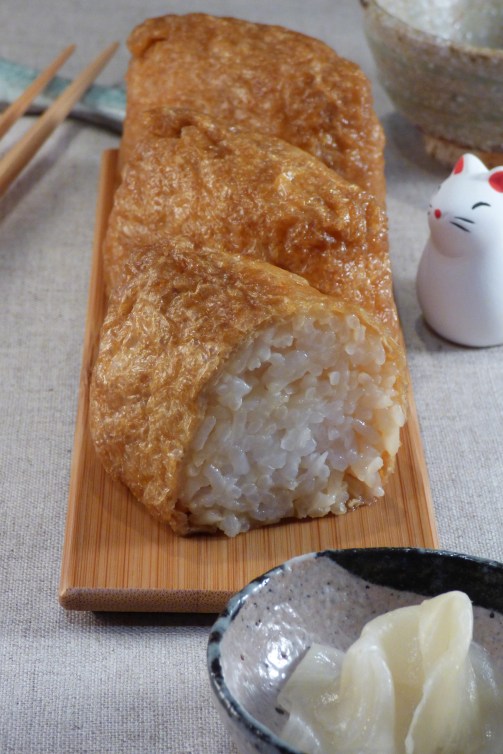
Perhaps the most popular deity in Shinto belief, Inari is the kami of fertility, prosperity, agriculture and foxes.  One of the favoured foods of Inari is abura-age or fried tofu, so these sweet pouches of fried tofu stuffed with rice have become a preferred offering at his shrines and a delicious snack for their patrons.  The largest shrine dedicated to Inari is in Fushimi, Kyoto, famous for its thousands of vermilion torii, and on the roads leading up to the shrine’s entrance you’ll find stalls selling these treats.  You can often find these in sushi restaurants, bento meals or convenience stores, but because of the foxes and their love for them they’ll always remind us of the hour and a half walk up Inari mountain and the peaceful glades found along the way.

inarizushi
Inarizushi, a favourite food of Japanese foxes, perhaps because the top corners of the pouches resemble their ears.

Continue reading “Inarizushi”