Sea bream or Tai is without a doubt Japan’s most beloved fish. Being a symbol of good fortune it is traditionally served during celebrations, which is alluded to in the term ‘medetai’, a phrase used to congratulate people on auspicious events. During the Edo period tai was so prized that it was reserved almost exclusively for the tables of the wealthy and a market solely trading in this king of fish was even set up in Osaka. Lucky bream shaped sweets are a popular favour handed out at Japanese weddings, and the hot, sweet, bean-filled pancakes called taiyaki can be bought at stalls and cafés all over the country. Ebisu- one of the traditional seven gods of fortune, is portrayed holding a fishing rod in one hand and carrying a huge red tai in the other. It is the symbol of wealth, prosperity and high quality; it even spoils at a slower rate to other fish thanks to the high levels of inosinic acid present in its flesh, making it an excellent choice for sashimi.
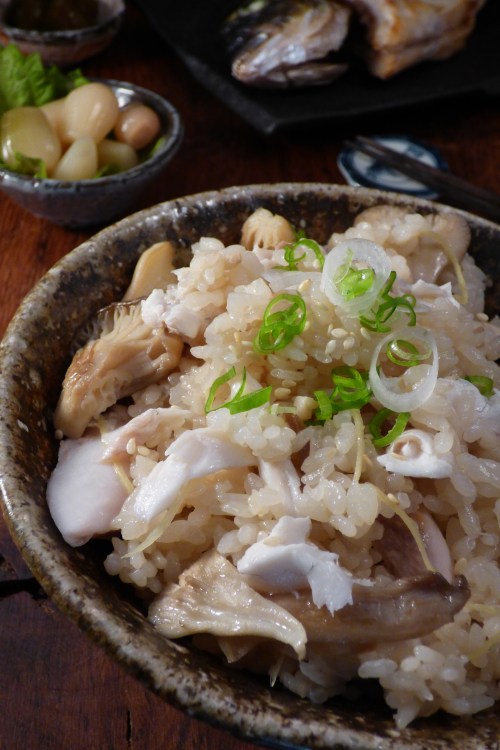
One of the best ways to enjoy this luckiest of fish is in this ‘surf & turf’ inspired takikomi gohan; the sweet, succulent pearly flesh of the tai is paired with meaty, earthy mushrooms and the spicy freshness only ginger can provide, to create a deliciously savoury rice dish that borders on the decadent. We’ve used a selection of our favourite mushrooms in this recipe, some frilly, some dense and some tender, but feel free to use whatever is available locally to you. If you’re fortunate enough to have some of the highly sought after, distinctly flavoured, matsutake mushrooms, they would make a phenomenal addition to your tai-meshi, combining both the country’s favourite fish and fungus into one memorable dish that spells out what the Japanese value most in food.
 kakuni