Tsukemono- preserved vegetables- pop up nearly every time food is consumed in Japan but can easily go unnoticed; they’re served with sushi to cleanse the palate in between flavours, as a snack with beers after a long day at work, used to top a bowl of rice and garnish dishes or as a course all of their own in a traditional kaiseki meal. These pickles help bring balance and harmony to a meal, they awaken the senses and excite the mouth preventing flavour fatigue and they add textures and colours that are otherwise missing from the foods that they accompany; samurai even used them for a quick energy boost during battle- and that alone is a good enough endorsement for me.
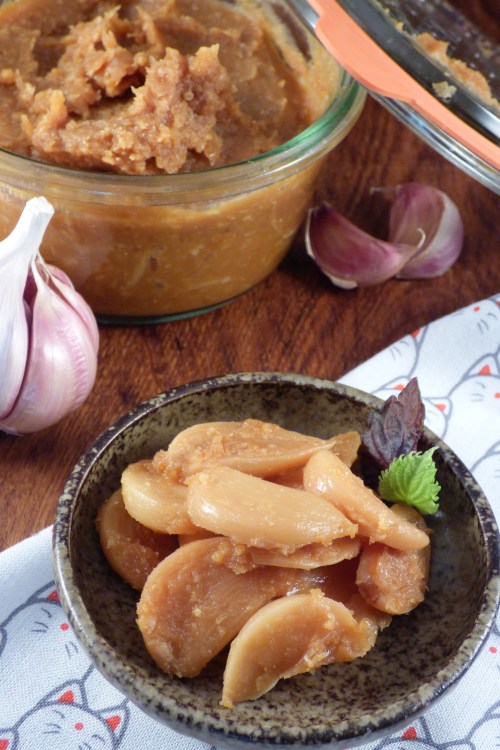
Unlike most Western pickles, those of Japan don’t rely purely on salt or vinegar to take care of the preservation of the main ingredient- tsukemono can be made with leftover lees from brewing sake, rice bran, mustard, soy sauce or as in this recipe, miso. These misozuke pickles are perhaps the most intensely savoury of all the tsukemono, garlic cloves are buried in a finger-licking mixture of miso, sake and mirin before being left for months to slowly transform. The miso helps temper the fiery flavour of the garlic which in turn mellows out the saltiness of the miso, resulting in two beautifully balanced condiments; a crunchy, umami-rich pickled garlic that’s a perfect accompaniment to meat or fish dishes, and a garlic enhanced nerimiso that’s just crying out to be stirred into a soup, spooned over hot steamed vegetables or smeared onto a crispy, lightly singed yaki onigiri. Oishii!
 kakuni