Furofuki Daikon

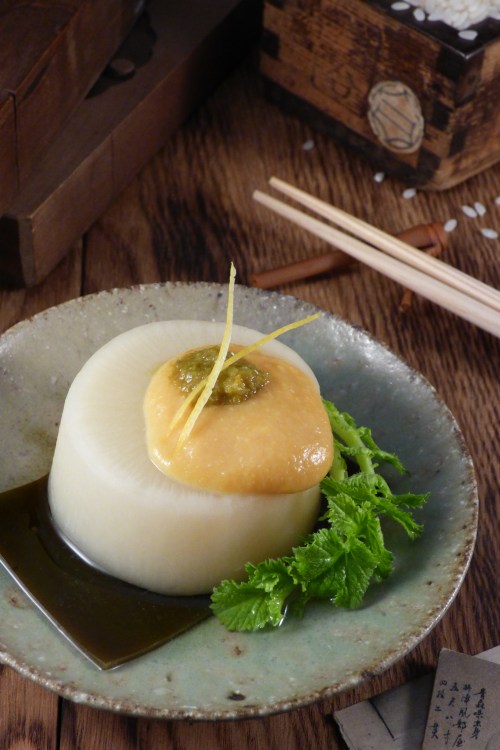
Most commonly encountered grated as a garnish for oroshi dishes or as a crunchy pickle (the Nihombashi district of Tokyo even holds an annual daikon festival every October where hundreds of vendors sell their own variation on the pickle), daikon- Japan’s unwieldy, oversized white radish- is surprisingly even tastier when used in a warm cooked dish than when eaten raw.  The mellow sweetness of the root is encouraged into the limelight by gentle stewing while the spicy, almost watercress-like flavour is ushered into a supporting role- more of an intriguing, characterful nuance than its normal in-your-face approach.  A soft, juicy disc of daikon is a prize to be found bobbing around in a steaming vat of oden along with the assorted fish cakes, or cut into tiny cubes sunk into a bowl of miso soup, but by far the best way to enjoy cooked daikon is as a tender, gently simmered ‘steak’.  Our preferred partner to a succulent piece of daikon is a classic nerimiso sauce; intensely flavoured on its own, too savoury and far too salty, but after you bite into the tender radish, it releases its juices and they combine together with the yuzu perfumed paste to create the perfect seasoning.

After a bout of illness or a long trip abroad, simmered daikon is often the first comfort food that Japanese people crave; the enveloping, warming aroma eliciting carefree childhood memories and the soothing, nostalgic taste of mothers’ homely cooking.   Whilst its close relative the turnip has fallen out of favour in British cuisine in recent years for being too old-fashioned in flavour, stewed daikon has never lost its popularity in Japan, remaining a winter favourite and an example of traditional, country style cooking at its finest.
 

furofuki
Furofuki Daikon- Simmered radish with white miso sauce.


Continue reading “Furofuki Daikon”

Nikujaga

Nikujaga, which translates literally as ‘meat and potatoes’, is pure unadulterated comfort food; to many Japanese people it is a taste of home and the memory of mother’s cooking. This sweet, incredibly warming, wintery dish has an easy-to-trace heritage going back to the beef stew served by the British Royal Navy in the late 1800s, and one Japanese cadet who was sent to England to further his naval studies.  Tōgō Heihachirō, who had achieved the rank of lieutenant before returning to Japan, had developed a fondness for the cuisine of his alma mater; describing the dish to the chefs of the Imperial Navy, he had them recreate its flavours using local ingredients and according to the story, nikujaga was born.

The key components of a classic British beef stew are still present- potatoes, carrots, onions and of course beef, although the latter being in a much smaller quantity than you would expect to find in the traditional version.  The similarities end there though- the umami-rich cooking liquor being made up of the staple Japanese ingredients of soy sauce, sake, mirin and dashi fish stock and the addition of chewy, glass-like shirataki noodles to complete the dish.  Like the original, nikujaga is the perfect simple and nostalgic meal to warm you up on a cold, wet winter’s day whichever side of the world you’re on.

nikujaga
Nikujaga- Japanese Navy style beef and potato stew


Continue reading “Nikujaga”

Gojiru Setsubun soup

Oni wa soto! Fuku wa uchi!

According to the lunar calendar today is Setsubun- the day before the start of spring, a sort of New Year’s Eve. It is believed that at the start of a new year, the mortal world and the spirit world move closer together than normal, so spirits can wander more easily into our world. Because of this, people all over Japan take part in purification rituals to ward off bad fortune for the year to come, traditionally using fukumame (‘lucky beans’, roast soybeans) to chase demons and evil spirits from their homes and invite good luck in. These beans are either thrown out of the door or at a representation of an evil spirit- normally a member of the family, wearing an oni mask- whilst chanting “Oni wa soto! Fuku wa uchi!” or “Demons out! Luck in!” It is also traditional to eat a roasted soybean for each year of your life, plus an extra one for the coming year, to bring good health.

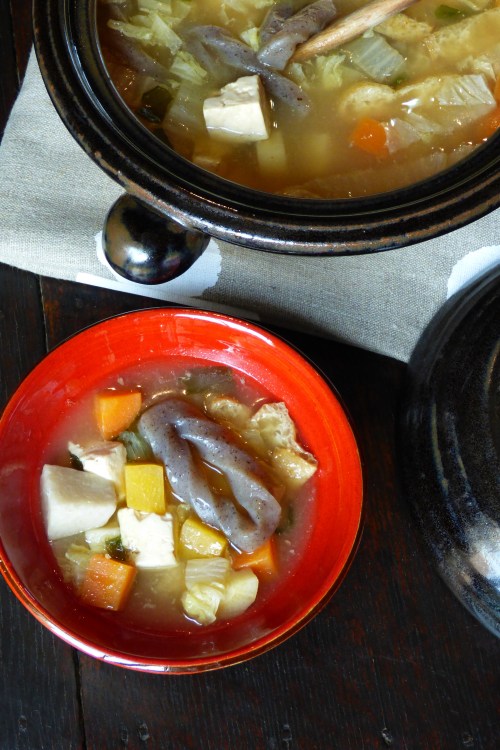
Soybeans are a ubiquitous part of Japanese cuisine, used in the production of tofu, soy sauce and miso amongst other foodstuffs. To commemorate Setsubun we’ve combined puréed soybeans and miso paste to make gojiru, a thick warming soup, full of vegetables, that’s sure to bring you health for the whole of the year.

Gojiru
Gojiru- Oni wa soto! Fuku wa uchi!

Continue reading “Gojiru Setsubun soup”

Hojichazuke

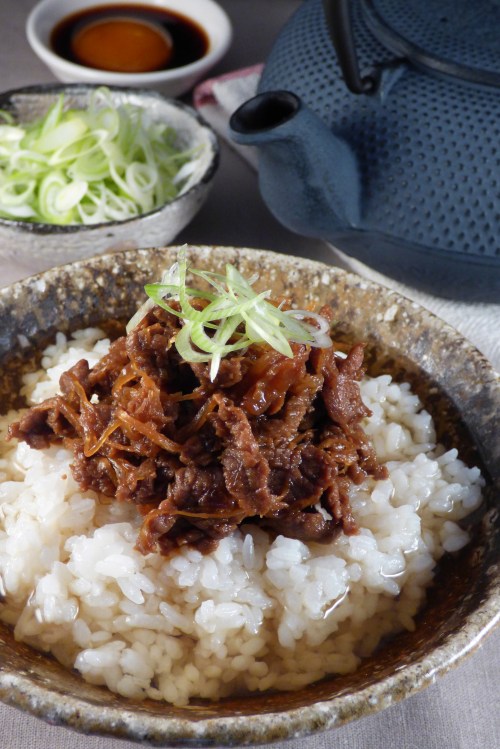
Ochazuke is a firm favourite when we want a simple warming meal, green tea poured over a bowl of rice topped with salmon.  However, tonight we wanted something darker, something sweeter and most importantly, something to use the beautiful piece of organic beef we got from our butcher.  This is what we came up with; a sweet, sticky, gingery beef tsukudani, rich and powerful with plenty of soy and sake in it.  The depth of flavour in the beef would have overpowered the green tea normally used in ochazuke, so we decided to use dashi-infused hojicha instead, and topped the whole dish off with a lightly cured egg yolk to add extra creaminess and provide a more substantial sauce for the beef and rice.  Any leftover tsukudani can be chopped up finely and used as a filling for some beef onigiri, or used as a punchy addition to a bento.

hojichazuke
Hojichazuke- sweet, salty beef over rice topped with hot tea.

Continue reading “Hojichazuke”

Oden

Oden is difficult to avoid in Japan during the colder months, sold from food carts and convenience stores; you often detect the warm, nourishing aroma on the breeze before you notice the huge vat of slowly steaming dashi in front of you, with its bobbing islands of fishcakes and vegetables.  A cheap way of getting protein into you, oden carts are a popular pit stop for salarymen before making their way back home, spicing up the myriad selection of nerimono fish pastes with a dab of sinus-clearingly hot karashi mustard.  You are free to pick your favourite items from the assortment on offer, scooping them into a bowl before having a helping of the sweet, fishy broth ladled over the top.

Oden is a great family style meal to place in the middle of the table and let everyone tuck in.  It always feels like a special dish, bountiful and overflowing with good things, and while it isn’t traditionally a celebration dish, we like to view it as such.  The selection of ingredients in your oden can be changed quite readily depending on what’s available, just make sure you have a wide range of textures, flavours and shapes.

oden
Warming oden fishcake stew

Continue reading “Oden”

Kenchinjiru

With its roots in shojin-ryori Buddhist cuisine, this hearty miso enriched soup is a great way to get more vegetables into your diet and warm you up on these windy, rainy days.  It reminds me of tonjiru, but without the porky overtones, and is the type of soup that makes you feel almost invincible after eating a bowlful.  We make ours with homemade chicken stock, which adds a medicinal chicken soup vibe to help ward off those winter bugs. You can of course keep it traditional by using vegetable stock which makes it vegan friendly and just as delicious.

kenchinjiru
Traditional winter warmer, kenchinjiru.

Continue reading “Kenchinjiru”