Nikujaga

Nikujaga, which translates literally as ‘meat and potatoes’, is pure unadulterated comfort food; to many Japanese people it is a taste of home and the memory of mother’s cooking. This sweet, incredibly warming, wintery dish has an easy-to-trace heritage going back to the beef stew served by the British Royal Navy in the late 1800s, and one Japanese cadet who was sent to England to further his naval studies.  Tōgō Heihachirō, who had achieved the rank of lieutenant before returning to Japan, had developed a fondness for the cuisine of his alma mater; describing the dish to the chefs of the Imperial Navy, he had them recreate its flavours using local ingredients and according to the story, nikujaga was born.

The key components of a classic British beef stew are still present- potatoes, carrots, onions and of course beef, although the latter being in a much smaller quantity than you would expect to find in the traditional version.  The similarities end there though- the umami-rich cooking liquor being made up of the staple Japanese ingredients of soy sauce, sake, mirin and dashi fish stock and the addition of chewy, glass-like shirataki noodles to complete the dish.  Like the original, nikujaga is the perfect simple and nostalgic meal to warm you up on a cold, wet winter’s day whichever side of the world you’re on.

nikujaga
Nikujaga- Japanese Navy style beef and potato stew


Continue reading “Nikujaga”

Ebi Katsu Burger with Onipote

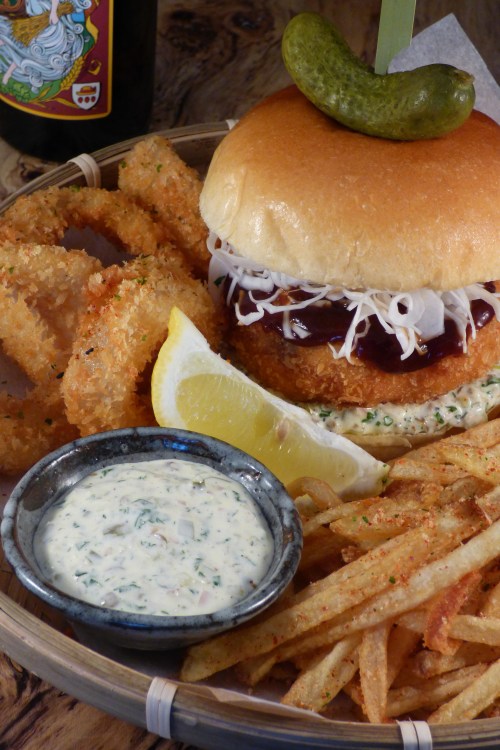
Food in Japan is divided into two distinct categories; Washoku, the native, traditional cuisine that dates back many hundreds if not thousands of years, and Yōshoku (or seiyōshoku), Western style dishes that started being imported into Japan’s culinary tapestry during the Meiji restoration.  Along with firm favourites such as karē, tonkatsu, and ramen, ebi furai- or breaded, fried prawns lie firmly within the yōshoku camp, probably owing their heritage to Portuguese traders who introduced crumb coated pork cutlets to Japan during the late 1880s.  Much later, an enterprising chef combined two of the most popular yōshoku, ebi furai and hambāgā to create an ebi katsu burger, chopped prawns shaped into a patty, breaded and then deep fried before being served in a soft buttery bun with the traditional furai accompaniments of tartare and tonkatsu sauces.   We’ve adapted this modern classic slightly by mixing our prawn meat with minced hanpen, a very airy fishcake made from pollock and nagaimo yam, which gives the burger a particularly light, bouncy, juicy texture without detracting from the sweet, delicate flavour of the prawn.

Onipote (a contraction of the words onion and potato) is a half portion of onion rings served with a half portion of fries, a dish we first came across in an Akihabara branch of MOSBurger, Japan’s largest fast food chain.  Why chose between both of these classic sides when you can have a little of each?  Rather than batter our onion rings we’ve opted for the same crunchy panko crumbs that we used on our ebi burger and then dredged both these and the super skinny fries with a sweet and spicy shichimi togarashi salt. Perfect!


ebi katsu burger
Ebi Katsu Burger- crisp breadcrumbs on the outside and juicy, sweet prawns on the inside.

Continue reading “Ebi Katsu Burger with Onipote”